
01How does heroin move through the body?
Within minutes of use heroin converts to an intermediate called 6-MAM and then to morphine. The liver breaks morphine down and the kidneys pass its by-products into urine, which is why tests look for these by-products rather than heroin itself.
02How long does heroin show on each test?
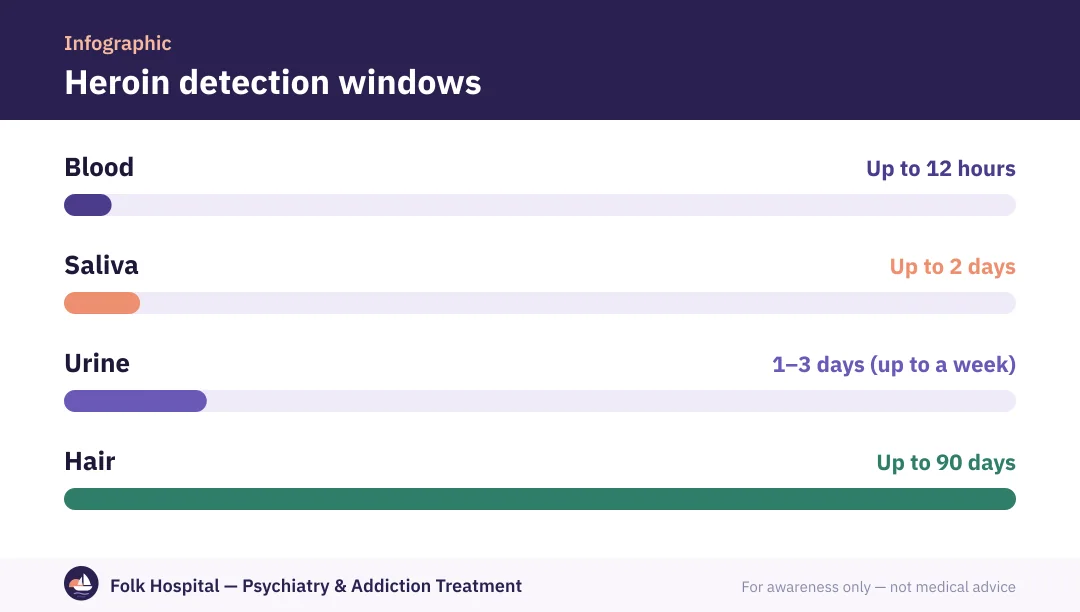
| Test | Approximate window |
|---|---|
| Blood | 5 to 12 hours |
| Saliva | Up to 24–48 hours |
| Urine | 1–3 days, up to a week with heavy use |
| Hair | Up to 90 days |
03What makes it last longer?
Factors that affect detection time
- Amount and number of doses per day.
- Months or years of use.
- Liver and kidney function.
- Age, weight and body fat.
- Other substances used alongside heroin.
04Why withdrawal matters more than the test
The medically important question isn't "when will it clear from a test?" but "when will withdrawal end and the body stabilise?". That's what medical detox manages, usually over a week to ten days. Read about heroin withdrawal.
؟Frequently asked questions
Can you flush heroin out of your body fast?
There's no safe way to speed it up meaningfully. Over-drinking water can cause dangerously low sodium, and advertised products aren't backed by evidence. The liver and kidneys need their time.
Does heroin show up as morphine on a test?
Usually, yes, because heroin becomes morphine. Confirmatory tests can tell it apart from medicines containing morphine or codeine through the marker 6-MAM.
Sources and references
- Heroin — research topic — National Institute on Drug Abuse (NIDA)
- Drug Testing — U.S. National Library of Medicine — MedlinePlus

A psychiatrist specialising in addiction and mental illness in adults and adolescents, with a focus on dual diagnosis.
For awareness only — not a substitute for medical advice. Editorial policy · View profile