01Harms to the body
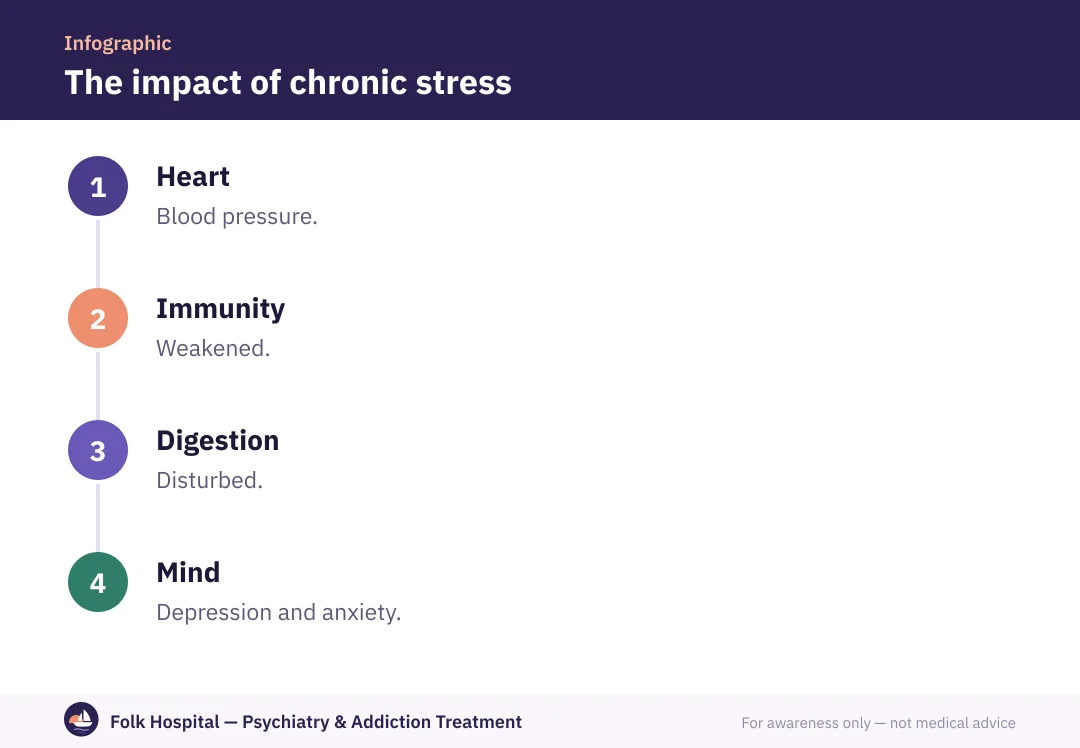
| System | Effect linked to chronic stress |
|---|---|
| Heart and blood vessels | High blood pressure and higher heart disease risk |
| Immunity | Weaker resistance and frequent infections |
| Digestion | Irritable bowel, heartburn, appetite changes |
| Muscles | Headaches, neck and back pain |
| Sleep | Insomnia and unrefreshing sleep |
| Hormones | Disturbed cortisol |
02Psychological harms
What may develop
- Ongoing anxiety.
- Depression.
- Burnout.
- A nervous breakdown in the everyday sense.
- Relationship problems.
03Harmful coping
Looks like a solution
- A cigarette to calm down.
- A drink to forget.
- A sedative to sleep.
- Overeating for comfort.
Becomes a problem
- Nicotine addiction.
- Alcohol dependence.
- Sedative dependence.
- Weight gain and health problems.
- Chest pain or breathlessness.
- Suicidal thoughts or deep hopelessness.
Ambulance 123; hotline 08008880700.
Ambulance: 123Read stress, its treatment and causes of addiction.
؟Frequently asked questions
What are the harms of chronic stress?
Insomnia, weaker immunity, high blood pressure, heart and digestive problems, headaches, anxiety, depression and burnout.
Does stress cause heart disease?
Chronic stress is a risk factor, especially with smoking, inactivity and poor diet.
Does stress weaken immunity?
Yes. Chronic stress is linked to weaker immune responses and frequent infections.
Does stress cause depression?
It can be an important factor in vulnerable people, especially with prolonged or severe stress.
What is burnout?
Emotional and mental exhaustion linked to chronic work stress, with detachment and reduced achievement.
Do the harms go away?
Many improve with less stress and better sleep, activity and support; some need medical treatment.
Sources and references
- Stress — questions and answers — World Health Organization
- Mental disorders — fact sheet — World Health Organization
- Anxiety Disorders — National Institute of Mental Health (NIMH)

A psychiatrist specialising in addiction and mental illness in adults and adolescents, with a focus on dual diagnosis.
For awareness only — not a substitute for medical advice. Editorial policy · View profile