01How stress works in the body
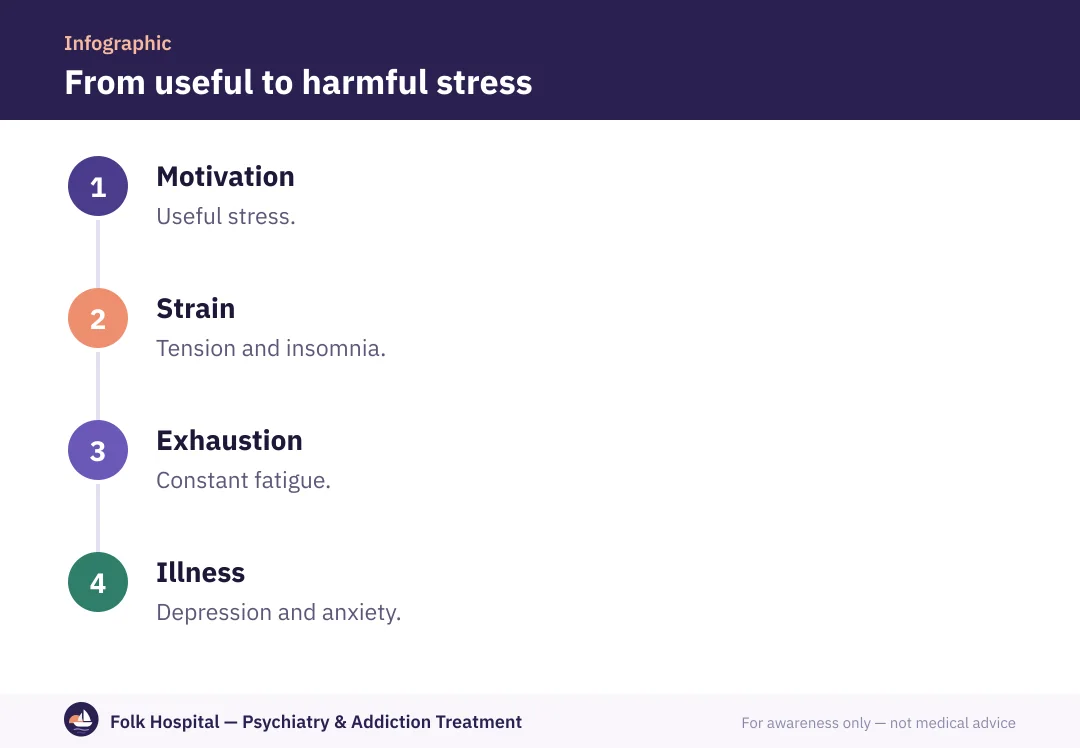
Facing stress, the body releases adrenaline and cortisol: the heart speeds up, energy rises and attention narrows. That helps with a short situation. But if stress lasts weeks or months, the body stays in emergency mode, and symptoms and harms appear.
02Helpful and harmful stress
Short-term stress
- Before an exam or interview.
- Increases focus and energy.
- Fades when the situation ends.
Chronic stress
- Lasts weeks or months.
- Exhausts body and mind.
- Causes insomnia, fatigue and health problems.
Details in stress symptoms and its causes.
03Daily skills for managing stress
- Identify the sourcewhat's really pressuring you?
- Break tasks downsmall steps and clear priorities.
- Protect your sleepregular times.
- Movewalking or exercise most days.
- Connecttalk to someone you trust.
- Breatheslow breathing or relaxation exercises.
- Cut stimulantscaffeine and screens at night.
Unhelpful ways of coping
Alcohol, sedatives, smoking and overeating may relieve briefly but worsen the problem and lead to dependence. Read causes of addiction.
04What to read next
؟Frequently asked questions
What is stress?
A state of mental and physical tension in response to a difficult situation or threat; normal in moderation, a problem when severe or chronic.
What's the difference between stress and anxiety?
Stress responds to specific external pressures and eases when they pass; pathological anxiety can persist without clear cause or out of proportion.
Is stress harmful?
Short-term stress can help; chronic stress is linked to insomnia, weaker immunity, high blood pressure and depression.
How can I reduce stress?
By organising time, sleeping enough, physical activity, connecting with people you trust, cutting caffeine and learning relaxation techniques.
When should I seek help?
When stress affects your sleep, work and relationships for a while, you turn to substances to cope, or depressive symptoms appear.
Does stress cause addiction?
It can drive the use of alcohol, sedatives or smoking to cope, raising the risk of dependence.
Sources and references
- Stress — questions and answers — World Health Organization
- Mental disorders — fact sheet — World Health Organization
- Anxiety Disorders — National Institute of Mental Health (NIMH)

A psychiatrist specialising in addiction and mental illness in adults and adolescents, with a focus on dual diagnosis.
For awareness only — not a substitute for medical advice. Editorial policy · View profile