01What is this test based on?
We wrote the questions in plain language to cover the main signs of stress that specialists ask about in an assessment. It helps you see whether you need another step.
02How to read your result
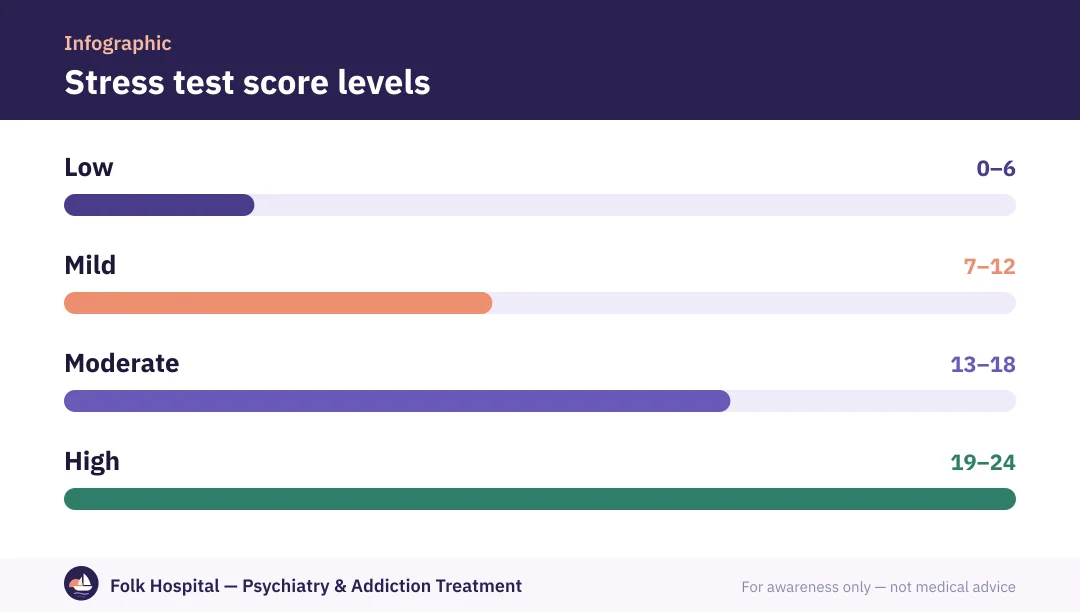
| Score | Level |
|---|---|
| 0–6 | Low |
| 7–12 | Mild |
| 13–18 | Moderate |
| 19–24 | High |
Read about stress.
03Where stress shows
| Area | Signs |
|---|---|
| Body | Headaches, muscle tension and insomnia |
| Mood | Irritability and anxiety |
| Thinking | Distraction and forgetfulness |
| Behaviour | More smoking, eating or drinking |
- Identify sourceswhat can change and what can't?
- Protect your sleepfixed times.
- Move dailyeven a short walk.
- Talk to a specialistif stress persists and affects your life.
؟Frequently asked questions
When does stress become a problem?
When it lasts for weeks and affects sleep, work and relationships, or pushes you towards substances to cope.
Does the site store my answers?
No, the score is calculated on your device and isn't sent or stored.
How is stress linked to substance use?
It increases the urge to smoke, drink or use drugs for relief.
Does stress cause physical symptoms?
Yes: headaches, muscle tension, digestive upset and insomnia.
How does stress differ from burnout?
Burnout is chronic work-related exhaustion with lost motivation.
Sources and references
- Stress — NHS (UK)
- Stress — questions and answers — World Health Organization
- Stress — Every Mind Matters — NHS (UK)

A psychiatrist specialising in addiction and mental illness in adults and adolescents, with a focus on dual diagnosis.
For awareness only — not a substitute for medical advice. Editorial policy · View profile