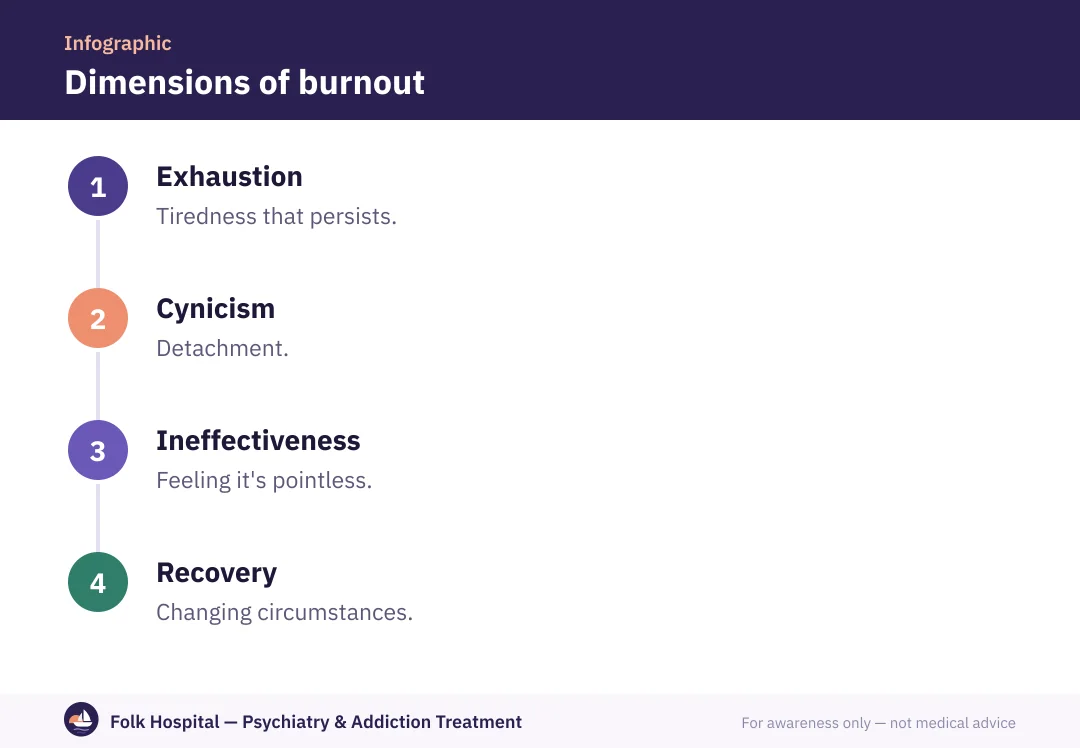
01The three dimensions
| Dimension | What happens |
|---|---|
| Exhaustion | Tiredness that rest doesn't fix |
| Distance | Negativity and cynicism about work |
| Reduced efficacy | Mistakes, slowness, loss of achievement |
Burnout
- Work-related.
- Improves away from work.
Depression
- Affects all of life.
- Doesn't improve with a holiday alone.
02Recovery steps
- Acknowledgethe exhaustion without self-blame.
- Set boundarieson working hours and contact.
- Reorganisetasks and priorities.
- Look after basicssleep, movement and food.
- Seek supportpsychological and professional.
Read also: stress, work addiction, stress test.
؟Frequently asked questions
What is burnout?
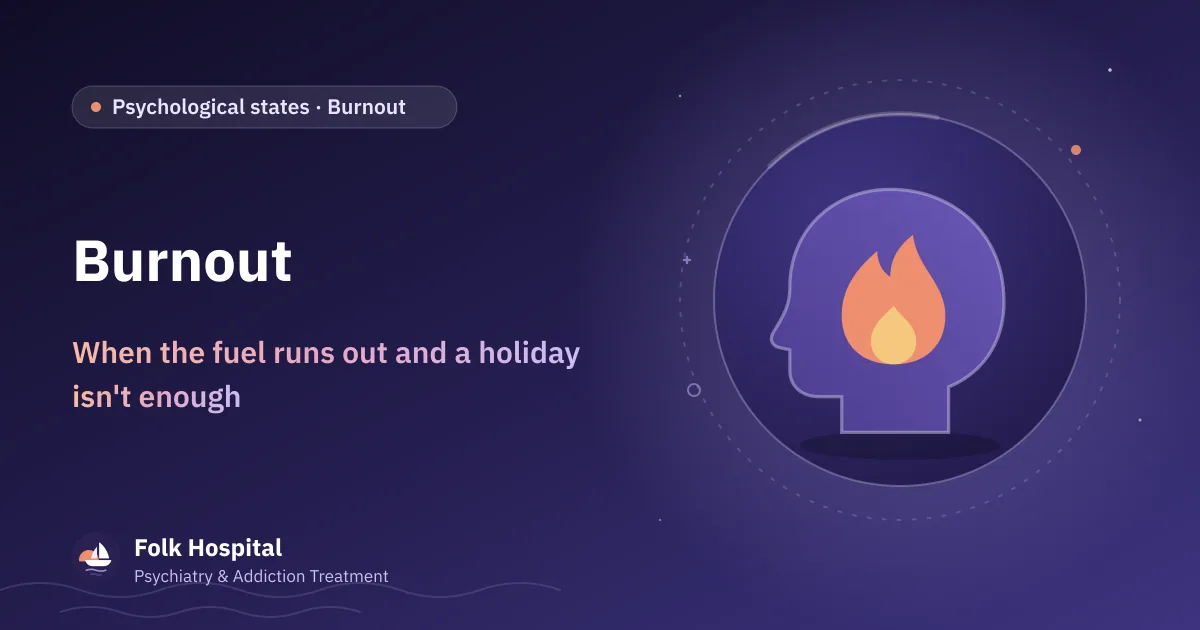
Exhaustion, distance from work and reduced efficacy resulting from chronic work stress.
Is it an illness?
The WHO classes it as an occupational phenomenon, not a medical condition.
How does it differ from depression?
Burnout is work-related; depression extends to all areas of life.
How do I recover?
Real rest, work boundaries, reorganising tasks and psychological support.
Is a holiday enough?
It helps, but returning to the same conditions usually brings it back.
Is it linked to addiction?
It can lead to using stimulants, alcohol or sedatives to cope.
Sources and references
- Burn-out an "occupational phenomenon" — World Health Organization
- Signs of Burnout — Cleveland Clinic
- Burn-out an "occupational phenomenon" — World Health Organization
- Signs of Burnout — Cleveland Clinic

A psychiatrist specialising in addiction and mental illness in adults and adolescents, with a focus on dual diagnosis.
For awareness only — not a substitute for medical advice. Editorial policy · View profile