01Normal stress and problem stress
Stress is a natural reaction to pressure, and it sometimes helps us get things done. But it becomes a problem when it persists or exceeds our ability to cope, affecting sleep, the body and relationships. Read about the symptoms of stress and its causes.
02Practical steps for handling stress
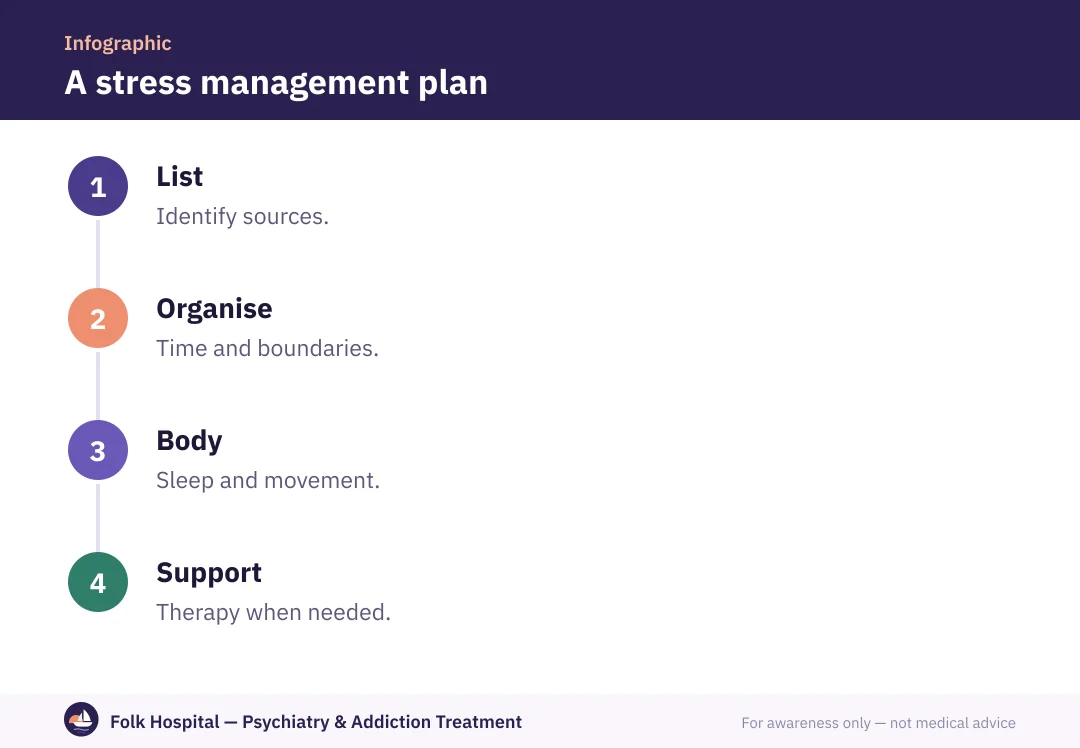
- Identify the sourceswrite down what's pressing on you and split it into what can and can't be changed.
- Deal with what can changeset priorities, break tasks down and learn to say no.
- Organise sleepfixed times, and less screen time and caffeine in the evening.
- Move dailyhalf an hour of brisk walking on most days.
- Breathe slowlyin for 4 seconds and out for 6 for a few minutes.
- Connecttalk to someone you trust and don't isolate yourself.
03Psychological therapy
Cognitive behavioural therapy helps you notice thoughts that magnify pressure, such as «everything has to be perfect» or «the worst will surely happen», and replace them with more realistic ones, while learning problem-solving and relaxation. Read about cognitive behavioural therapy.
04What to avoid
Fixes that make things worse
Turning to sedatives, alcohol or cannabis to ease stress gives temporary relief but can lead to dependence and more anxiety later. Read about sedative addiction.
05When do you need a doctor?
- Constant stress for weeks that disrupts your life.
- Ongoing insomnia or repeated physical symptoms.
- Panic attacks or constant sadness.
- Turning to substances or sedatives to calm down.
- Thoughts of self-harm, in which case seek help immediately: 08008880700.
Stress may be the start of generalised anxiety or depression. Read about the harms of stress.
؟Frequently asked questions
What's the fastest way to calm stress?
Slow breathing: in for 4 seconds and out for 6 for a few minutes, which calms the nervous system quickly.
When does stress become a problem that needs a doctor?
When it lasts weeks and affects sleep, work or relationships, or comes with panic attacks, constant sadness or turning to sedatives or substances.
Are there medicines for stress?
Ordinary stress doesn't need medicines. But if generalised anxiety or depression is found, the doctor may prescribe suitable treatment, avoiding dependence on sedatives.
Does exercise help with stress?
Yes. Regular movement such as brisk walking lowers stress hormones and improves sleep and mood.
Sources and references
- Anxiety Disorders — National Institute of Mental Health (NIMH)
- Mental disorders — fact sheet — World Health Organization
- Psychotherapies — National Institute of Mental Health (NIMH)

A psychiatrist specialising in addiction and mental illness in adults and adolescents, with a focus on dual diagnosis.
For awareness only — not a substitute for medical advice. Editorial policy · View profile