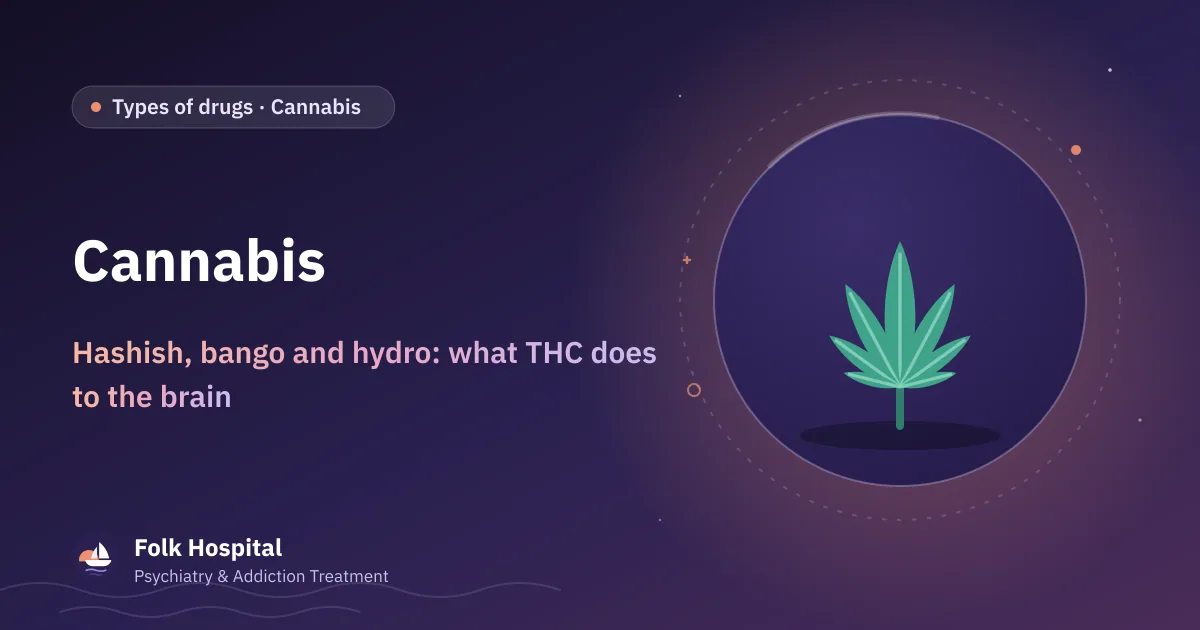
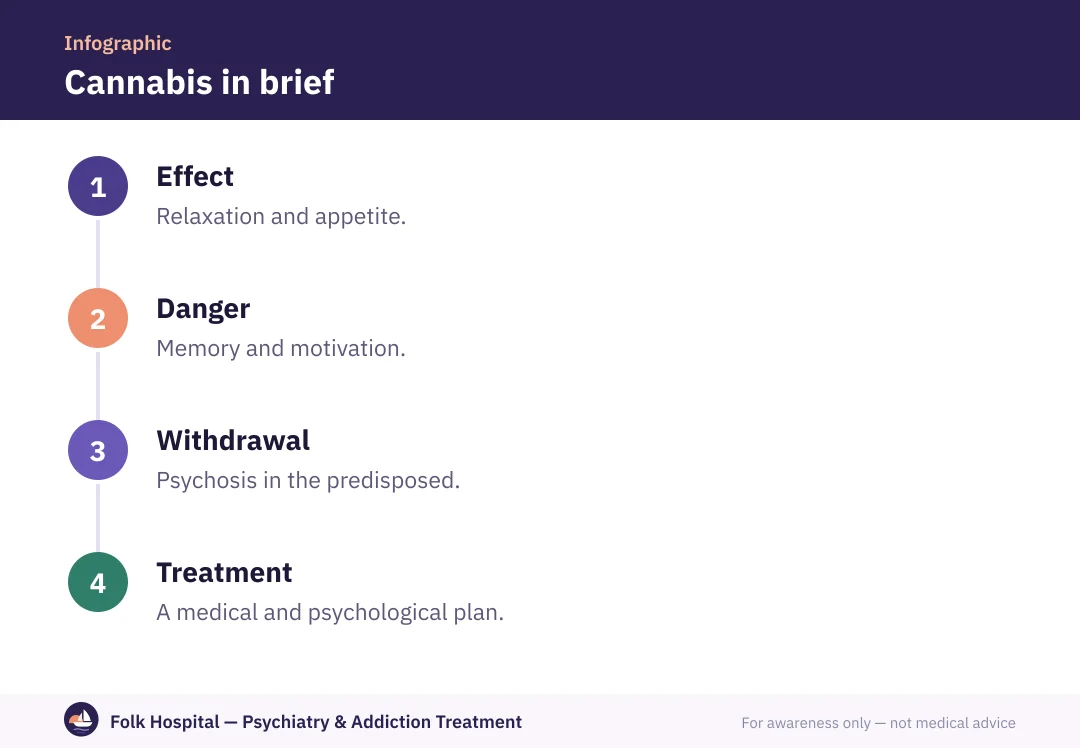
Many people believe hashish is «natural» and not addictive, one of the most widespread myths. It's true that a fatal dose is very far away, but dependence is common, and its effects on memory, motivation and mental health are real, especially with modern high-potency strains.
01How do cannabis products affect the brain?
The brain has a natural system called the endocannabinoid system, which regulates mood, memory, appetite and pain. THC mimics this system's natural messengers, binding to CB1 receptors more strongly and for longer, which changes the sense of time, weakens short-term memory and indirectly raises dopamine. With repeated use the number of responsive receptors falls, so sleep and calm become hard without the drug. The teenage brain is still maturing, which makes it more vulnerable.
02The best-known substances in this group
| Substance | Common form | What sets it apart |
|---|---|---|
| Hashish | Brown pieces, smoked with tobacco | Cannabis resin; potency varies widely |
| Bango | Dried leaves and flowers | Usually the least potent form |
| Hydro | Hydroponically grown flowers | Much higher THC content |
| CBD | Oils and products | Not intoxicating; product quality varies |
03Signs you may notice in someone using them
Common signs
- Red eyes and a distinctive smell on clothes.
- Laughing for no reason or drifting off.
- Sudden hunger and heavy eating.
- Slow reactions and forgetfulness.
- Losing interest in study or work.
- Irritability and insomnia when not using.
04Health and mental-health risks
- Poorer memory, concentration and school performance.
- Panic attacks and anxiety, especially at high doses.
- Psychosis: suspicion and hallucinations, with higher risk after early use and a family history.
- Cyclical vomiting syndrome with long daily use.
- Chest problems from smoking it with tobacco.
- Road accidents from slowed reactions.
- Chest pain or severe palpitations.
- Hallucinations or intense suspicion with a risk of harm.
- Repeated vomiting that won't stop, with dehydration.
A panic attack after hashish is frightening but usually settles within hours. Stay with the person somewhere quiet, and call an ambulance if heart symptoms or psychosis appear.
Ambulance: 12305What is withdrawal like?
Cannabis withdrawal usually appears one to three days after stopping, peaks in the first week and eases within about two weeks; poor sleep and vivid dreams can last longer.
- First daysirritability, anxiety, insomnia and poor appetite.
- First weekthe peak, with vivid dreams, mood swings and cravings.
- Second week onwardsgradual improvement, though insomnia and cravings may linger in certain situations.
06How does treatment differ?
There's no approved medicine for cannabis addiction itself, but psychological treatment works: cognitive behavioural therapy, motivational interviewing and contingency management, along with treatment of related insomnia and anxiety. If psychosis appears, the person needs an urgent psychiatric assessment. Read hashish addiction treatment and hashish withdrawal.
07Read also
؟Frequently asked questions
Is hashish addictive?
Yes, it can cause real dependence. Research bodies estimate that a notable share of regular users develop cannabis use disorder, and the risk rises with early and daily use.
What's the difference between hashish, bango and hydro?
All come from the cannabis plant. Hashish is pressed resin, bango is dried leaves and flowers, and hydro is flowers grown in ways that make THC far more concentrated.
Can hashish cause madness?
It can cause psychosis, especially in teenagers, people with a family history of psychotic illness, and with high-potency strains. Not every user is affected, but the risk is real.
Is CBD a drug?
CBD doesn't cause a high and isn't a drug in the usual sense, but some products contain THC that isn't listed on the label.
How long does hashish withdrawal last?
It starts within one to three days, peaks in the first week and eases within about two weeks; sleep problems can last longer.
Does hashish have medical benefits?
Some cannabis compounds have specific prescribed medical uses under supervision, which is entirely different from smoking street hashish of unknown strength and content.
Sources and references
- Cannabis (Marijuana) — research topic — National Institute on Drug Abuse (NIDA)
- Drugs, Brains, and Behavior: The Science of Addiction — National Institute on Drug Abuse (NIDA)
- Commonly Used Drugs Charts — National Institute on Drug Abuse (NIDA)
- Psychosis — NHS (UK)

A psychiatrist specialising in addiction and mental illness in adults and adolescents, with a focus on dual diagnosis.
For awareness only — not a substitute for medical advice. Editorial policy · View profile