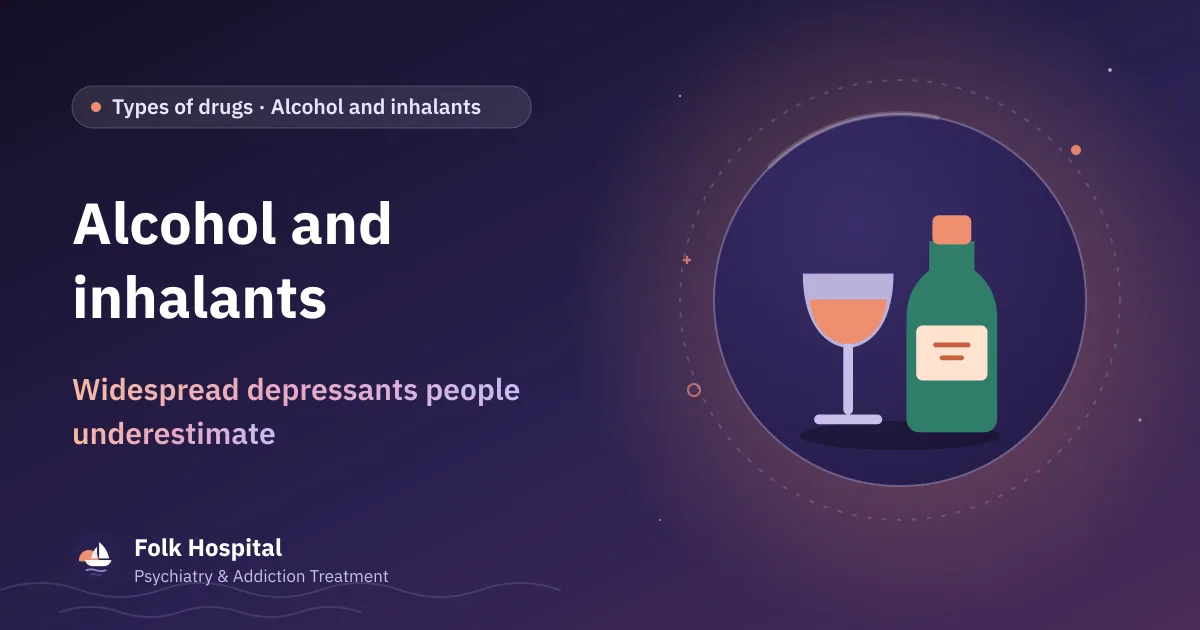
We group alcohol and inhalants together because they share two things: both slow the brain, and both are easy to get, so neither is seen as a «real» drug. Yet alcohol is among the most harmful substances to the body and the family, and inhalants are among the most dangerous things children experiment with.
01How do alcohol and inhalants affect the brain?
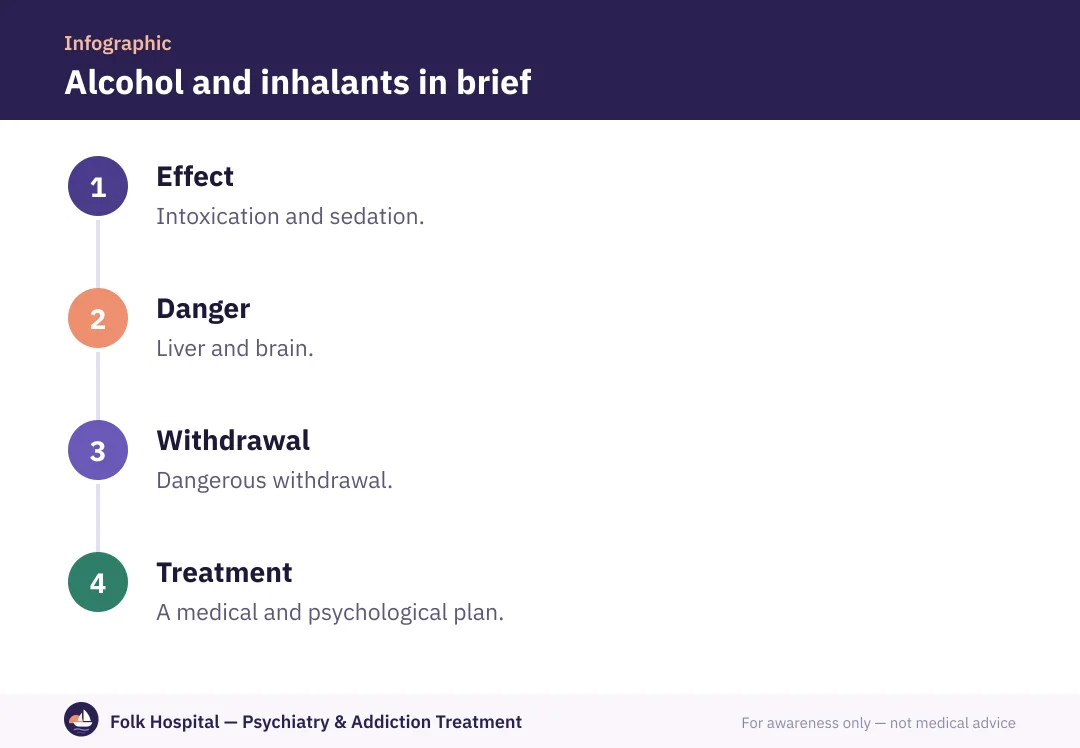
Alcohol boosts GABA and dampens glutamate, slowing the brain and causing relaxation, then loss of balance and control. With regular drinking the brain adapts by increasing glutamate activity, so if drinking stops suddenly the brain becomes over-excited: tremor, sweating and anxiety, and possibly seizures and delirium. Inhalants are solvents and gases that reach the brain within seconds through the lungs, causing dizziness and a brief high, and they make the heart sensitive to adrenaline, so it may suddenly stop with fright or running, known as sudden sniffing death.
02The best-known substances in this group
| Substance | Common form | What sets it apart |
|---|---|---|
| Alcohol | Beer, wine and spirits | Physical dependence and potentially fatal withdrawal |
| Inhalants | Glue, petrol, aerosols and gases | Cheap and available, with immediate heart danger |
| Methanol poisoning | Contaminated alcohol | Causes blindness and death |
03Signs you may notice in someone using them
Common signs
- A smell of alcohol or solvents on the breath or clothes.
- Unsteadiness and slurred speech.
- Paint or glue marks around the mouth and nose with inhalants.
- Red eyes and a runny nose.
- Irritability and mood swings.
- Household items such as aerosols and lighters going missing.
04Health and mental-health risks
- Liver disease: fatty liver, then hepatitis, then cirrhosis.
- Pancreatitis, high blood pressure and heart disease.
- Memory loss and brain damage with long use.
- Accidents and domestic violence.
- With inhalants: sudden death, suffocation, and nerve, kidney and liver damage.
- Methanol poisoning from contaminated alcohol.
- Unconsciousness or slow breathing.
- Seizures or hallucinations after stopping alcohol.
- Blurred vision after drinking alcohol of unknown origin.
- Collapse while inhaling.
Don't force the person to vomit; put them on their side. With inhalants, don't startle or chase them, because fear can stop the heart.
Ambulance: 12305What is withdrawal like?
Alcohol withdrawal starts within hours of the last drink in heavy, regular drinkers. Most cases are mild to moderate, but some progress to seizures or delirium tremens needing hospital care. Inhalant withdrawal is usually milder: irritability, insomnia and cravings.
- 6–24 hourstremor, sweating, anxiety, nausea and palpitations.
- 12–48 hoursseizures or hallucinations may occur in some patients.
- 48–96 hoursrisk of delirium tremens, an emergency needing hospital care.
06How does treatment differ?
Alcohol treatment starts by assessing how severe the dependence is, then medical detox with medicines that prevent seizures, plus vitamin B1 to protect the brain. After detox, there are medicines that reduce cravings, chosen by the doctor, alongside psychological and family rehabilitation. With inhalants, treatment focuses on the child or teenager, their family and their environment. Read alcohol addiction treatment and alcohol withdrawal.
07Read also
؟Frequently asked questions
Is alcohol a drug?
Yes. Alcohol is a central nervous system depressant that causes dependence, and its harms are among the largest health and social harms worldwide, even though it's legal in many countries.
Is alcohol withdrawal dangerous?
It can be in long-term heavy drinkers, because it may cause seizures or delirium tremens. These people need medical detox, not a sudden stop at home.
What are inhalants?
Household or industrial products whose fumes are inhaled, such as glue, petrol, paint thinners, lighter gas and aerosols.
Why are inhalants dangerous for children?
They're cheap and available, can cause sudden cardiac arrest or suffocation even the first time, and damage the brain and nerves with repeated use.
How can I tell if my child is using inhalants?
A solvent smell on the breath or clothes, marks around the mouth and nose, soaked bags or rags, missing aerosols or lighters, with dizziness or behaviour changes.
Is there medicine for alcohol addiction?
Yes. There are medicines that help reduce cravings or prevent relapse, prescribed after detox, and they work best with psychological rehabilitation.
Sources and references
- Alcohol — fact sheet — World Health Organization
- Alcohol — research topic — National Institute on Drug Abuse (NIDA)
- Inhalants — research topic — National Institute on Drug Abuse (NIDA)
- Alcohol withdrawal — U.S. National Library of Medicine — MedlinePlus

A psychiatrist specialising in addiction and mental illness in adults and adolescents, with a focus on dual diagnosis.
For awareness only — not a substitute for medical advice. Editorial policy · View profile