- ADHD is a difference in how the brain regulates attention, activity and impulses.
- It continues into adulthood for a large share of children.
- Adults usually struggle more with distraction and disorganisation than hyperactivity.
- Medication and behavioural treatment are effective.
- Untreated ADHD raises the risk of addiction and accidents.
01The three presentations
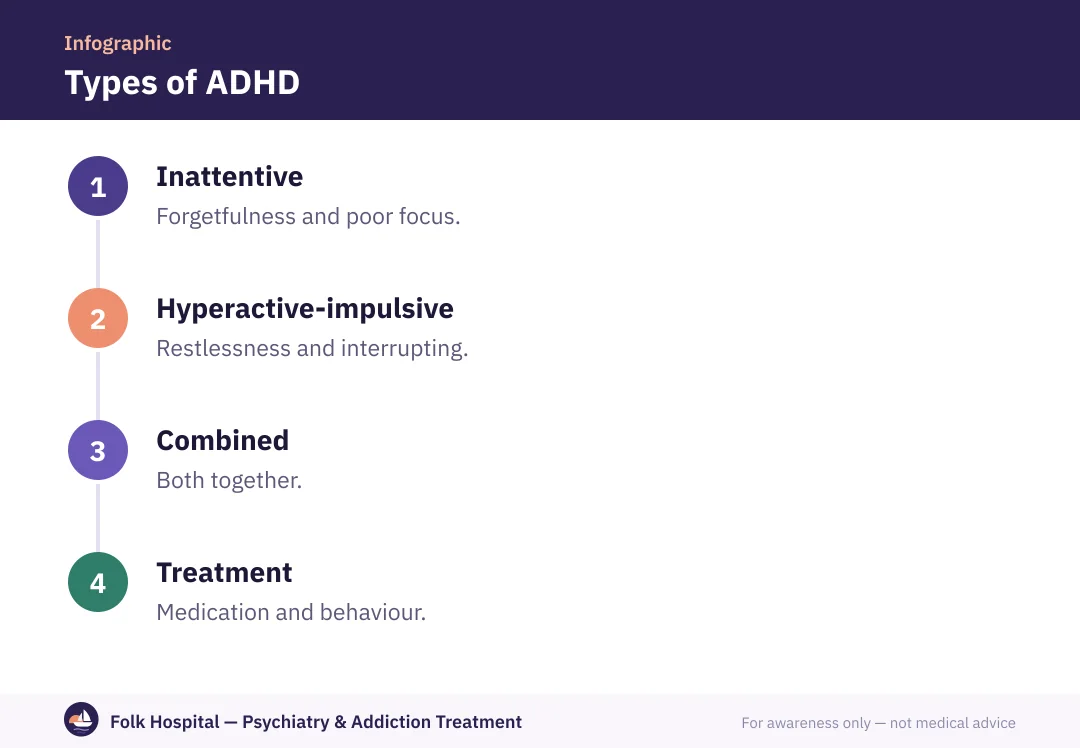
| Presentation | Dominant symptoms |
|---|---|
| Inattentive | Forgetfulness, losing things, difficulty focusing and organising |
| Hyperactive-impulsive | Constant movement, interrupting, not waiting one's turn |
| Combined | Both together |
Details in ADHD symptoms.
02In children and adults
Children
- Excess movement and difficulty staying seated.
- Distraction in class and forgotten homework.
- Impulsivity and interrupting.
Adults
- Distraction, procrastination and disorganisation.
- Inner restlessness instead of visible movement.
- Impulsive decisions, spending and driving.
03Treatment
- Accurate diagnosisassessing symptoms in more than one setting and excluding other conditions.
- Family educationunderstanding the disorder instead of blaming.
- Behavioural treatmentparent training for children, CBT for adults.
- Medicationstimulants or non-stimulants depending on the case, under supervision. Read Ritalin.
- Academic and work supportorganising the environment and tasks.
Medicines without a prescription
Stimulant ADHD medicines are misused to stay awake and study. Using them without diagnosis and prescription is dangerous and can cause dependence and heart problems.
04What to read next
؟Frequently asked questions
What is ADHD?
A neurodevelopmental disorder with inattention, hyperactivity-impulsivity or both, starting in childhood and affecting daily functioning.
Does ADHD affect adults?
Yes. It continues into adulthood for many and may be diagnosed for the first time later in life.
Is ADHD caused by bad parenting?
No. It has a strong neurological and genetic basis, though environment affects symptom severity.
Do ADHD medicines cause addiction?
Used at the prescribed dose under supervision, the risk is low, and treatment reduces addiction risk in people with ADHD.
How is ADHD different from normal childhood activity?
Normal activity doesn't persistently disrupt study and relationships; ADHD symptoms are severe, persistent and present in more than one setting.
Is ADHD curable?
Symptoms may lessen with age in some, and treatment helps manage them successfully.
Sources and references
- Attention-Deficit/Hyperactivity Disorder — National Institute of Mental Health (NIMH)
- Mental Health Medications — National Institute of Mental Health (NIMH)

A psychiatrist specialising in addiction and mental illness in adults and adolescents, with a focus on dual diagnosis.
For awareness only — not a substitute for medical advice. Editorial policy · View profile