01Prevention is a way of life
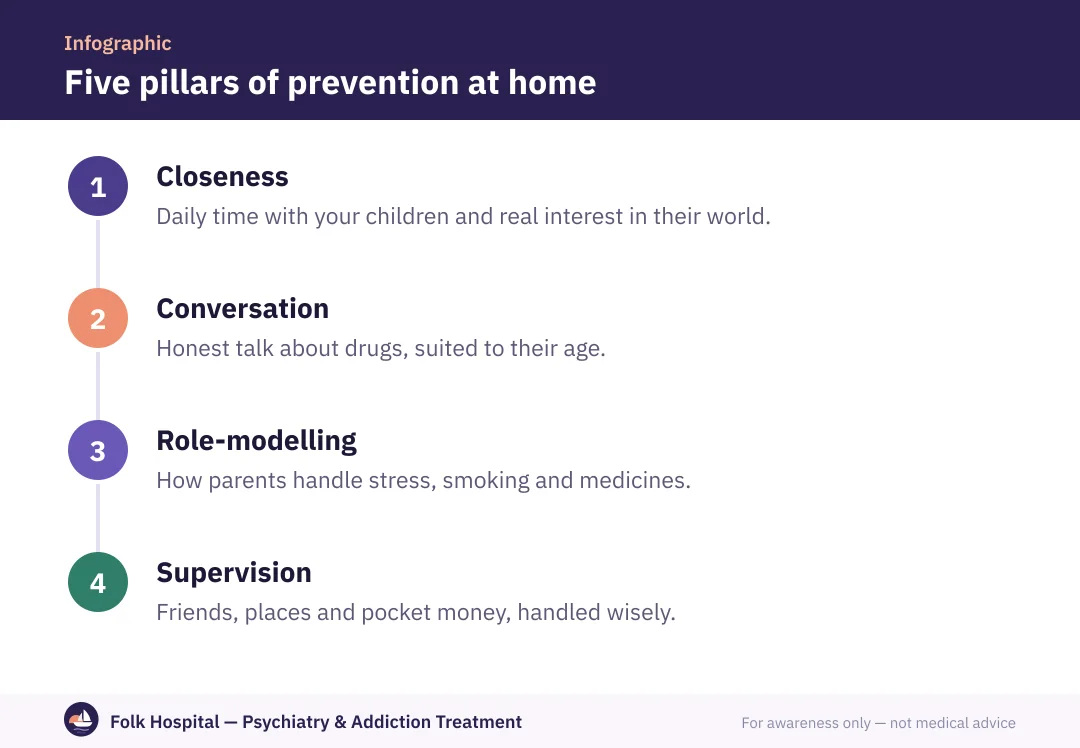
International prevention standards stress that effective programmes don't rely on a single lecture, but on skills and a supportive environment that last for years. The home is the first line of defence.
02Protective and risk factors
| Protective factors | Risk factors |
|---|---|
| A close relationship with parents | Ongoing family conflict or neglect |
| Open, honest conversation | Secrecy and scare tactics without information |
| Smart supervision of friends and money | No supervision |
| Refusal and coping skills | Friends who use |
| Sport and hobbies | Idleness and boredom |
| Early treatment of anxiety and depression | Untreated mental disorders |
03Practical steps at home
- Daily time to talkwithout lectures or judgement.
- Honest informationabout drugs and their harms, suited to their age.
- Refusal practiceready phrases such as «No, it's not for me».
- Get to know their friendsand invite them home.
- Clear boundariesknown curfews and pocket money.
- Role modelsparents' behaviour with smoking and medicines.
- Watch mental healthdon't ignore anxiety, sadness and isolation.
04Prevention by age
| Age | Focus |
|---|---|
| Early childhood | A secure relationship and learning about safe medicines |
| Primary school | Skills for saying no and expressing feelings |
| Adolescence | Frank talk about drugs, smoking, vaping and peer pressure |
Read about teenagers and drugs, psychological changes in teenagers and the signs of drug use.
؟Frequently asked questions
When should I talk to my children about drugs?
Early and in a way suited to their age, then the conversation repeats as they grow. It's better they hear it from you before they hear it on the street.
Does scaring them prevent drug use?
Exaggerated scare tactics alone usually aren't enough and can cost parents credibility. Honest information with refusal skills and a close relationship works better.
Does strict monitoring protect my son?
Supervision matters, but strictness without a warm relationship can push him into secrecy. Balancing closeness and boundaries works best.
What are the main risk factors?
A family history of addiction, anxiety, depression and ADHD, friends who use, weak supervision and starting smoking early.
Sources and references
- International Standards on Drug Use Prevention — United Nations Office on Drugs and Crime (UNODC)
- Parents & Educators — National Institute on Drug Abuse (NIDA)
- Drugs, Brains, and Behavior: The Science of Addiction — National Institute on Drug Abuse (NIDA)
A specialist in psychological rehabilitation, behaviour modification and relapse prevention, with over 15 years in addiction programmes.
For awareness only — not a substitute for medical advice. Editorial policy · View profile