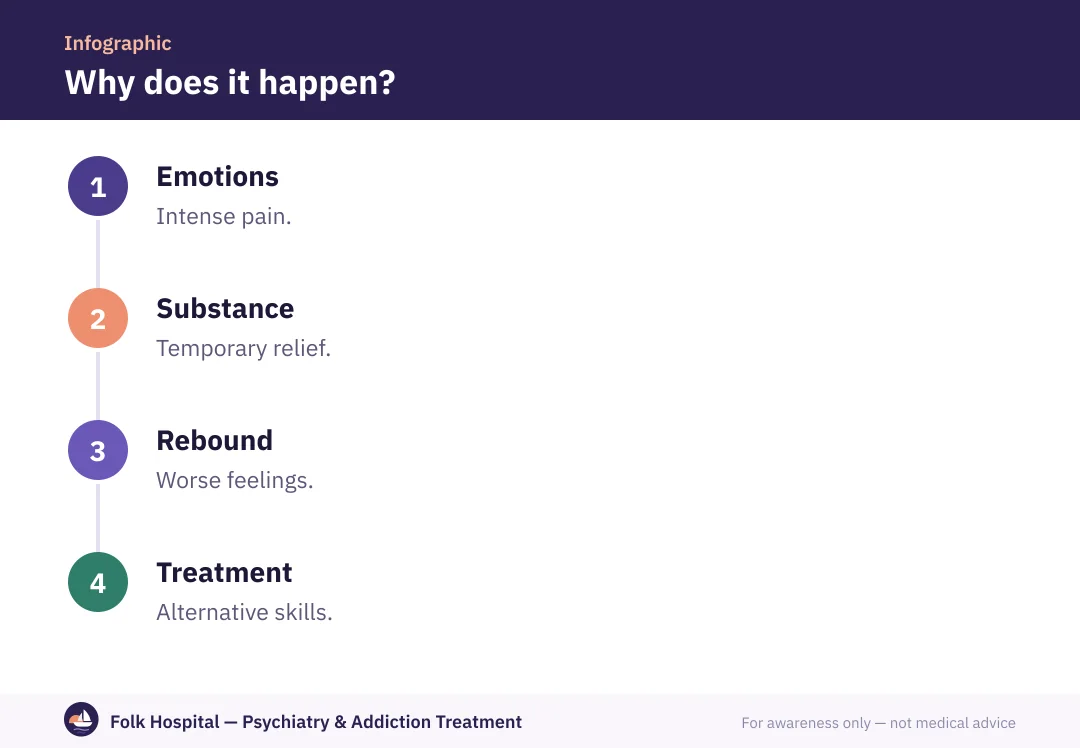
01The cycle of pain and numbing
- A triggeran argument, feeling rejected, or emptiness.
- Intense emotional painanger, fear or despair.
- Quick numbingalcohol, a sedative or hashish.
- Temporary reliefthen regret and shame.
- Repetitionthe substance becomes the only way to calm down.
02Substances and risks
| Substance | Why it's used | Particular risk |
|---|---|---|
| Alcohol | Calming anger and anxiety | Impulsivity and self-harm |
| Sedatives | Fast calm | Dependence; overdose with alcohol |
| Hashish | Easing tension | Anxiety and suspicion with continued use |
| Opioids | Numbing emotional pain | Overdose |
03Integrated treatment
What usually doesn't work
- Addiction treatment without emotion-regulation skills.
- BPD treatment with ongoing use.
- Long-term sedatives instead of therapy.
What works
- Dialectical behaviour therapy with addiction treatment.
- Safe detox if there's dependence.
- Alternative distress-tolerance skills.
- A clear crisis plan.
- Suicidal thoughts or plans, or self-harm.
- Taking a large dose of a medicine or substance.
- Intense anger with risk to self or others.
Mental health hotline: 08008880700.
Ambulance: 123Read dual diagnosis, borderline personality and self-harm.
؟Frequently asked questions
Why is addiction linked to BPD?
Substances quickly relieve emotional pain, emptiness and anxiety, and impulsivity makes starting and continuing easier.
Which substances are most used?
Alcohol, sedatives and hashish, sometimes opioids and stimulants.
Are sedatives dangerous for people with BPD?
They can cause dependence and increase impulsivity in some, and are more dangerous with alcohol, so medication is used cautiously.
Can both be treated together?
Yes, and that's best; there's a DBT approach designed for people with both BPD and addiction.
Do substances raise suicide risk?
Yes. They increase impulsivity and despair and provide a means of overdose.
What can the family do?
Encourage integrated treatment, remove medicines and substances, know the warning signs, and get support for themselves.
Sources and references
- Borderline Personality Disorder — National Institute of Mental Health (NIMH)
- Personality disorder — NHS (UK)
- Psychotherapies — National Institute of Mental Health (NIMH)
- Comorbidity: Substance Use and Other Mental Disorders — National Institute on Drug Abuse (NIDA)

A psychiatrist specialising in addiction and mental illness in adults and adolescents, with a focus on dual diagnosis.
For awareness only — not a substitute for medical advice. Editorial policy · View profile