01What is this test based on?
We wrote the questions in plain language to cover the main signs of borderline personality traits that specialists ask about in an assessment. It helps you see whether you need another step.
02How to read your result
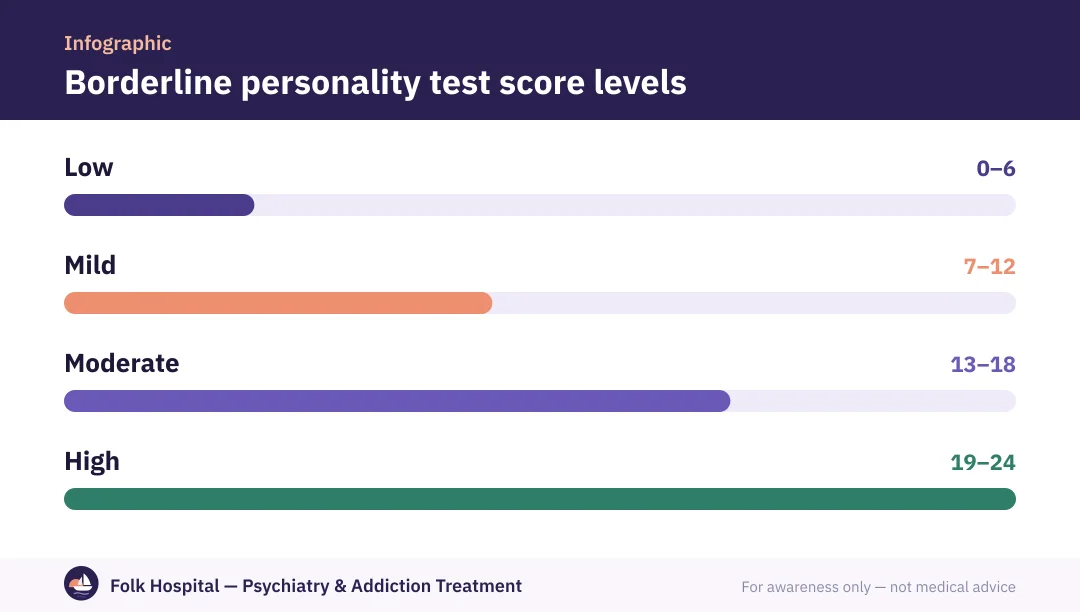
| Score | Level |
|---|---|
| 0–6 | Low |
| 7–12 | Mild |
| 13–18 | Moderate |
| 19–24 | High |
Read about borderline personality.
03Traits a specialist asks about
| Area | Example |
|---|---|
| Emotions | Intense swings within hours |
| Relationships | Shifting between attachment and rejection |
| Self-image | An unclear sense of identity |
| Impulsivity | Spending, substance use or reckless driving |
| Emptiness | A chronic feeling of emptiness |
- Don't label yourselfthe result is only an indicator.
- Note situationswhen emotions became overwhelming.
- Find a specialist therapistin dialectical behaviour therapy.
- Get help immediatelyif you have thoughts of self-harm.
- Suicidal thoughts or intent to harm yourself or others.
- Losing touch with reality or severe agitation.
In Egypt call the ambulance on 123 or the mental-health hotline 08008880700.
Ambulance: 123؟Frequently asked questions
Can borderline personality be treated?
Yes, it responds well to psychotherapy such as dialectical behaviour therapy, and many people improve over time.
Does the site store my answers?
No, the score is calculated on your device and isn't sent or stored.
Is borderline personality disorder treatable?
Yes. Specialised psychological therapies improve symptoms greatly.
How is it linked to trauma?
Many people affected have had difficult experiences, but it isn't required.
How is it linked to addiction?
Impulsivity and emotional swings raise substance-use risk.
Is the test suitable for teenagers?
Assessing teenagers needs a specialist as personality is still forming.
Sources and references
- Borderline Personality Disorder — National Institute of Mental Health (NIMH)
- Personality disorder — NHS (UK)

A psychiatrist specialising in addiction and mental illness in adults and adolescents, with a focus on dual diagnosis.
For awareness only — not a substitute for medical advice. Editorial policy · View profile