01Harms of manic episodes
What can happen during mania
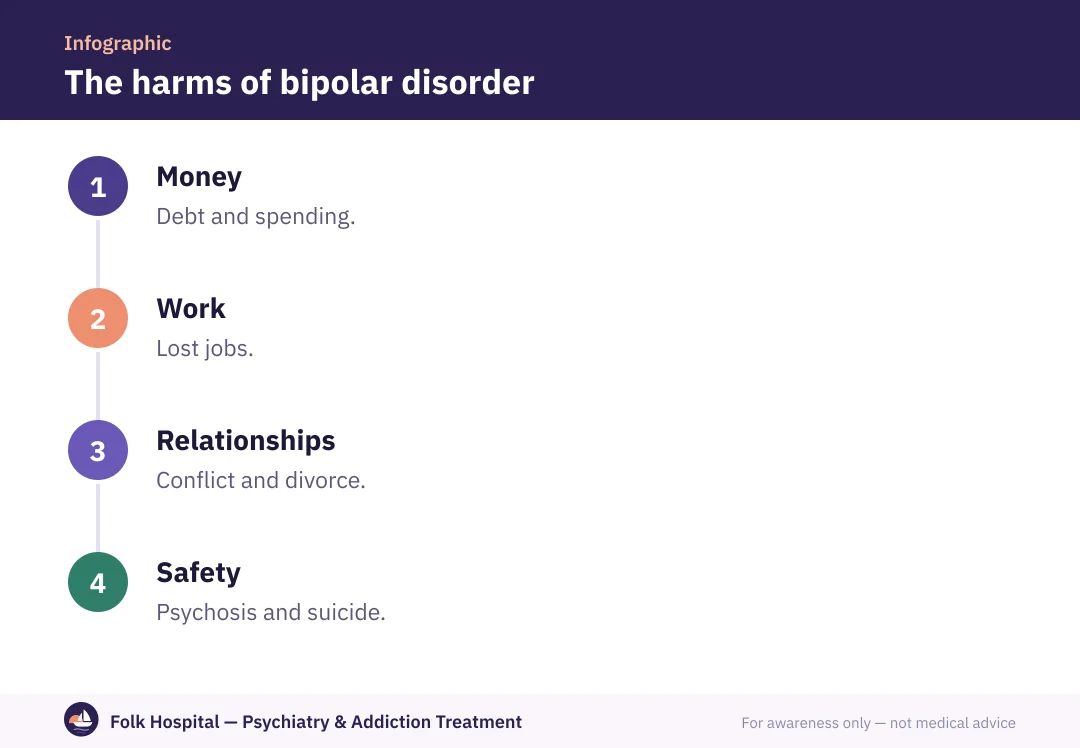
- Heavy spending, debts and loans.
- Quitting work or hasty career decisions.
- Reckless relationships or sexual behaviour.
- Fights and legal problems.
- Reckless driving and accidents.
02Long-term harms
| Area | Possible harm |
|---|---|
| Life | High suicide risk, especially in depression and mixed episodes |
| Family | Conflict, divorce and loss of trust |
| Money and work | Debts and job loss |
| Substances | Addiction to alcohol, stimulants or hashish |
| Brain | Concentration and memory problems with repeated episodes |
| Body | Heart disease and diabetes linked to lifestyle, medicines and smoking |
- Suicidal thoughts or plans.
- Severe mania with days of little sleep and risky decisions.
- Psychosis or agitation with risk to self or others.
Mental health hotline: 08008880700.
Ambulance: 12303How to reduce the harms
- A mood stabiliser taken regularlyreduces episodes and their severity.
- A plan for early signspoor sleep, spending or withdrawal.
- Financial protectionan advance agreement with a trusted person on spending limits during episodes.
- Avoiding drugs and alcohol.
- Physical monitoringweight, blood sugar, kidney and thyroid function with some medicines.
Read bipolar disorder, its treatment and supporting someone with bipolar disorder.
؟Frequently asked questions
What are the harms of untreated bipolar disorder?
Repeated episodes, financial and career losses, family problems, addiction, high suicide risk, and declining concentration and memory over time.
Is bipolar disorder dangerous?
It can be without treatment, especially through suicide and reckless decisions, but it's managed successfully with treatment.
Do episodes affect memory?
Repeated episodes may be linked to concentration and memory problems; early treatment reduces this.
How does mania harm the family?
Debts and spending, conflict, sometimes infidelity or reckless relationships, and loss of trust.
Does bipolar disorder affect work?
It can cause absences, conflict or hasty career decisions, but many people work successfully with treatment.
How can these harms be prevented?
Through regular treatment, knowing early signs, a financial and family emergency plan, and avoiding drugs.
Sources and references
- Bipolar Disorder — National Institute of Mental Health (NIMH)
- Bipolar disorder — fact sheet — World Health Organization

A psychiatrist specialising in addiction and mental illness in adults and adolescents, with a focus on dual diagnosis.
For awareness only — not a substitute for medical advice. Editorial policy · View profile