01Comparing the types
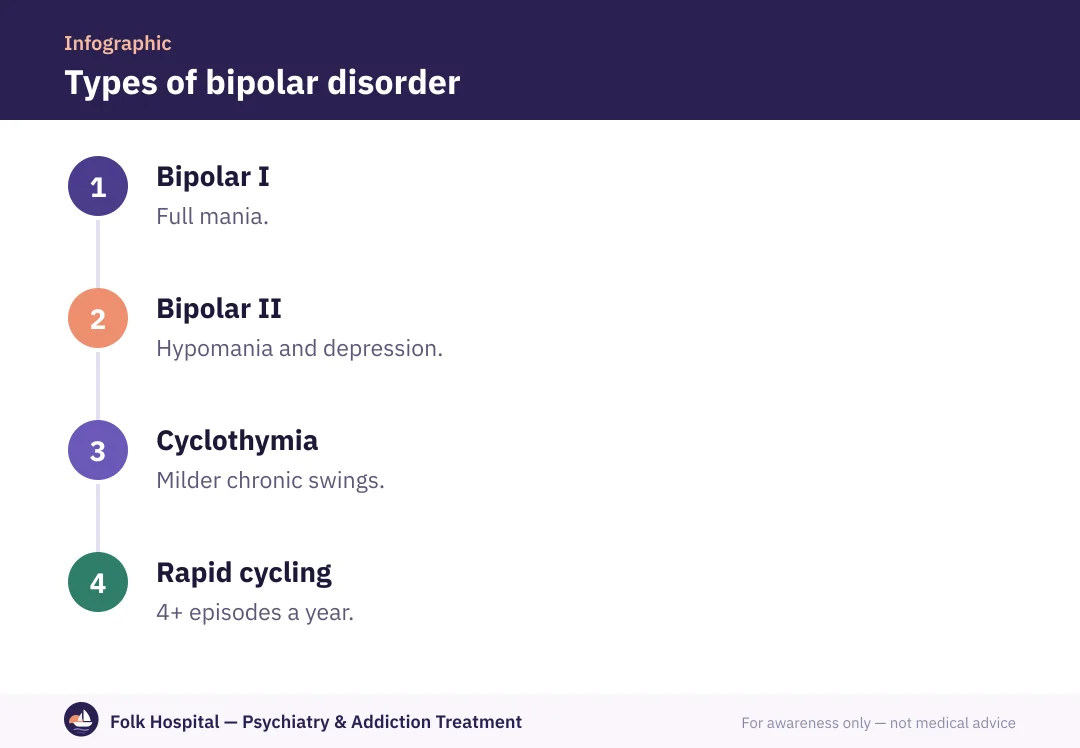
| Type | Highs | Depressive episodes | Note |
|---|---|---|---|
| Bipolar I | Full mania (a week or more, or needing hospital) | Common but not required | May include psychosis |
| Bipolar II | Hypomania only (4 days or more) | At least one major depressive episode | Often misdiagnosed as depression |
| Cyclothymia | Mild hypomanic symptoms | Mild depressive symptoms | Lasts at least two years |
02Special patterns
Patterns needing attention
- Rapid cycling: four or more episodes a year.
- Mixed episodes: manic and depressive symptoms together, with higher suicide risk.
- With psychotic features: hallucinations or delusions during an episode.
- Postpartum onset: an episode within weeks of birth, needing urgent treatment.
- Substance- or medicine-related: episodes after stimulants, steroids or antidepressants.
03Why the type matters
It affects
- Choosing the right mood stabiliser.
- Caution with antidepressants.
- Anticipating future episodes.
- The relapse-prevention plan.
Common mistakes
- Treating type II as depression with antidepressants alone.
- Ignoring hypomania as «just energy».
- Dismissing cyclothymia as a «moody temperament».
- Suicidal thoughts or plans, especially in depressive or mixed episodes.
- Severe mania with days of little sleep and risky decisions.
- Psychosis or agitation with risk to self or others.
Mental health hotline: 08008880700.
Ambulance: 123Read bipolar disorder, its symptoms, its diagnosis and mood swings.
؟Frequently asked questions
What are the types of bipolar disorder?
Bipolar I, bipolar II and cyclothymia, plus forms linked to substances or other illnesses.
What's the difference between type I and II?
Type I involves a full manic episode; type II involves only hypomania with major depressive episodes.
Is type II milder than type I?
Not necessarily. Its highs are milder, but depression may be longer and more frequent, and suicide risk is real.
What is cyclothymia?
Fluctuation between mild hypomanic and mild depressive symptoms for at least two years, without full episodes.
What is rapid cycling?
Four or more mood episodes in a year, needing special assessment of causes and treatment.
Can the type change over time?
It can: someone with type II or cyclothymia may later have a full manic episode.
Sources and references
- Bipolar Disorder — National Institute of Mental Health (NIMH)
- Bipolar disorder — fact sheet — World Health Organization

A psychiatrist specialising in addiction and mental illness in adults and adolescents, with a focus on dual diagnosis.
For awareness only — not a substitute for medical advice. Editorial policy · View profile