01The aims of treatment
Bipolar disorder causes episodes of mania or hypomania and depression, with periods in between that can be stable. Treatment has three aims: controlling the current episode, preventing future episodes, and restoring normal life at work and at home. Read about the symptoms of bipolar disorder and its types.
02Medication: the cornerstone
| Type | Examples | Notes |
|---|---|---|
| Mood stabilisers | Lithium, valproate, lamotrigine | Lithium needs regular level, kidney and thyroid tests; valproate is avoided in pregnancy |
| Modern antipsychotics | Several, chosen by the doctor | Help in mania, and some in bipolar depression |
| Antidepressants | Used cautiously and only with a mood stabiliser | Alone they can trigger mania |
Don't stop medication on your own
Stopping medication suddenly on feeling better is one of the commonest causes of relapse and can bring a more severe episode. Any change is made with the doctor.
Read about psychiatric medicines.
03Psychological therapy and education
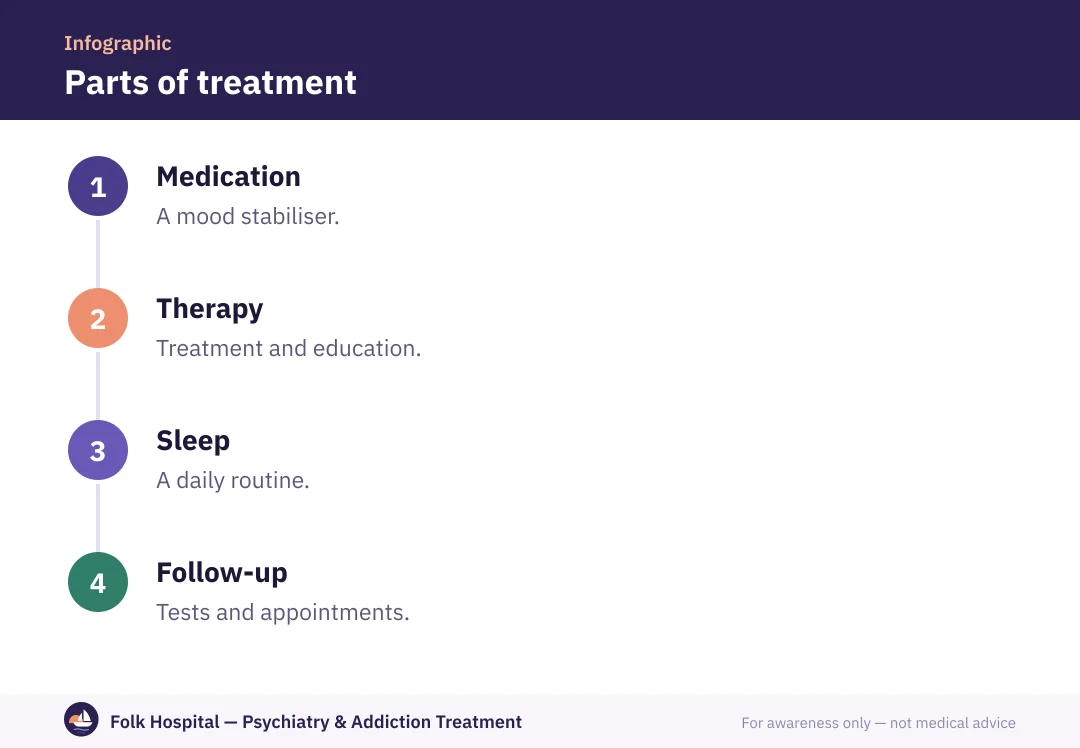
Medication alone isn't enough. Alongside it, these help:
- Psychoeducation: understanding the illness, early warning signs and why adherence matters.
- Cognitive behavioural therapy: for depression, thoughts and stress.
- Regulating daily rhythm and sleep: because disturbed sleep is one of the strongest triggers of episodes.
- Family therapy: helping the family support and spot signs without conflict.
04Early warning signs
Signs of mania starting
- Needing less sleep, with extra energy.
- Talking more and racing thoughts.
- Impulsive spending or reckless decisions.
- Unusual irritability or euphoria.
Signs of depression starting
- Withdrawal and loss of interest.
- Sleeping too much or insomnia.
- Fatigue and slowness.
- Negative thoughts or thoughts of death.
We agree a written plan with the patient and family for what to do when these signs appear.
05Lifestyle
- Regular sleep is the single most important habit.
- Avoiding alcohol and drugs, which trigger episodes and interact with medicines. Read about bipolar disorder and addiction.
- Reducing stress where possible, and organising work.
- Regular follow-up with the doctor.
06When is admission needed?
In an acute manic episode with dangerous decisions or aggression, severe depression with suicidal thoughts, or psychotic symptoms. See our psychiatric hospital.
- Suicidal thoughts or an attempt.
- Danger to self or others.
Read how to deal with someone with bipolar disorder and bipolar versus borderline.
؟Frequently asked questions
Should I stop my medicine when I feel better?
No. Stopping is one of the commonest causes of relapse, and any change is made with the doctor.
Does lithium need blood tests?
Yes. It needs regular measurement of its blood level and checks of kidney and thyroid function, because the gap between an effective and an excessive dose is small.
Can I get pregnant with bipolar disorder?
Yes, but with advance planning with the doctor; some mood medicines such as valproate can harm the baby, and the plan may need adjusting before pregnancy.
Can bipolar disorder be cured?
It's usually a long-term condition, but many people live stable for many years with regular treatment, working and raising families.
What are early signs of a manic episode?
Needing less sleep, talking and thinking faster, impulsive spending or decisions, and unusual irritability or euphoria. When they appear, contact the doctor straight away.
Sources and references
- Bipolar Disorder — National Institute of Mental Health (NIMH)
- Bipolar disorder — fact sheet — World Health Organization
- Mental Health Medications — National Institute of Mental Health (NIMH)
- Psychotherapies — National Institute of Mental Health (NIMH)

A psychiatrist specialising in addiction and mental illness in adults and adolescents, with a focus on dual diagnosis.
For awareness only — not a substitute for medical advice. Editorial policy · View profile