01A two-way relationship
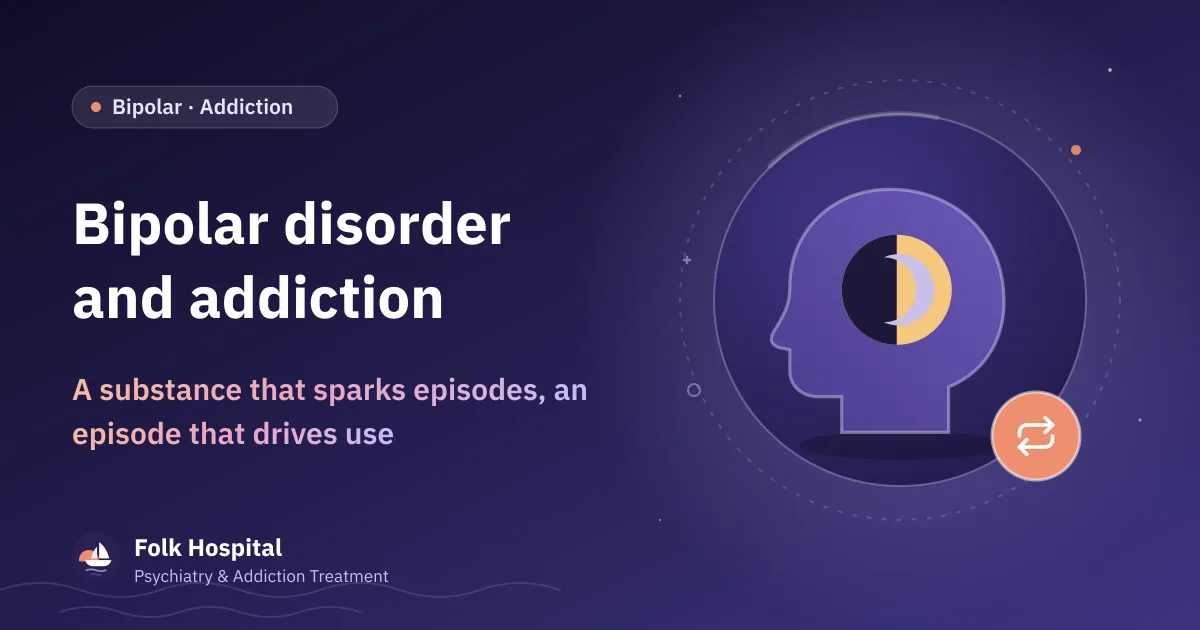
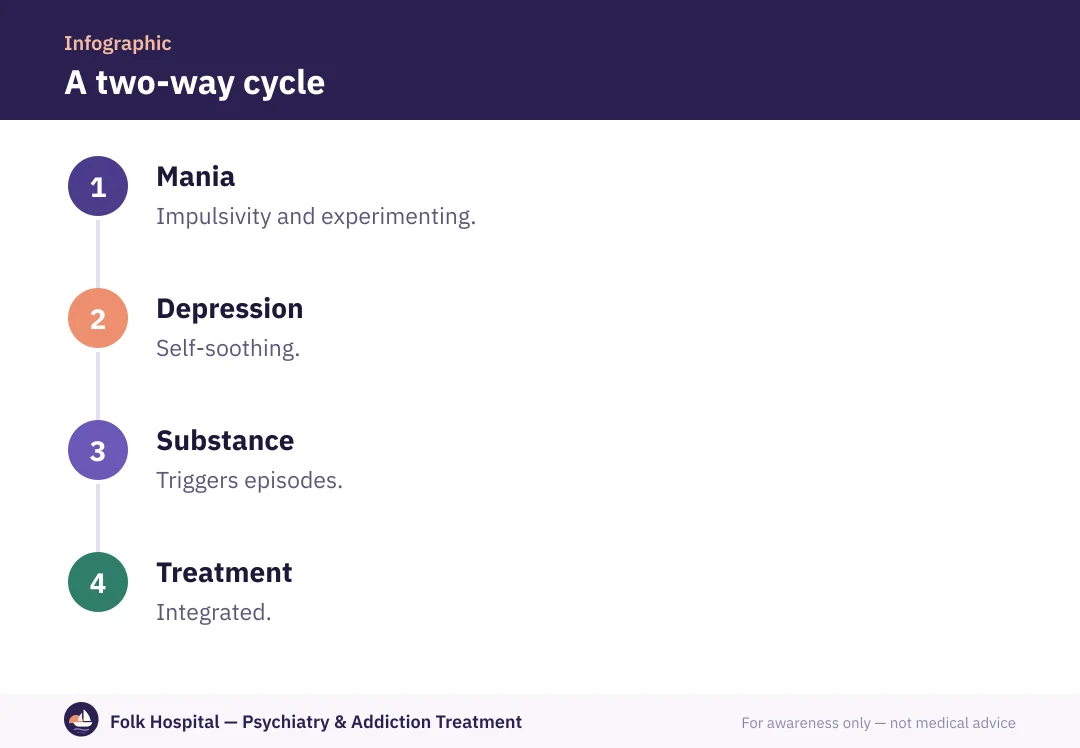
Bipolar disorder leads to substances
- Impulsivity and thrill-seeking in mania.
- Numbing in depression.
- Trying to sleep with alcohol or sedatives.
Substances worsen bipolar disorder
- Stimulants trigger mania.
- Alcohol deepens depression.
- Hashish increases episodes and slows improvement.
- All weaken treatment.
02The commonest substances
| Substance | Effect on bipolar disorder |
|---|---|
| Alcohol | Depression, impulsivity, interactions with medicines |
| Shabu and cocaine | Mania or mixed episodes, and psychosis |
| Hashish | More episodes, slower improvement |
| Sedatives | Dependence; suppression with alcohol |
03Integrated treatment
- Full assessmentmood and substances together.
- Safe detoxif there's dependence on alcohol or sedatives.
- A mood stabiliserthe foundation, accounting for interactions.
- Addiction rehabilitationmotivational interviewing and CBT.
- A relapse-prevention planfor mood and substances together.
- Suicidal thoughts or plans.
- Severe mania with days of little sleep and risky decisions.
- Psychosis or agitation with risk to self or others.
Mental health hotline: 08008880700.
Ambulance: 123Read dual diagnosis, bipolar disorder and depression and addiction.
؟Frequently asked questions
Why is bipolar disorder linked to addiction?
Impulsivity in mania and the urge to numb in depression drive substance use, and there may be shared vulnerability.
Can stimulants cause a manic episode?
They can trigger mania or a mixed episode in affected people, and their effects sometimes resemble mania.
Is alcohol dangerous with bipolar disorder?
Yes. It deepens depression, increases impulsivity, interacts with medicines such as lithium and raises suicide risk.
How can I tell mania from a substance effect?
It needs medical assessment, testing and follow-up after stopping, because symptoms can overlap.
Can both be treated together?
Yes, and integrated treatment is best, including a mood stabiliser, safe detox and addiction rehabilitation.
Does hashish calm bipolar disorder?
It may seem calming briefly, but it's linked to more manic episodes and slower improvement.
Sources and references
- Bipolar Disorder — National Institute of Mental Health (NIMH)
- Bipolar disorder — fact sheet — World Health Organization
- Comorbidity: Substance Use and Other Mental Disorders — National Institute on Drug Abuse (NIDA)

A psychiatrist specialising in addiction and mental illness in adults and adolescents, with a focus on dual diagnosis.
For awareness only — not a substitute for medical advice. Editorial policy · View profile