01By the person's state
| State | What helps | What harms |
|---|---|---|
| Stable | Supporting routine and medication; respecting independence | Over-monitoring and constant doubt |
| Mania | Calm, clear limits, fewer stimuli, protecting money | Long arguments, getting worked up, leaving keys and cards about |
| Depression | Presence, listening, encouraging small steps | Blame («pull yourself together»), ignoring talk of death |
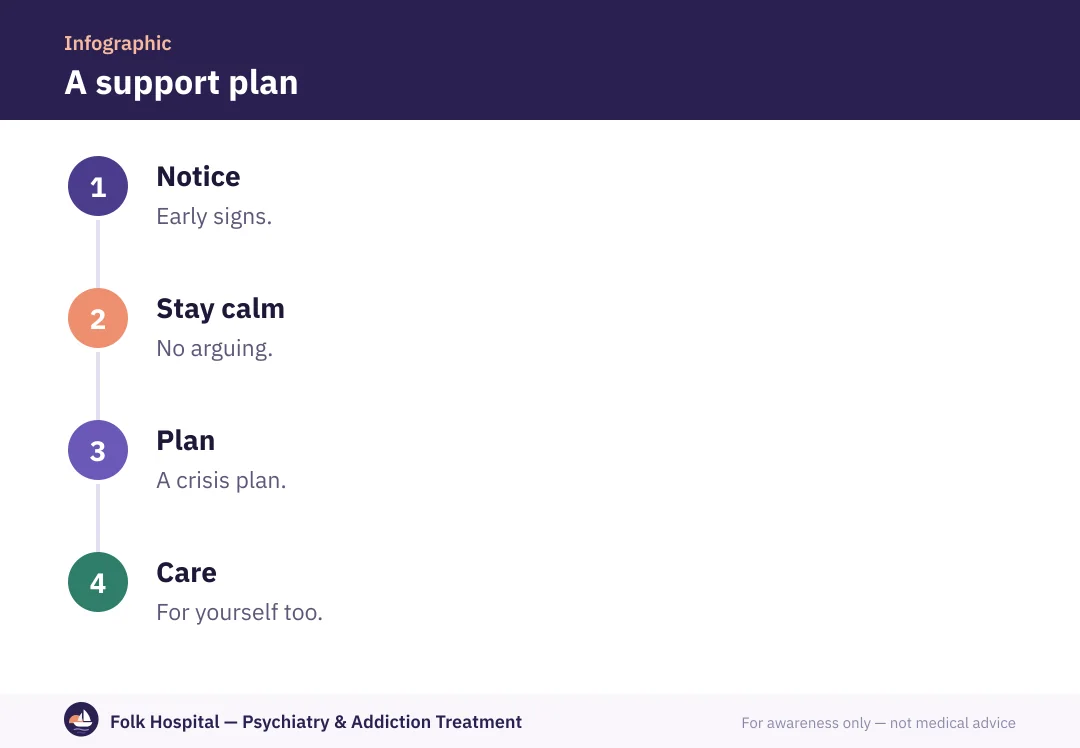
02A shared plan while stable
- Early signswritten by the person and family together for each type of episode.
- Contactsthe doctor, emergency services and a trusted person.
- Protecting moneyspending limits or dual signatures during episodes.
- Big decisionspostponed until stable.
- The person's wisheshow they'd like to be treated during an episode.
03The family's role in preventing episodes
What helps day to day
- Encouraging sleep at regular times.
- Keeping drugs and alcohol out of the home.
- Gentle medication reminders without nagging.
- A calm home with less conflict.
- Noticing changes early and discussing them calmly.
- Suicidal thoughts or plans.
- Severe mania with days of little sleep and risky decisions.
- Psychosis or agitation with risk to self or others.
Mental health hotline: 08008880700.
Ambulance: 12304Caring for the carer
Living with someone with bipolar disorder can be exhausting, especially after hard episodes. Join the family programme and seek support for yourself. Read supporting a mentally ill relative, bipolar disorder and bipolar disorder and marriage.
؟Frequently asked questions
How do I handle someone during mania?
Calmly and with short sentences, without long arguments, reducing stimulation, protecting money and driving, and contacting the doctor.
How do I help during depression?
By being present and listening, encouraging small steps, watching for suicidal thoughts and helping them stick with treatment.
What if they stop their medication?
Calmly discuss why, such as side effects or feeling better, and encourage them to see the doctor rather than stop.
Should I make decisions for them during an episode?
It's best to agree in advance, while stable, on a plan to protect money and big decisions during episodes.
What early signs should I watch?
Less sleep, more talk and activity, spending, or the opposite: withdrawal, oversleeping and sadness.
How do I protect myself?
By getting support, setting clear limits, joining family programmes and not carrying the responsibility alone.
Sources and references
- Bipolar Disorder — National Institute of Mental Health (NIMH)
- Bipolar disorder — fact sheet — World Health Organization
- Psychotherapies — National Institute of Mental Health (NIMH)

A psychiatrist specialising in addiction and mental illness in adults and adolescents, with a focus on dual diagnosis.
For awareness only — not a substitute for medical advice. Editorial policy · View profile