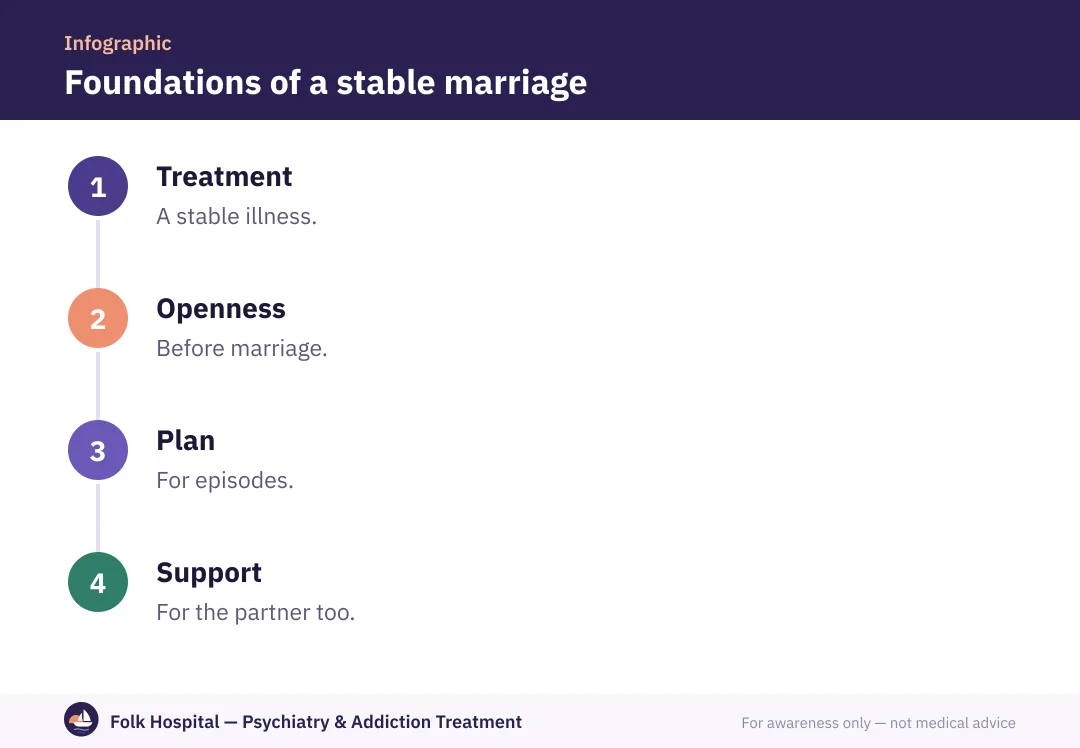
01Before marriage
- Stabilitya sufficient period without episodes while sticking with treatment.
- Honestytelling the partner about the diagnosis, treatment and early signs.
- Educationa session with the doctor for the partner.
- A written planwhat to do at signs of mania or depression.
02How episodes affect the relationship
| Episode | What may happen | What helps |
|---|---|---|
| Mania | Spending, irritability, reckless relationships, little sleep | Advance financial protection, quick contact with the doctor |
| Depression | Withdrawal, loss of desire, sadness | Patience, presence, encouraging treatment |
| Stability | Usually normal life | Routine, regular sleep and follow-up |
03Pregnancy and after birth
A high-risk period
The period after birth is among the highest-risk times for relapse in women with bipolar disorder, and mania or psychosis can occur. Advance planning with the psychiatrist and obstetrician, and protecting the mother's sleep, are essential.
- Reviewing medicines before pregnancy, as some need changing.
- Not stopping treatment suddenly.
- A plan to share night-time baby care.
- Suicidal thoughts or plans.
- Severe mania with days of little sleep and risky decisions.
- Psychosis or agitation with risk to self or others.
Mental health hotline: 08008880700.
Ambulance: 123Read bipolar disorder, supporting someone with bipolar disorder and mental illness and marriage.
؟Frequently asked questions
Can someone with bipolar disorder marry?
Yes. Many stable patients marry and have stable family lives with treatment and follow-up.
Should I tell my partner about the illness?
Yes. Honesty is essential, and the doctor can help explain the illness to the partner and their family.
How do episodes affect marriage?
Mania can bring spending, irritability and sometimes reckless relationships; depression can bring withdrawal and loss of desire; both need understanding and treatment.
Can I get pregnant on bipolar medicines?
Yes, with planning: some medicines need changing before pregnancy, and treatment shouldn't stop suddenly because relapse is dangerous.
Is the illness passed to children?
Children's risk is higher than average, but most aren't affected.
How can the partner help?
By understanding early signs, supporting sleep and treatment, agreeing a plan for episodes, and seeking marital counselling when needed.
Sources and references
- Bipolar Disorder — National Institute of Mental Health (NIMH)
- Bipolar disorder — fact sheet — World Health Organization

A psychiatrist specialising in addiction and mental illness in adults and adolescents, with a focus on dual diagnosis.
For awareness only — not a substitute for medical advice. Editorial policy · View profile