01Why is fentanyl different from other opioids?
Fentanyl is a very potent synthetic opioid used medically in anaesthesia and for severe cancer pain, often as injections or skin patches. But it's dozens of times stronger than morphine, so the safety margin is narrow: a very small excess can stop breathing.
Fentanyl reaches users in three main ways: misuse of a prescription, patches used incorrectly, or adulterated drugs it's mixed into without the user knowing. Read about causes of fentanyl addiction.
02Safety first
- Extreme drowsiness or no response.
- Very slow or stopped breathing.
- Blue or grey lips and nails.
- Pinpoint pupils.
Call an ambulance on 123 immediately, place the person on their side and stay with them. If naloxone is available, use it as instructed, but an ambulance is still essential.
Ambulance: 12303How is it treated?
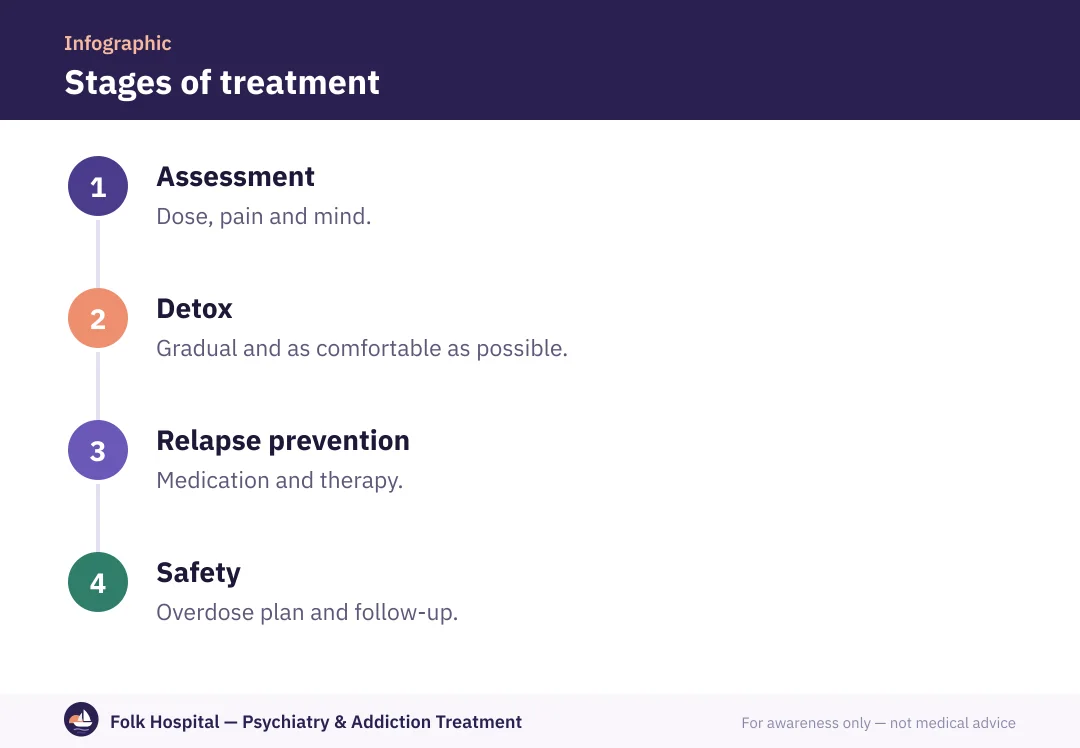
- Assessmentdose, source and route, pain, other drugs, mental state, and blood-borne viruses where there's been injecting.
- Stabilisationsupervised detox with symptom medicines, or starting approved medication that stabilises the patient.
- Long-term medicationoften recommended for fentanyl addiction because it reduces deaths.
- Psychological rehabilitationCBT, motivational interviewing and treatment of depression and anxiety.
- Follow-up and a safety planeducating the patient and family about overdose, with follow-up for at least a year.
Read about fentanyl withdrawal.
04Why is medication so often recommended here?
Research shows that approved medicines for opioid use disorder, such as buprenorphine and methadone, reduce relapse and overdose deaths. Given fentanyl's potency and the danger of returning to it after tolerance drops, this option matters greatly for many patients. The doctor decides the right option and timing, and starting some of these medicines after fentanyl needs specific expertise. Read opioid addiction treatment.
05If use began with patches for chronic pain
Don't remove patches suddenly
A patient using fentanyl patches for genuine pain needs a gradual tapering plan with their doctor and an alternative pain plan. Misusing patches by cutting, heating or applying several is very dangerous and can cause an overdose.
06Rehabilitation and follow-up
- Cognitive behavioural therapy: triggers, cravings and coping with stress.
- Treating depression, anxiety and trauma: within a dual diagnosis plan.
- Involving the family: education about overdose, naloxone and handling relapse.
- Long follow-up: because the first months are the most dangerous.
07Residential or outpatient?
In most fentanyl cases we advise starting with residential care or very intensive follow-up, especially with injecting, non-medical sources, mixing sedatives or a previous overdose. Read about residential rehab.
Read about the harms of fentanyl.
؟Frequently asked questions
Why is fentanyl so dangerous?
Because it's so potent, the gap between a dose that has an effect and one that stops breathing is small, especially for someone without tolerance or when mixed with sedatives or alcohol.
Will the doctor recommend a substitute medicine?
With fentanyl addiction, long-term approved medication is often recommended because it reduces relapse and death; the final decision follows assessment and agreement with the patient.
How long does treatment take?
Detox or stabilisation on medication takes days to weeks, rehabilitation months, and follow-up at least a year.
I was using fentanyl patches for chronic pain. What should I do?
Don't stop suddenly. The doctor sets a gradual taper with an alternative pain plan, or moves to addiction treatment if there are signs of misuse.
What is naloxone?
A medicine that temporarily reverses an opioid overdose. The World Health Organization recommends making it available to people likely to witness an overdose. Calling an ambulance is still essential.
Sources and references
- Fentanyl — research topic — National Institute on Drug Abuse (NIDA)
- Medications to Treat Opioid Use Disorder — Research Report — National Institute on Drug Abuse (NIDA)
- Opioid overdose — fact sheet — World Health Organization
- Guidelines for the psychosocially assisted pharmacological treatment of opioid dependence — World Health Organization
- Drug misuse in over 16s: opioid detoxification (CG52) — National Institute for Health and Care Excellence (NICE)

A psychiatrist specialising in addiction and mental illness in adults and adolescents, with a focus on dual diagnosis.
For awareness only — not a substitute for medical advice. Editorial policy · View profile