01Symptoms by timing
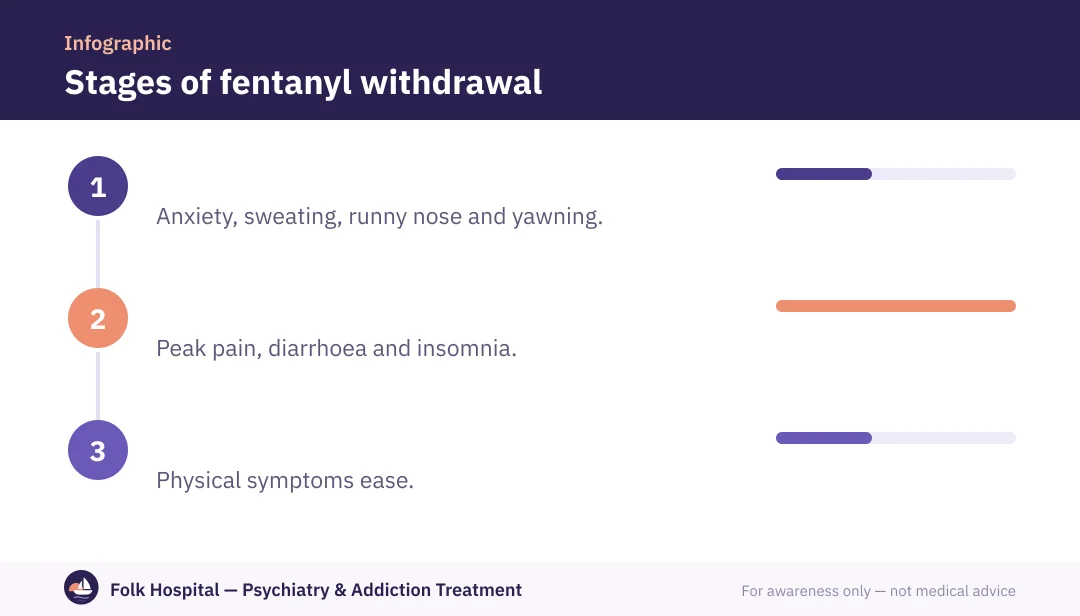
| Time | Symptoms |
|---|---|
| Hours to a day | Anxiety, sweating, runny nose, yawning and watery eyes |
| Days two to four | Peak: muscle and bone pain, diarrhoea, vomiting, chills, insomnia and intense cravings |
| One to two weeks | Physical symptoms ease |
| Weeks | Insomnia, anxiety, mood swings and cravings |
02Safe detox options
- An urgent assessmentdose, route of use and other substances.
- Supporting medicinesto ease symptoms, or substitution treatment under supervision.
- Fluids and nutritionwith diarrhoea and vomiting.
- A relapse-prevention planbecause overdose risk after stopping is high.
- Long-term follow-uppsychological and medical, depending on the case.
- Slow breathing, strange snoring, pinpoint pupils or blue lips: ambulance 123 immediately. Read about overdose.
Read about fentanyl addiction treatment, the symptoms of fentanyl use and detox.
؟Frequently asked questions
Can fentanyl patches be tapered gradually?
Yes, and that's usually best, but with a doctor's plan that sets doses and alternatives and monitors pain and withdrawal.
Can I stop fentanyl at home?
We don't advise it. Symptoms are severe and the risk of relapse and overdose is high; medically supervised detox is better.
What is the medical treatment for fentanyl addiction?
Options include medicines such as buprenorphine or methadone under supervision, or detox with symptom medicines followed by a relapse-prevention programme, depending on the case.
Why is fentanyl more dangerous than heroin?
Because it's far stronger, so a tiny amount can stop breathing, and it may be mixed into other substances without the user knowing.
Sources and references
- Fentanyl — research topic — National Institute on Drug Abuse (NIDA)
- Medications to Treat Opioid Use Disorder — Research Report — National Institute on Drug Abuse (NIDA)
- Opiate and opioid withdrawal — U.S. National Library of Medicine — MedlinePlus
- Opioid overdose — fact sheet — World Health Organization

A psychiatrist specialising in addiction and mental illness in adults and adolescents, with a focus on dual diagnosis.
For awareness only — not a substitute for medical advice. Editorial policy · View profile