01Harms
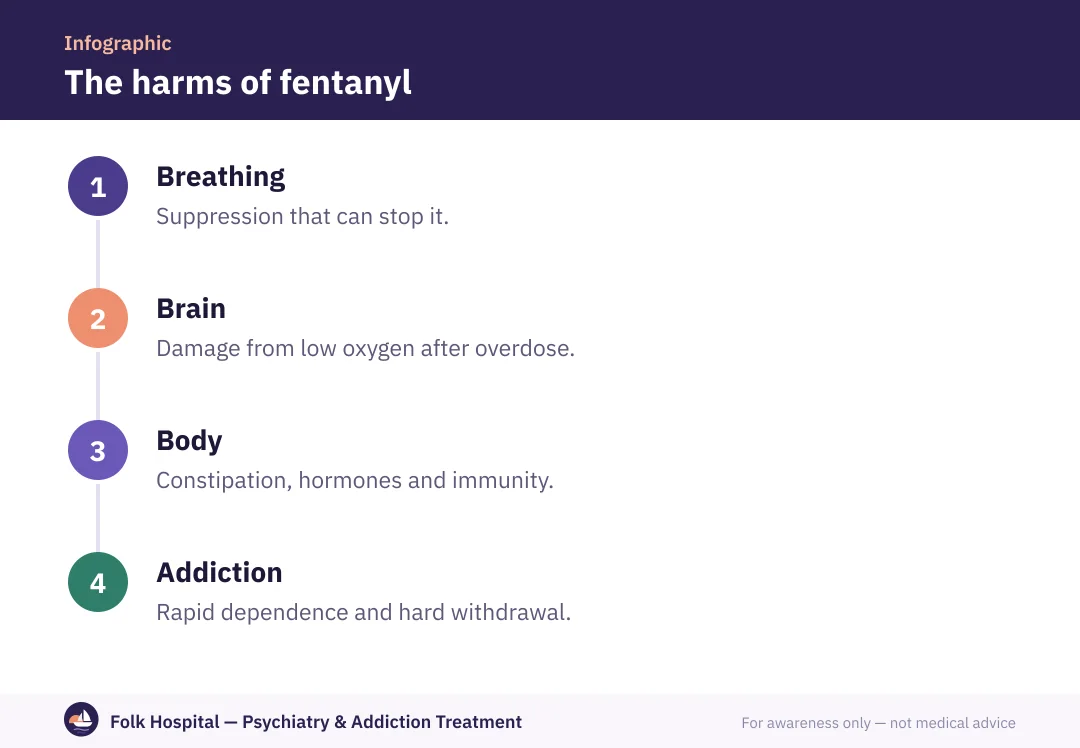
| Area | Harms |
|---|---|
| Breathing | Slowed or stopped breathing, and rapid overdose |
| Brain | Lack of oxygen after overdose can cause permanent damage |
| Dependence | Rapid tolerance and dependence, and severe withdrawal |
| Injecting | Abscesses, vein damage, and hepatitis and HIV infection |
| Digestion and hormones | Severe constipation and lower sex drive |
| Pregnancy | Withdrawal in the newborn |
- Unresponsiveness, slow breathing or snoring, pinpoint pupils or blue lips: ambulance 123 immediately. Read about overdose.
02Treatment
Medication treatment under supervision with psychological support reduces deaths and relapse. Read about fentanyl symptoms, its withdrawal and its treatment.
؟Frequently asked questions
Does heat affect a fentanyl patch?
Yes. Heat from a hot bath, heating pad or fever can increase absorption and cause an overdose. Follow your doctor's instructions.
Why is fentanyl more dangerous than heroin?
Because it's far stronger, so the safety margin is very small and overdose happens quickly.
Is touching fentanyl dangerous?
Brief skin contact rarely causes poisoning, but take care, wear gloves and dispose of it safely.
Can fentanyl addiction be treated?
Yes, with medicines such as buprenorphine or methadone under supervision, plus psychological therapy and follow-up.
Sources and references
- Fentanyl — research topic — National Institute on Drug Abuse (NIDA)
- Opioid overdose — fact sheet — World Health Organization
- Medications to Treat Opioid Use Disorder — Research Report — National Institute on Drug Abuse (NIDA)

A psychiatrist specialising in addiction and mental illness in adults and adolescents, with a focus on dual diagnosis.
For awareness only — not a substitute for medical advice. Editorial policy · View profile