Fentanyl is far stronger than most opioids, so dependence develops quickly, whether use began medically or through misuse.
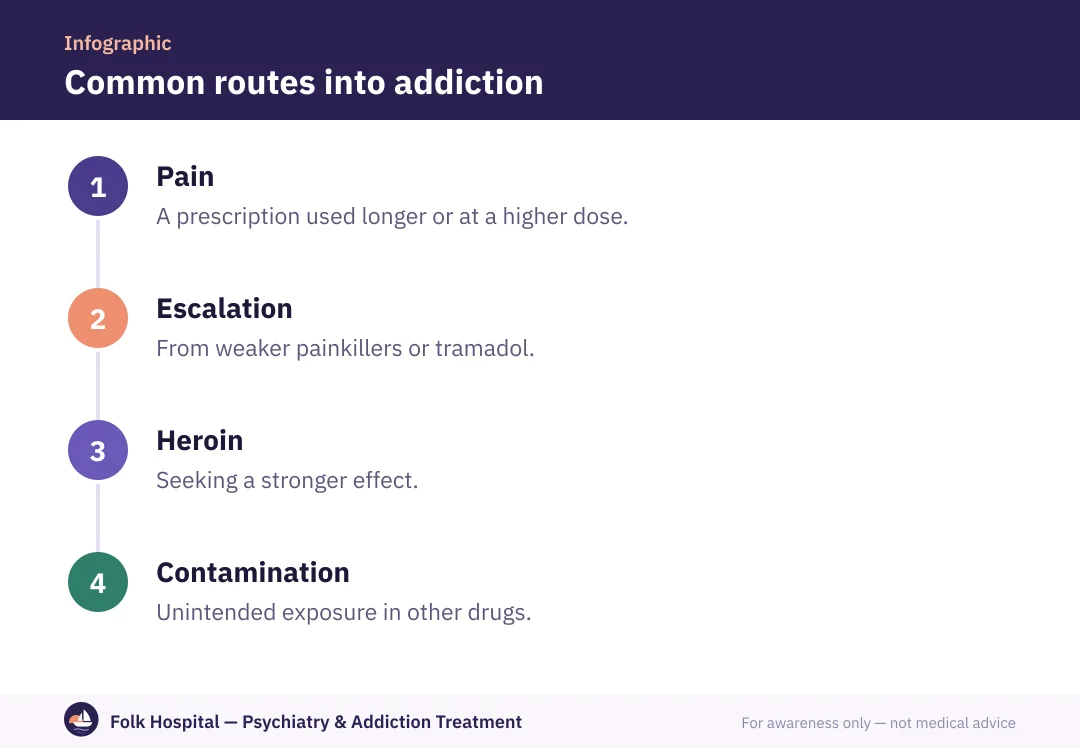
01Factors that raise the risk of addiction
| Factor | How it contributes |
|---|---|
| Severe pain | A prescription for patches or injections |
| Lack of follow-up | Continuing or raising the dose without a doctor |
| Moving from other opioids | Seeking a stronger effect |
| Adulterated substances | Unintended exposure |
| Mental disorders | Depression and trauma |
Having a risk factor doesn't make addiction inevitable, and lacking one doesn't guarantee protection; addiction is an illness with many causes, and it can be treated.
02How does use turn into addiction?
Its high potency means tolerance develops quickly and withdrawal is severe, making it hard to stop without help.
03What protects?
- Treating anxiety, depression and insomnia early and safely.
- Supportive relationships and open conversation in the family.
- Healthy ways of coping with stress and pain.
- Seeking help at the first signs of losing control.
Read about fentanyl symptoms, its harms, its treatment.
؟Frequently asked questions
I need a strong painkiller after surgery. Will I become addicted?
Most people who use painkillers briefly under supervision don't become addicted. Tell your doctor about any history of addiction, and stick to the dose and duration.
Can a patient become addicted to prescribed fentanyl patches?
Physical dependence is expected with long-term use; addiction occurs with misuse, which is why follow-up is essential.
Why do some move from heroin to fentanyl?
To seek a stronger effect, or because the supply mixes it in without their knowledge.
Sources and references
- Fentanyl — research topic — National Institute on Drug Abuse (NIDA)
- Opioids — research topic — National Institute on Drug Abuse (NIDA)
- Fentanyl — research topic — National Institute on Drug Abuse (NIDA)
- Opioids — research topic — National Institute on Drug Abuse (NIDA)

A psychiatrist specialising in addiction and mental illness in adults and adolescents, with a focus on dual diagnosis.
For awareness only — not a substitute for medical advice. Editorial policy · View profile