01Why did 'blue elephant' spread?
The name spread after a drama series created curiosity about a mysterious "experience", and sellers exploited that curiosity to promote various hallucinogens under the same name. The result is that users don't know what they're taking: it may be an LSD-like substance, a stronger synthetic hallucinogen, or a mixture. Read what blue elephant is and about hallucinogens.
02Signs that need emergency care
- Severe panic or behaviour dangerous to self or others.
- Hallucinations with complete loss of contact with reality.
- Seizures or high temperature.
- An attempt at self-harm.
Keep the person away from heights, roads and sharp objects, speak calmly and don't leave them alone.
Ambulance: 12303How is it treated?
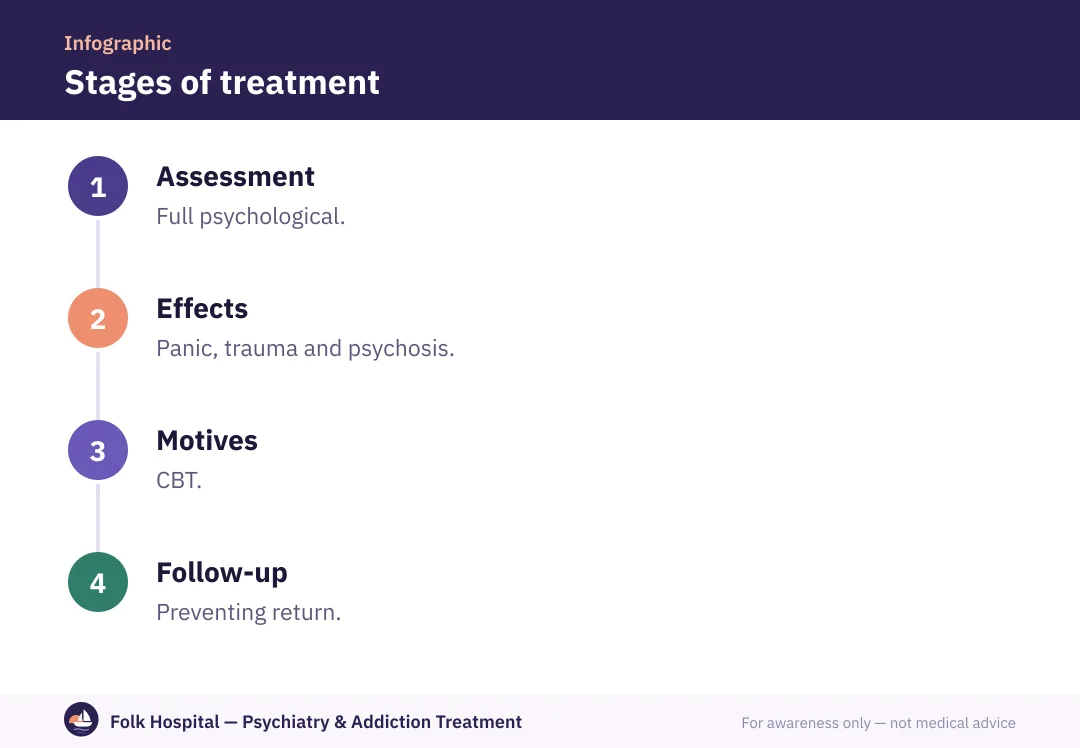
- Psychological assessmentwhat happened during the experience? Is there ongoing anxiety or hallucinations? Is there a family history of mental illness? Are other drugs used?
- Treating the after-effectspanic, nightmares and fear, and trauma symptoms if present.
- Treating psychosis if it appearsspecialist psychiatric follow-up.
- Cognitive behavioural therapycuriosity, peer pressure, and escaping boredom or feelings.
- Family and follow-upcalm conversation, clear rules and support without overreaction.
04After a terrifying experience
Many young people come to us after "one try" that left a frightening mark: fear of going mad, a feeling that reality is strange, nightmares or panic attacks. These symptoms are treatable and usually improve with:
- Reassurance based on a real medical assessment.
- Cognitive behavioural therapy for panic and anxiety.
- Stopping hallucinogens and cannabis completely.
- Treating trauma symptoms if they persist. Read about depersonalisation and panic attacks.
05The family's role
Families often find out in a moment of crisis. It's best to:
- Stay calm first: shouting increases panic, and safety is the priority.
- Talk after the crisis: about curiosity, friends and pressures, not only punishment.
- Seek an assessment, even if it seems he's "got over it".
Read teenagers and drugs and treatment for LSD use.
Read about the harms of blue elephant.
؟Frequently asked questions
What exactly is blue elephant?
A name that spread after a drama series, exploited by sellers to promote various hallucinogens, usually on paper or tablets. The real content is unknown and varies from source to source.
My son tried it once and is still frightened. Is that normal?
After a terrifying experience, anxiety, nightmares and fear can last days or weeks. If they persist or affect his life, he needs assessment and psychological support; it's treatable.
Is it addictive?
Hallucinogens don't usually cause physical withdrawal, but some young people use them repeatedly with other drugs. The bigger danger is their psychological effects and unknown content.
Can it cause permanent madness?
Not in most people, but in those with a vulnerability to psychosis it can trigger an episode that needs treatment. Early assessment matters.
Sources and references
- Hallucinogens — research topic — National Institute on Drug Abuse (NIDA)
- Treatment Approaches for Drug Addiction — DrugFacts — National Institute on Drug Abuse (NIDA)
- Co-Occurring Disorders and Health Conditions — National Institute on Drug Abuse (NIDA)
- Drug misuse in over 16s: psychosocial interventions (CG51) — National Institute for Health and Care Excellence (NICE)

A psychiatrist specialising in addiction and mental illness in adults and adolescents, with a focus on dual diagnosis.
For awareness only — not a substitute for medical advice. Editorial policy · View profile