01Harms
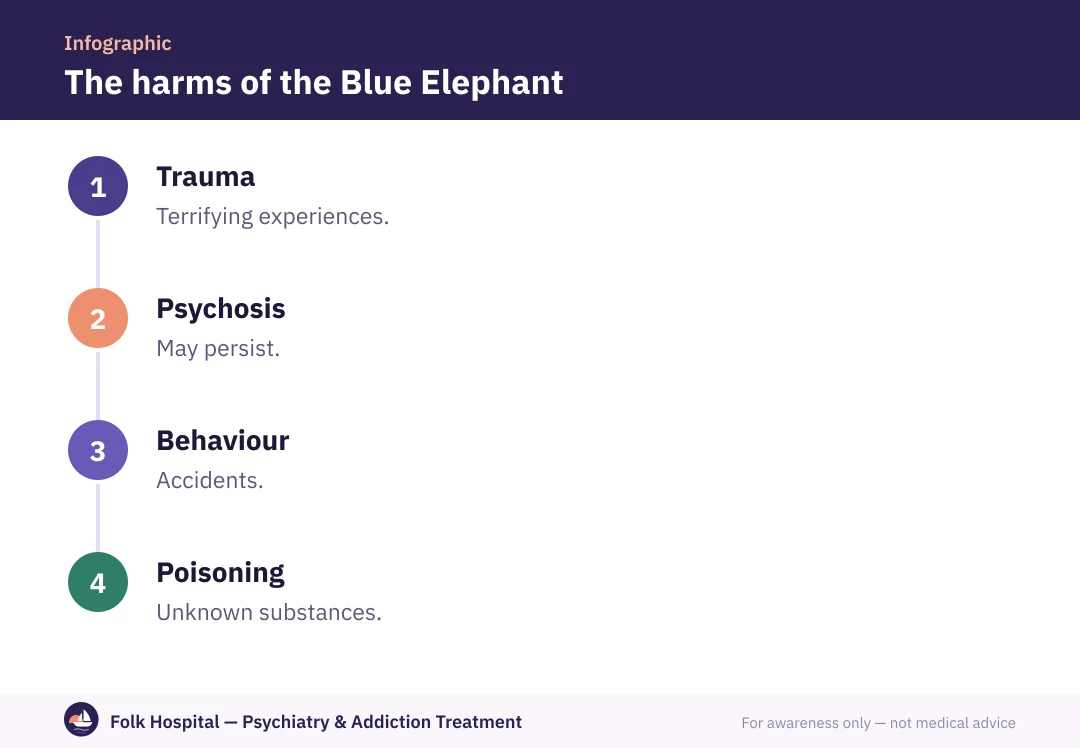
| Area | Harms |
|---|---|
| Safety | Accidents, falls and self-harm during hallucinations |
| Mind | Panic, intense fear, suspicion and psychosis in predisposed people |
| Perception | Flashbacks and sometimes ongoing visual disturbance |
| Body | Fast heartbeat, raised blood pressure and temperature, and nausea |
| Adulteration | Unknown substances that may be more dangerous than the user expects |
- Panic that won't settle, dangerous behaviour, high temperature or seizures.
02After use
If hallucinations, suspicion or anxiety persist, the person needs a psychiatric assessment. Read about the symptoms of Blue Elephant, its treatment and drug-induced psychosis.
؟Frequently asked questions
Can it cause a lasting mental illness?
It can trigger persistent psychosis in those predisposed, which needs specialist treatment.
Does Blue Elephant cause lasting harm?
Most effects are temporary, but some people continue to have anxiety, psychosis or visual perception problems after use.
Is the danger physical or psychological?
Both: fast heartbeat, overheating and accidents physically, and panic and psychosis psychologically.
Is mixing it with other substances dangerous?
Yes. Mixing hallucinogens with alcohol, stimulants or cannabis increases unpredictability and danger.
Sources and references
- Hallucinogens — research topic — National Institute on Drug Abuse (NIDA)
- Drugs, Brains, and Behavior: The Science of Addiction — National Institute on Drug Abuse (NIDA)

A psychiatrist specialising in addiction and mental illness in adults and adolescents, with a focus on dual diagnosis.
For awareness only — not a substitute for medical advice. Editorial policy · View profile