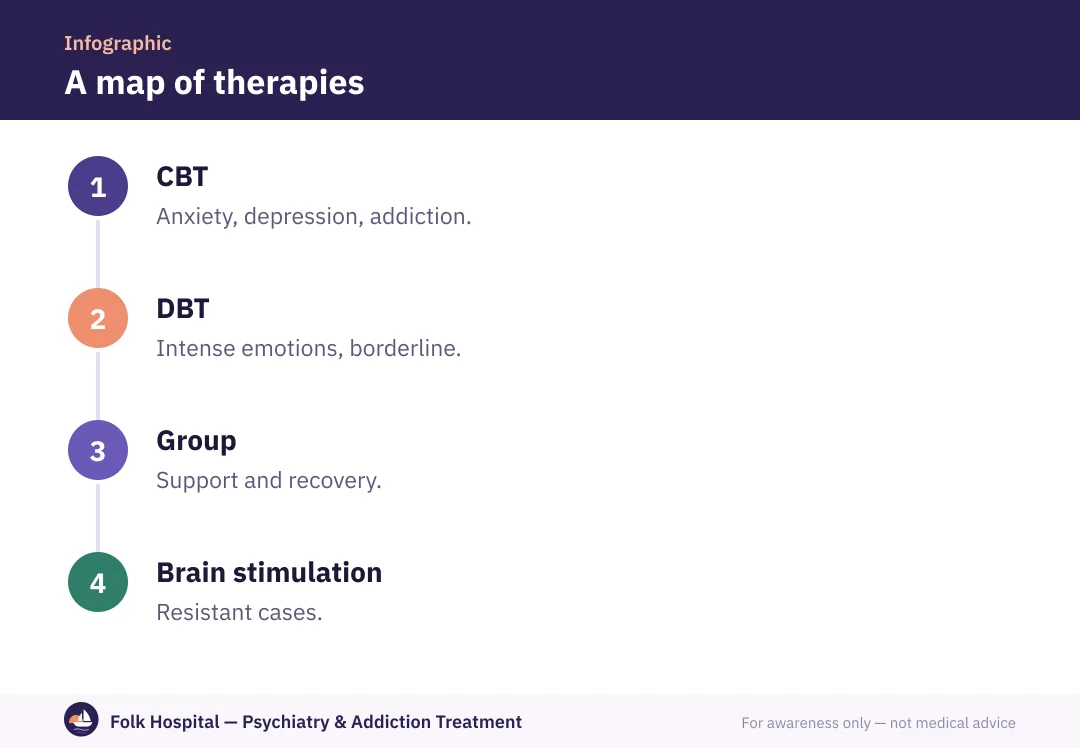
01Map of therapies
| Therapy | Type | Mainly used for |
|---|---|---|
| CBT | Talking | Depression, anxiety, OCD |
| DBT | Talking | Borderline personality, self-harm |
| Group therapy | Talking | Addiction, social anxiety |
| ECT | Brain stimulation | Severe or resistant depression |
| TMS | Brain stimulation | Depression not responding to medication |
02How to start
- Assessmenta session with a psychiatrist to set diagnosis and severity.
- Planchoosing the right treatment together.
- Startingregular sessions and between-session tasks.
- Reviewmeasuring progress and adjusting the plan.
03Talking therapy and medication
Talking therapy
- Teaches lasting skills.
- Reduces relapse.
- Needs time and commitment.
Medication
- Eases severe symptoms.
- Helps a person benefit from therapy.
- Needs monitoring for side effects.
Read psychiatric medications, depression and the psychiatric hospital.
؟Frequently asked questions
What types of therapy are there?
Talking therapies such as CBT, DBT and group therapy, and brain stimulation therapies such as ECT and TMS.
Can psychotherapy replace medication?
In mild and moderate cases it may be enough; in severe cases it's usually combined with medication.
How long does psychotherapy take?
It varies by condition and type; many structured programmes run from several weeks to months.
How do I choose the right therapy?
Through assessment with a psychiatrist based on diagnosis, severity and your preferences.
Is ECT safe?
It's done under anaesthesia with monitoring; its best-known side effect is temporary memory disturbance.
Is therapy confidential?
Yes. What's said is confidential except where there's risk to self or others, as the law requires.
Sources and references
- Psychotherapies — National Institute of Mental Health (NIMH)
- Types of talking therapies — NHS (UK)
- Brain Stimulation Therapies — National Institute of Mental Health (NIMH)
- Depression — National Institute of Mental Health (NIMH)

A psychiatrist specialising in addiction and mental illness in adults and adolescents, with a focus on dual diagnosis.
For awareness only — not a substitute for medical advice. Editorial policy · View profile