01How a phobia works
Facing the feared thing, the brain sounds the danger alarm: palpitations, sweating, trembling and an urge to flee. The person escapes and feels relief, so the brain learns that escape «saved» them, and the fear grows next time. So the phobia gets bigger with every avoidance.
02The main types
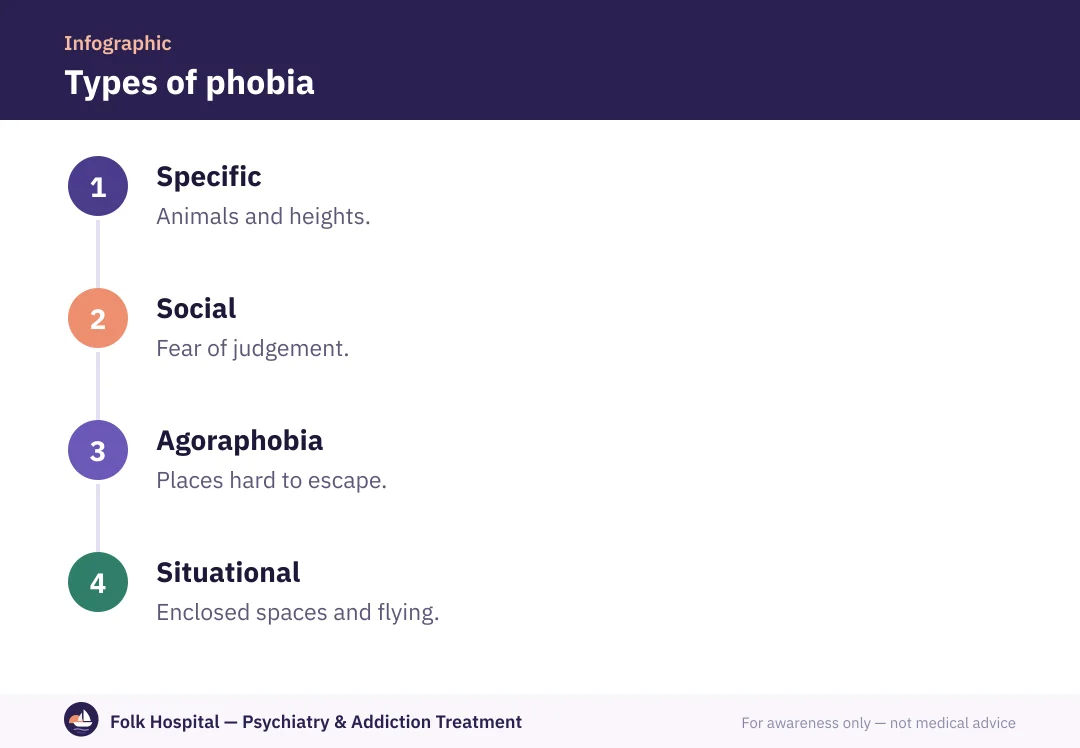
| Type | What the person fears | Examples |
|---|---|---|
| Specific phobia | A particular thing or situation | Enclosed spaces, heights, animals, blood and injections, flying |
| Social phobia | Negative evaluation or embarrassment in front of others | Speaking in public, eating in front of people, interviews |
| Agoraphobia | Situations hard to escape from | Transport, shops, queues, going out alone |
Details in types of phobias and claustrophobia.
03Symptoms
What happens when facing the feared thing
- Palpitations, sweating and trembling.
- Breathlessness or a choking feeling.
- Dizziness and nausea.
- An urgent need to escape.
- Anticipatory anxiety days before.
- Avoidance that affects daily life.
Details in phobia symptoms.
Phobias and substances
Some people drink or take a sedative before flying, an interview or gatherings. It brings temporary relief but blocks recovery and leads to dependence. Read anxiety and addiction.
04Treatment
- Understandinghow fear and avoidance work.
- A fear ladderranking situations from easiest to hardest.
- Gradual exposurefacing each step until anxiety settles.
- Changing thoughtstesting catastrophic predictions.
- Medication when neededfor some cases of social phobia and agoraphobia.
Read causes of phobias, phobia treatment and panic attacks.
؟Frequently asked questions
What's the difference between fear and a phobia?
Fear is a natural response to real danger; a phobia is exaggerated fear of something that poses little danger, which persists, drives avoidance and affects life.
What are the most common phobias?
Specific phobias such as fear of enclosed spaces, heights or animals; social phobia; and agoraphobia.
Can phobias be cured?
Yes. Phobias are among the most treatable disorders, especially with cognitive behavioural therapy and gradual exposure.
Are phobias hereditary?
Genes may play a part in a tendency to anxiety, but experiences and learning from others matter a lot too.
Are there medicines for phobias?
Specific phobias are usually treated without medication; social phobia and agoraphobia may benefit from some antidepressants alongside therapy.
When should I seek help?
When fear stops you working, studying, travelling or having relationships, or you start using alcohol or sedatives to face it.
Sources and references
- Phobias — overview — NHS (UK)
- Anxiety Disorders — National Institute of Mental Health (NIMH)
- Anxiety disorders — fact sheet — World Health Organization
- Psychotherapies — National Institute of Mental Health (NIMH)

A psychiatrist specialising in addiction and mental illness in adults and adolescents, with a focus on dual diagnosis.
For awareness only — not a substitute for medical advice. Editorial policy · View profile