
01Common triggers
Places and situations
- Lifts.
- Tunnels and the underground.
- Aeroplanes.
- Small windowless rooms.
- MRI and CT scanners.
- Narrow public toilets and changing rooms.
- Dense crowds.
- Sometimes wearing masks or helmets.
02Symptoms
| Kind | Examples |
|---|---|
| Physical | Palpitations, sweating, breathlessness, dizziness, nausea, trembling |
| Psychological | Feeling suffocated or trapped, fear of losing control |
| Behavioural | Looking for the exit on entering, preferring stairs, avoiding travel |
03The two core fears
Fear of suffocating
- «There won't be enough air».
- Constantly monitoring breathing.
- Opening windows everywhere.
Fear of being trapped
- «I won't be able to get out».
- Sitting near the door.
- Avoiding situations without a quick exit.
04Handling a medical situation
- Tell the medical team in advanceit's common and there are solutions.
- Ask about alternativesopen or wider MRI scanners if available.
- Practise breathingin for 4 seconds, out for 6.
- Use focuscount the sounds or imagine a calm place.
- Medication for that occasionthe doctor may decide on a mild sedative for one procedure, not as ongoing treatment.
05Treatment
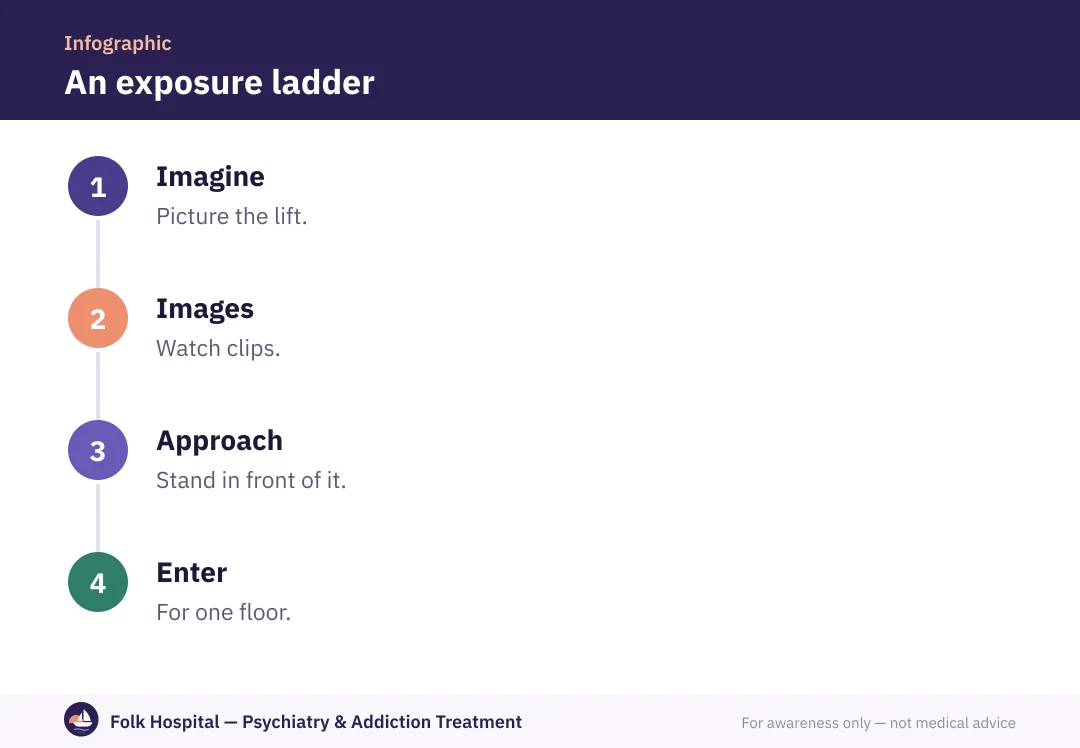
The therapist builds a gradual ladder: standing in front of the lift, then entering with the door open, then one floor, then several, until the brain learns the place is safe. Cognitive therapy helps change suffocation thoughts. Read phobias, phobia treatment and panic attacks.
؟Frequently asked questions
What is claustrophobia?
An intense, disproportionate fear of small or enclosed spaces such as lifts, tunnels, aeroplanes and MRI scanners.
What are the symptoms of claustrophobia?
Palpitations, sweating, breathlessness, a choking feeling, dizziness and an urgent need to get out, sometimes reaching a panic attack.
What causes claustrophobia?
Usually a frightening experience such as being trapped in a small space, a panic attack in an enclosed place, or learning from others, plus a tendency to anxiety.
How do I cope with an MRI if I have claustrophobia?
Tell the doctor in advance, ask about open scanners if available, practise breathing, and the doctor may decide on a mild sedative for that one occasion.
Is claustrophobia treatable?
Yes, with gradual exposure to enclosed spaces and cognitive behavioural therapy; many patients improve clearly.
Is claustrophobia dangerous?
It isn't physically dangerous, but it can restrict life and prevent important medical procedures, so it's worth treating.
Sources and references
- Claustrophobia — NHS (UK)
- Phobias — overview — NHS (UK)
- Anxiety Disorders — National Institute of Mental Health (NIMH)

A psychiatrist specialising in addiction and mental illness in adults and adolescents, with a focus on dual diagnosis.
For awareness only — not a substitute for medical advice. Editorial policy · View profile