01Physical symptoms
What the body feels
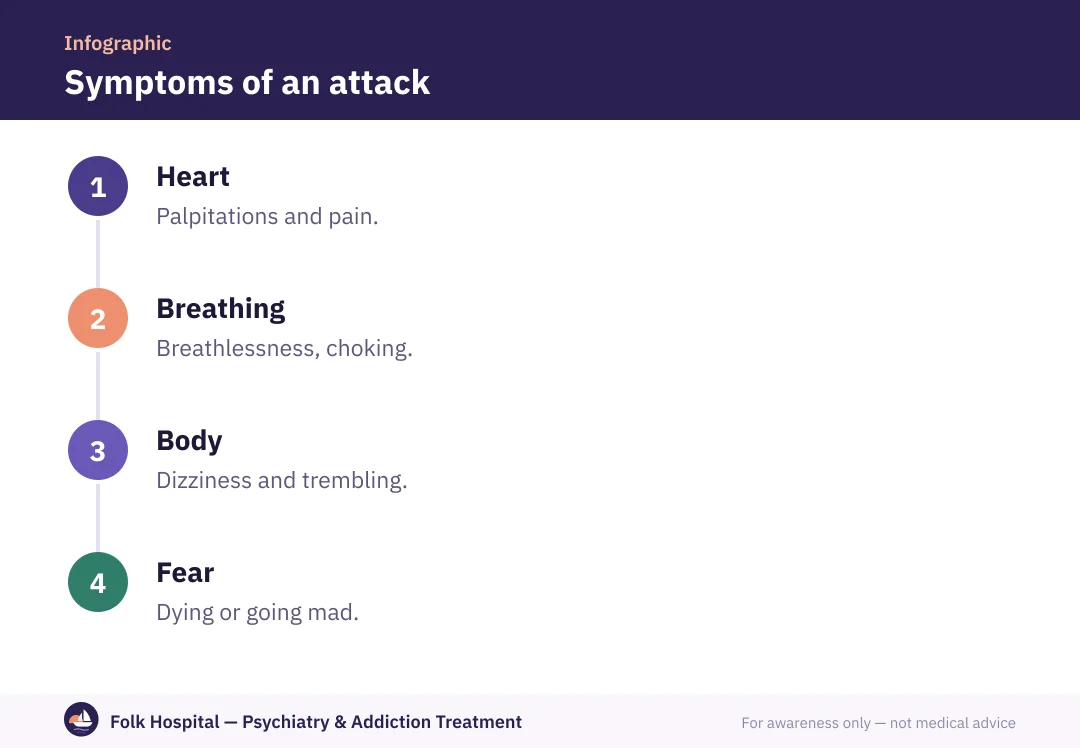
- Palpitations or a pounding, racing heart.
- Chest pain or pressure.
- Breathlessness, or feeling there isn't enough air.
- A choking feeling or lump in the throat.
- Dizziness, light-headedness or feeling faint.
- Nausea or an upset stomach.
- Sweating, trembling, chills or hot flushes.
- Numbness or tingling in the hands, feet and around the mouth.
02Psychological symptoms
- Fear of dying: a momentary conviction the heart will stop.
- Fear of going mad or losing control: a sense the mind will «slip».
- Unreality: the world seems distant or dreamlike.
- Detachment from self: watching yourself from outside. Read depersonalisation.
- An urgent need to escape the place.
03Why does the body feel all this?
| Symptom | What's happening in the body |
|---|---|
| Palpitations | Adrenaline speeds the heart to prepare for escape |
| Breathlessness | Fast, shallow breathing feels like too little air even when there's enough |
| Tingling and dizziness | Over-breathing lowers carbon dioxide in the blood |
| Chest pain | Tense chest muscles and upper-chest breathing |
| Sweating and trembling | The nervous system's emergency response |
04Between attacks
Panic disorder isn't only the attacks. Between them come:
- Anticipatory anxiety: constant worry about when the next attack will come.
- Body monitoring: repeatedly checking pulse and breathing.
- Avoidance: steering clear of transport, crowds, exercise or coffee for fear of triggering an attack.
- Safety behaviours: always carrying water or medicine, or never going out alone.
These are what turn attacks into a disorder that restricts life. Read harms of panic attacks.
- This is your first attack and your heart hasn't been checked.
- Chest pain spreads to the arm, jaw or back, or comes with exertion.
- You faint, or have weakness on one side or difficulty speaking.
- Symptoms began after taking stimulants or during withdrawal from sedatives or alcohol.
05What can mimic panic?
The doctor first rules out heart rhythm problems, an overactive thyroid, low blood sugar, asthma, the effects of caffeine or stimulants, and withdrawal from sedatives or alcohol. Once these are excluded, treatment begins. Read panic attacks, psychological breathlessness and health anxiety.
؟Frequently asked questions
What are the first symptoms of a panic attack?
Usually sudden palpitations, breathlessness or dizziness, followed by mounting fear that something serious is happening.
Can panic cause chest pain?
Yes. Muscle tension and over-breathing can cause chest pain or pressure. Still, any new or different chest pain needs a medical check.
Why do I feel tingling during an attack?
Over-breathing changes carbon dioxide balance in the blood, causing tingling in the limbs and around the mouth, and dizziness.
Can a panic attack happen during sleep?
Yes. Nocturnal panic attacks wake a person suddenly with palpitations and fear and are a known part of panic disorder.
Is feeling unreal dangerous?
Feeling that the world isn't real or that you're detached from yourself is a common attack symptom; it passes with the attack and doesn't mean losing your mind.
Can panic symptoms resemble other illnesses?
Yes. They can mimic heart disease, thyroid problems, low blood sugar or stimulant effects, so a medical assessment comes first.
Sources and references
- Panic disorder — NHS (UK)
- Anxiety Disorders — National Institute of Mental Health (NIMH)
- Anxiety disorders — fact sheet — World Health Organization
- Psychotherapies — National Institute of Mental Health (NIMH)

A psychiatrist specialising in addiction and mental illness in adults and adolescents, with a focus on dual diagnosis.
For awareness only — not a substitute for medical advice. Editorial policy · View profile