01The main harms
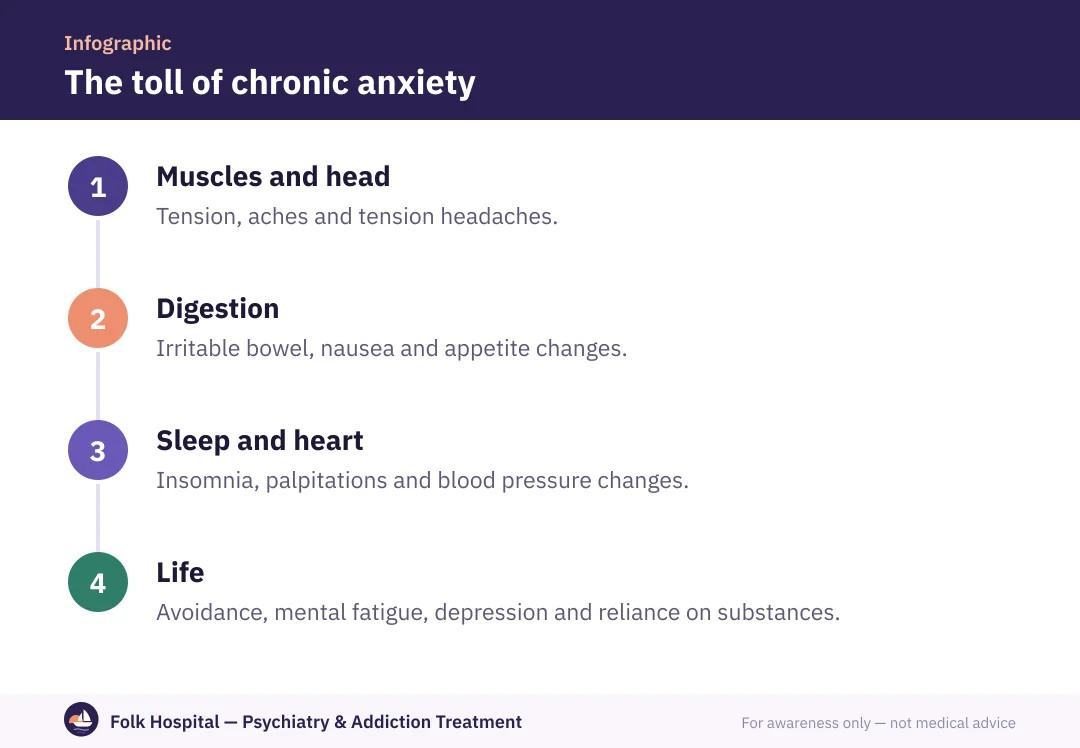
| Area | Harm |
|---|---|
| Sleep | Chronic insomnia and exhaustion |
| Mood | Depression and frustration |
| Body | Headaches, irritable bowel, muscle tension |
| Work and study | Distraction, procrastination, avoidance |
| Relationships | Irritability and repeated reassurance-seeking |
| Substances | Dependence on sedatives or alcohol |
02Anxiety and daily life
What may happen gradually
- Avoiding important decisions for fear of mistakes.
- Exhaustion from constant thinking.
- Less enjoyment of good times.
- Repeated medical visits for physical symptoms.
- Suicidal thoughts or deep hopelessness.
- Chest pain or breathlessness that hasn't been checked before.
Ambulance 123; mental health hotline 08008880700.
Ambulance: 12303Treatment reverses the harms
- CBTto change the worry cycle.
- Suitable medicationa non-addictive antidepressant when needed.
- Better sleepsteady habits.
- Fewer substancescaffeine, alcohol and sedatives.
Read generalised anxiety, its symptoms and psychosomatic symptoms.
؟Frequently asked questions
What are the harms of GAD?
Insomnia, exhaustion, depression, physical symptoms, declining performance, strained relationships and a risk of dependence on sedatives or alcohol.
Does anxiety cause depression?
Yes. Depression often accompanies or follows it, especially with long-standing anxiety.
Does anxiety harm the body?
Chronic anxiety is linked to headaches, digestive problems and insomnia, and may contribute to high blood pressure with other factors.
Does anxiety affect relationships?
It can cause irritability, repeated reassurance-seeking and avoidance, which exhaust both sides.
Does anxiety lead to addiction?
It can drive the use of sedatives or alcohol for calm, raising the risk of dependence.
Do the harms go away with treatment?
Yes. Sleep, mood, performance and relationships improve with suitable treatment.
Sources and references
- Anxiety Disorders — National Institute of Mental Health (NIMH)
- Anxiety disorders — fact sheet — World Health Organization
- Psychotherapies — National Institute of Mental Health (NIMH)

A psychiatrist specialising in addiction and mental illness in adults and adolescents, with a focus on dual diagnosis.
For awareness only — not a substitute for medical advice. Editorial policy · View profile