01When does anger become a problem?
Anger is a natural feeling that alerts us to injustice or danger. But it becomes a problem when it's intense, frequent, or expressed through violence, insults or breaking things, or when it damages relationships and work. Read about the causes of excessive irritability.
02Calming down in the moment
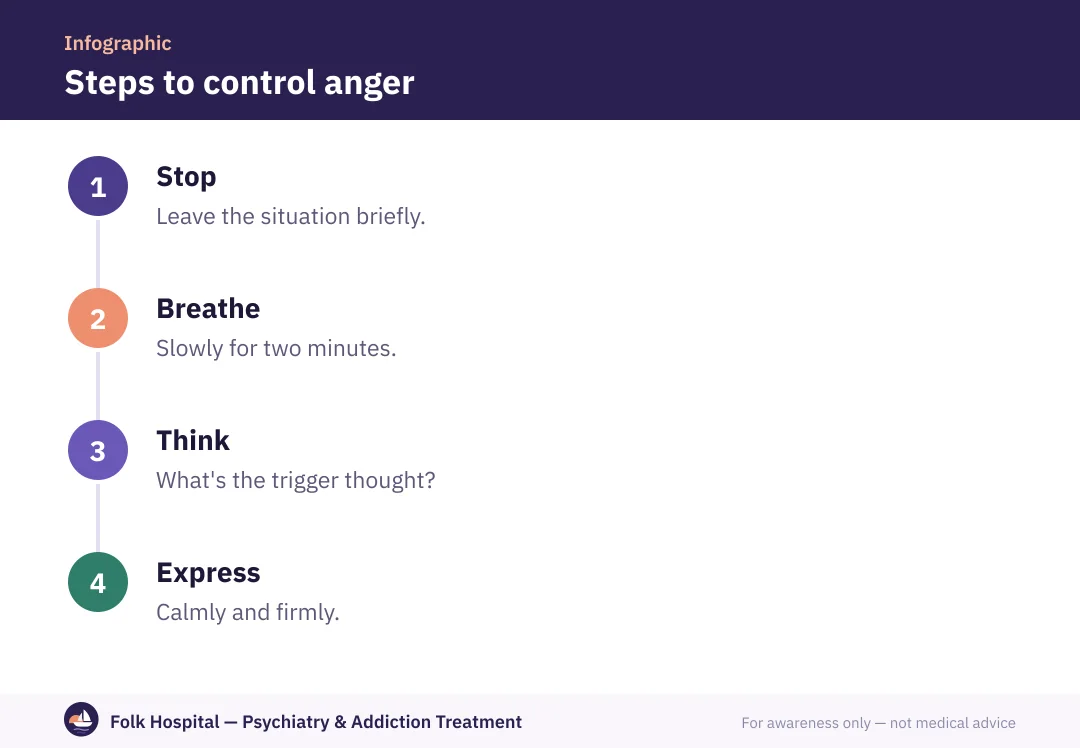
- Notice the early signsa hot face, a racing heart and tense muscles.
- Step away for a whilesay «I need a few minutes» and leave without slamming the door.
- Breathe slowlyin for 4 seconds and out for 6 for a few minutes.
- Delay your responsedon't make decisions or send messages while angry.
- Return to the conversationonce calm, talk about the problem, not the person.
03Cognitive behavioural therapy
It helps uncover triggering thoughts such as «he's doing it on purpose to provoke me» or «I have to respond right away», review them, and learn problem-solving. Read about cognitive behavioural therapy.
Aggressive expression
Assertive expression
- «You're always careless» | «I was upset when you were late without telling me»
- Shouting and threats | A calm voice and a clear request
- Aims to win | Aims to solve the problem
04Treating the cause
| Possible cause | Step |
|---|---|
| Depression or anxiety | Suitable psychological and medical treatment |
| ADHD | Assessment and a treatment plan |
| Bipolar disorder | Mood stabilisers and follow-up |
| Substance use or withdrawal | Addiction treatment |
| Lack of sleep and pressure | Organising sleep and managing stress |
- If anyone at home is in danger, safety comes first: leave the place and get help. Police 122, ambulance 123.
؟Frequently asked questions
Are there medicines for irritability?
There's no medicine for anger alone, but treating accompanying depression, anxiety or ADHD can reduce irritability considerably.
How do I calm down in a moment of anger?
Step away calmly, breathe slowly (in for 4 seconds, out for 6) and delay your response until you've calmed down.
Is bottling up anger better?
No. Constant suppression can explode later or turn into stress and physical symptoms. Calm, assertive expression of your need is better.
Do drugs increase irritability?
Yes, especially stimulants such as shabu, cannabis and alcohol, as well as withdrawal from them, and they're among the causes of violence at home.
When does anger need a doctor?
When there's violence, breaking things or harm to others, repeated problems at work and home, substance use, or severe mood swings.
Sources and references
- Psychotherapies — National Institute of Mental Health (NIMH)
- Depression — National Institute of Mental Health (NIMH)
- Anxiety Disorders — National Institute of Mental Health (NIMH)
- Co-Occurring Disorders and Health Conditions — National Institute on Drug Abuse (NIDA)

A psychiatrist specialising in addiction and mental illness in adults and adolescents, with a focus on dual diagnosis.
For awareness only — not a substitute for medical advice. Editorial policy · View profile