01What is this test based on?
We wrote the questions in plain language to cover the main signs of anger control problems that specialists ask about in an assessment. It helps you see whether you need another step.
02How to read your result
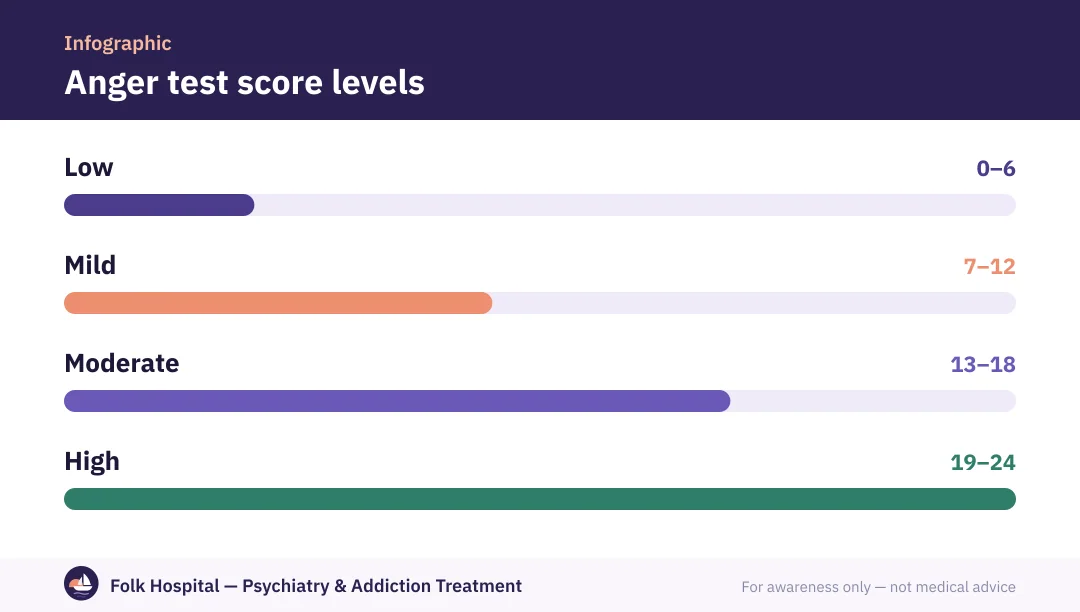
| Score | Level |
|---|---|
| 0–6 | Low |
| 7–12 | Mild |
| 13–18 | Moderate |
| 19–24 | High |
Read about anger and its treatment.
03Healthy anger or anger that needs help?
Anger that needs help
- Frequent outbursts over small things
- Shouting, breaking things or threats
- Repeated regret afterwards
Healthy anger
- Fits the situation
- Expressed in words
- Settles and resolves
- Notice body signalsa hot face and racing pulse before an outburst.
- Step away brieflya few minutes prevents decisions you regret.
- Review triggerspoor sleep, caffeine and substance use.
- Get an assessmentif anger is affecting work or family.
؟Frequently asked questions
Is anger a mental illness?
Anger is a normal emotion, but difficulty controlling it may be linked to depression, anxiety or substance use, and improves with treatment.
Does the site store my answers?
No, the score is calculated on your device and isn't sent or stored.
How is anger linked to substance use?
Substances reduce impulse control and increase aggression.
Is anger a symptom of depression?
Depression can show as irritability, especially in men.
When does anger become dangerous?
When it involves harming yourself or others, breaking things or threats.
Sources and references
- Anger — NHS (UK)

A psychiatrist specialising in addiction and mental illness in adults and adolescents, with a focus on dual diagnosis.
For awareness only — not a substitute for medical advice. Editorial policy · View profile