01Signs by type of substance
| Type | Signs |
|---|---|
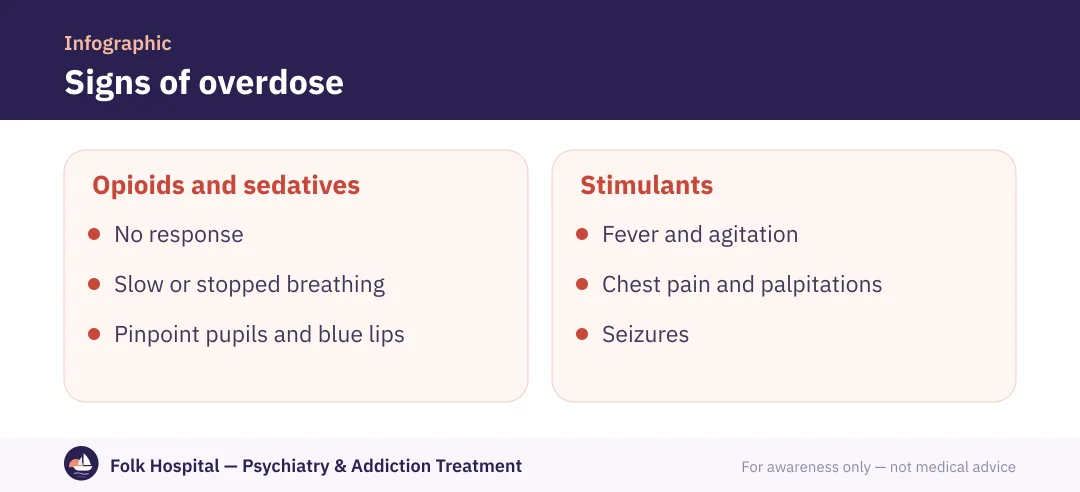
| Opioids such as heroin, tramadol and fentanyl | Unresponsiveness, slow or stopped breathing or strange snoring, pinpoint pupils, blue lips and nails |
| Sedatives, pregabalin and alcohol | Severe drowsiness, confusion, slow breathing and unconsciousness, especially when mixed |
| Stimulants such as shabu and cocaine | High temperature, agitation, chest pain, palpitations and seizures |
| Strox and synthetic drugs | Seizures, agitation, unconsciousness and vomiting |
02What to do step by step
- Call an ambulancedial 123 immediately and tell them what was taken if you know.
- Check response and breathingcall their name loudly and watch their chest.
- Recovery positionif they're breathing but unconscious, lay them on their side to protect the airway.
- Follow the dispatcher's instructionsif breathing stops, they may ask you to give CPR.
- Stay with themdon't leave them alone until the ambulance arrives.
- Keep the packaginghand it to the medical team.
03What not to do
Dangerous myths
The right thing
- Cold water or ice | The recovery position while waiting for the ambulance
- Forcing them to vomit | Preventing choking by laying them on their side
- Coffee or stimulants | Calling an ambulance
- Letting them «sleep it off» | Staying with them and watching their breathing
04Naloxone
Naloxone is a medicine that temporarily reverses the effect of opioids and restores breathing, given by the medical team. It wears off sooner than some opioids, so the patient needs hospital monitoring even after waking.
05Who is most at risk?
Risk factors
- People who mix substances, especially opioids with sedatives, pregabalin or alcohol.
- People returning to use after a break, or after leaving treatment or prison.
- People who inject.
- People who use alone.
- People using substances of unknown content.
Read about acute intoxication, the dangers of mixing and after rehab.
؟Frequently asked questions
Why do deaths rise after recovery and relapse?
Because tolerance drops after a break, so the person goes back to their old dose, which is now more than their body can handle.
Should I put the person in cold water or make them vomit?
No. Cold water can cause shock or drowning, and vomiting can cause choking. Call an ambulance, put them in the recovery position and stay with them.
Should I give them coffee or a stimulant to wake them?
No. It doesn't treat an overdose and may increase the danger. An ambulance is the answer.
What's the difference between an opioid overdose and a stimulant overdose?
Opioids and sedatives slow breathing until it stops; stimulants cause high temperature, agitation, chest pain and seizures, and can cause a stroke or heart attack.
What happens after surviving an overdose?
It's the best moment to start treatment, because the risk of another one is high. An addiction assessment and a relapse-prevention plan are essential.
Sources and references
- Opioid overdose — fact sheet — World Health Organization
- Opioids — research topic — National Institute on Drug Abuse (NIDA)
- Fentanyl — research topic — National Institute on Drug Abuse (NIDA)
- Cocaine — research topic — National Institute on Drug Abuse (NIDA)

A psychiatrist specialising in addiction and mental illness in adults and adolescents, with a focus on dual diagnosis.
For awareness only — not a substitute for medical advice. Editorial policy · View profile