- Meth withdrawal is less physically painful than heroin withdrawal but heavier psychologically.
- Loss of pleasure after stopping is temporary and improves gradually; knowing that prevents despair.
- Psychiatric monitoring in the first weeks is essential to catch depression and suicidal thoughts.
01Why does meth withdrawal happen?
Meth has overworked the dopamine system for weeks or months, depleting its stores and dulling its receptors. When use stops, the brain can't produce normal feelings of energy and pleasure, and exhaustion, sadness and emptiness follow.
02What are the stages and how long do they last?
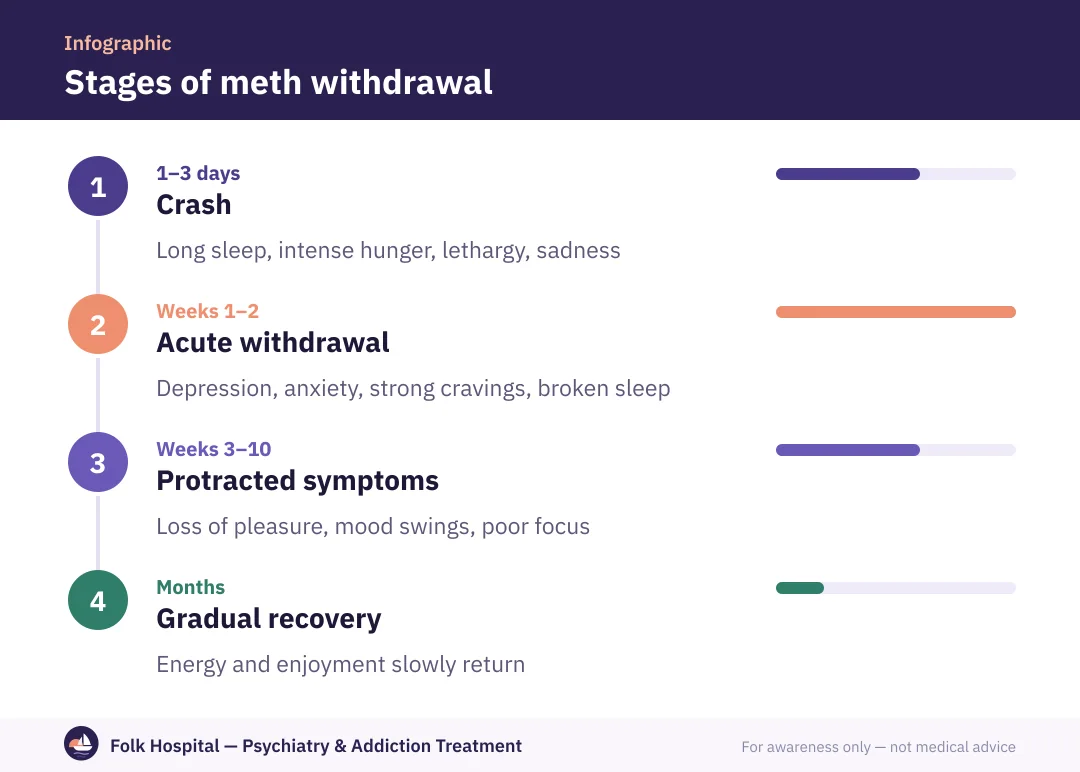
- 1–3 days
Crash
Very long sleep, intense hunger, lethargy, sadness, irritability.
Intensity - Weeks 1–2
Acute withdrawal
Clear depression, anxiety, strong cravings, broken sleep, vivid dreams.
Intensity - Weeks 3–10
Protracted symptoms
Loss of pleasure, mood swings, poor concentration and memory, waves of craving.
Intensity - Months
Gradual recovery
Energy and the ability to enjoy things slowly return with treatment and activity.
Intensity
03What are the symptoms of meth withdrawal?
Physical symptoms
- Excessive sleep, then broken sleep
- Hunger and rapid overeating
- Fatigue and heaviness
- Headache and general aches
Psychological symptoms
- Depression, sadness and tearfulness
- Loss of pleasure and interest
- Anxiety and irritability
- Strong cravings
- Slow thinking and poor concentration
04When is withdrawal dangerous?
- They talk about suicide or harming themselves
- Hallucinations or paranoia continue after stopping
- They become aggressive or a danger to others
- They refuse all food and drink
Call an ambulance on 123, or Egypt's mental health hotline on 08008880700.
Ambulance: 12305How is meth withdrawal treated?
- A safe settingadmission that prevents access to the drug and allows round-the-clock mood monitoring.
- Assessing psychosis and depressiontreating any paranoia or hallucinations and closely watching for suicidal thoughts.
- Restoring sleep and nutritionresetting the body's rhythm after days of no sleep and no food.
- Medication where neededfor insomnia, anxiety, depression or psychosis, based on the doctor's assessment.
- Starting therapypreparing for the rehabilitation programme that prevents a return.
؟Frequently asked questions
Is meth withdrawal life-threatening?
Physical symptoms are rarely dangerous, but severe depression can bring suicidal thoughts, and psychosis can persist in some people. Withdrawal therefore needs close psychiatric monitoring.
When will I enjoy life again after quitting meth?
It improves gradually over weeks to months as the dopamine system rebalances. Exercise, regular sleep and therapy speed up recovery.
Sources and references
- Methamphetamine — research topic — National Institute on Drug Abuse (NIDA)
- Treatment Approaches for Drug Addiction — DrugFacts — National Institute on Drug Abuse (NIDA)
- Suicide Prevention — National Institute of Mental Health (NIMH)

A psychiatrist specialising in addiction and mental illness in adults and adolescents, with a focus on dual diagnosis.
For awareness only — not a substitute for medical advice. Editorial policy · View profile