01Why is methanol so dangerous?
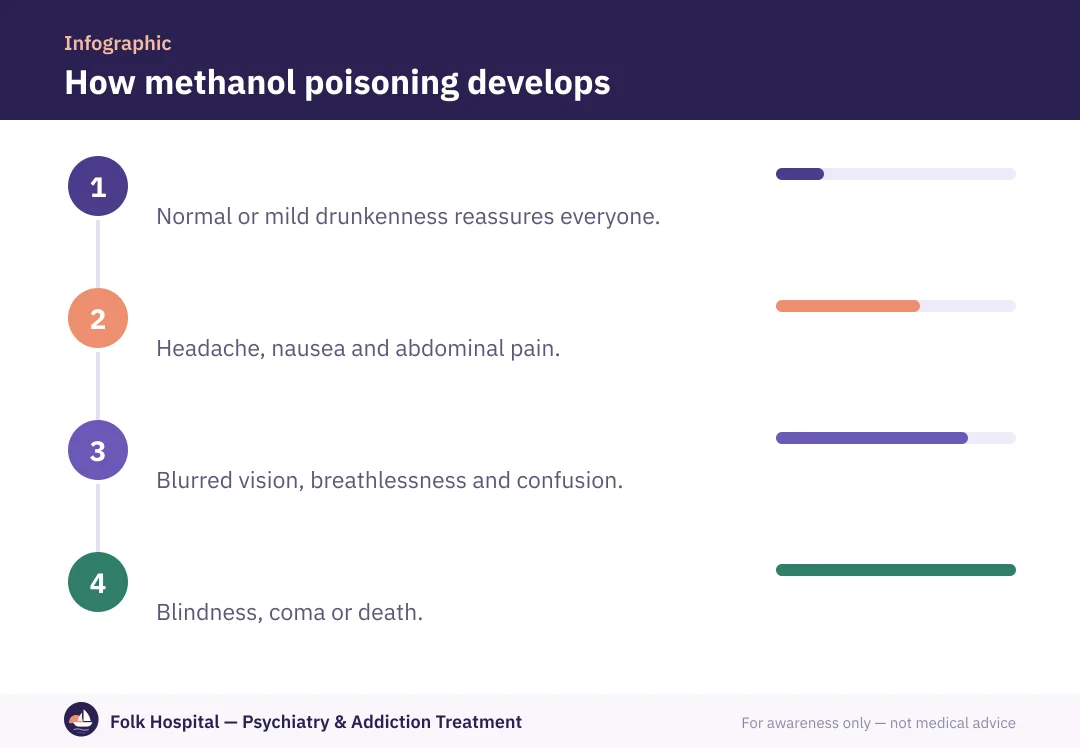
Methanol itself causes symptoms like ordinary drunkenness. But the liver gradually converts it into highly toxic substances (formaldehyde, then formic acid), which attack energy-hungry cells, first the optic nerve and then the brain, and cause blood acidity that strains the heart and breathing. Because this conversion takes hours, the person goes through a period of seeming normal and delays seeking help.
02Sources of methanol
- Counterfeit spirits, or suspiciously cheap or unknown-origin alcohol.
- Home-made spirits from crude distillation.
- Industrial products: solvents, paint strippers, and some cleaning fluids and fuels.
- Mistakenly drinking products containing industrial alcohol instead of ordinary alcohol.
03Symptoms and stages
- The first hoursdizziness, drowsiness and nausea like ordinary drunkenness; no one may notice anything.
- Usually after 12 to 24 hoursblurred or hazy vision, «snowfield» vision, severe abdominal pain, vomiting and headache.
- The severe stagefast, deep breathing from blood acidity, confusion, seizures, loss of sight and coma.
- Any blurred, hazy or spotty vision after drinking alcohol.
- Severe abdominal pain with vomiting.
- Fast, deep breathing or breathlessness.
- Confusion, severe drowsiness or seizures.
Don't wait for symptoms if someone who drank from the same source falls ill. Go to the emergency department now, and take the bottle if you can.
Ambulance: 12304Methanol versus ordinary alcohol
| Ordinary alcohol (ethanol) | Methanol | |
|---|---|---|
| Source | Regulated, manufactured drinks | Counterfeit spirits and industrial products |
| Symptom onset | Within minutes | Drunkenness first, then serious symptoms hours later |
| Greatest danger | Excess, dependence and withdrawal | Blindness, blood acidity and death |
| Emergency treatment | Support and monitoring | A specific antidote and dialysis |
05How is it treated in hospital?
- Diagnosisblood gas and acidity tests, and methanol levels where available.
- Antidotea medicine that stops the liver converting methanol into toxins, buying the body time to clear it.
- Correcting acidityspecial intravenous fluids.
- Dialysisto remove methanol and its toxins quickly in moderate and severe cases.
- Follow-upeye and brain assessment after stabilisation.
06After survival
Surviving methanol poisoning is often a moment of reckoning. If the person drinks regularly, or turns to cheap, unknown alcohol because they can't stop, these are signs of alcohol addiction that needs treatment. Read alcohol addiction treatment and acute drug intoxication.
؟Frequently asked questions
What is methanol?
A type of alcohol used in industry, fuel and solvents. It's very toxic to humans and is sometimes added to counterfeit spirits because it's cheap.
How can I tell if a drink contains methanol?
You can't by taste, smell or colour. The greatest risk is with spirits of unknown origin, suspiciously cheap, or home-made.
When do methanol poisoning symptoms appear?
Usually 12 to 24 hours after drinking, and later if ordinary alcohol was drunk too, because ordinary alcohol slows methanol's conversion in the liver.
Does methanol poisoning cause blindness?
Yes. It can cause permanent visual impairment or complete blindness, because its by-products attack the optic nerve. Early treatment reduces this risk.
How is methanol poisoning treated?
In hospital, with an antidote that stops the liver turning methanol into toxins, correction of blood acidity, and dialysis to remove methanol and its toxins in moderate and severe cases.
I drank with friends and one fell ill. What should I do?
Go to the emergency department immediately even if you feel fine, because symptoms can be delayed and early testing allows treatment before damage occurs.
Sources and references
- Methanol poisoning — Medical Encyclopedia — U.S. National Library of Medicine — MedlinePlus
- Alcohol — fact sheet — World Health Organization
- Alcohol — research topic — National Institute on Drug Abuse (NIDA)

A psychiatrist specialising in addiction and mental illness in adults and adolescents, with a focus on dual diagnosis.
For awareness only — not a substitute for medical advice. Editorial policy · View profile