01Harms by body system
| System | Harms |
|---|---|
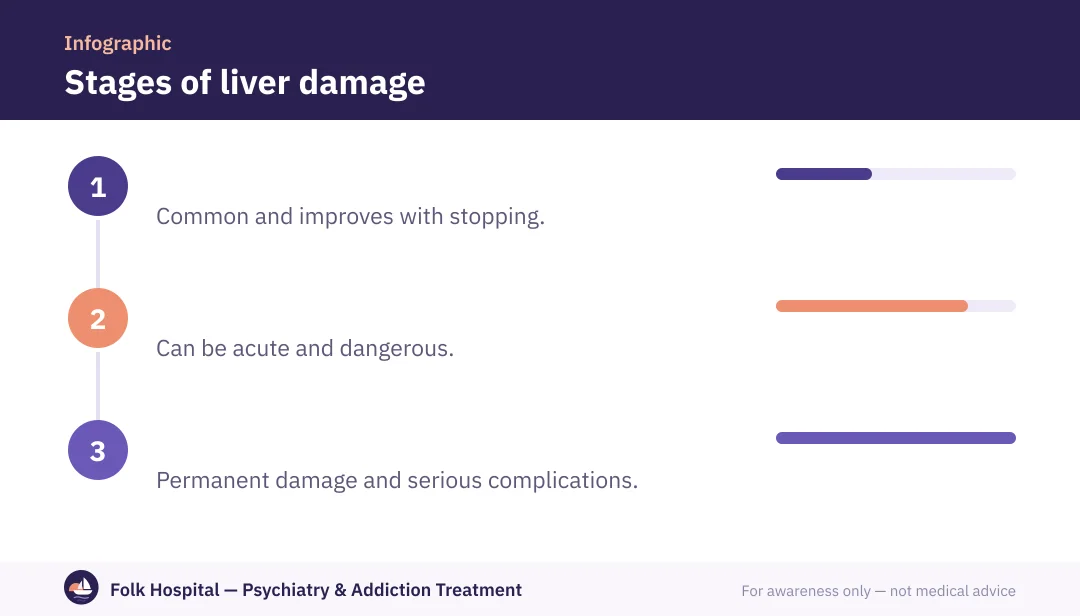
| Liver | Fatty liver, then inflammation, then cirrhosis and liver failure |
| Heart | High blood pressure, irregular rhythm and weakened heart muscle |
| Brain and nerves | Weak memory, nerve damage, and vitamin B1 deficiency and its harms |
| Digestive system | Gastritis, bleeding and pancreatitis |
| Cancer | Linked to cancers of the mouth, throat, oesophagus, liver, breast and colon |
| Mind | Depression, anxiety, insomnia and higher suicide risk |
02Social harms
Road accidents, domestic violence, job loss, debt and legal problems.
03The biggest danger: mixing and counterfeit alcohol
- Mixing alcohol with sedatives, pregabalin or opioids can stop breathing.
- Counterfeit alcohol may contain methanol, which causes blindness and death.
For blurred vision, breathlessness or unconsciousness: ambulance 123.
Ambulance: 12304Can the harms improve?
Many do improve with stopping: fatty liver, blood pressure, sleep and mood. Stopping safely needs medical supervision. Read about alcohol withdrawal, its treatment and methanol poisoning.
؟Frequently asked questions
Does the liver return to normal after quitting alcohol?
Fatty liver usually improves within weeks to months of stopping. Cirrhosis doesn't go away, but stopping halts its progress and improves survival.
Is a small amount of alcohol safe?
The World Health Organization indicates there's no completely safe level of drinking, and risk rises with the amount.
Does the liver recover after stopping?
Fatty liver improves a lot with stopping; advanced cirrhosis doesn't return to normal, but stopping prevents it getting worse.
What are the harms of alcohol in pregnancy?
It can cause malformations, delayed growth and learning and behaviour problems in the baby, and there's no safe amount in pregnancy.
Sources and references
- Alcohol — fact sheet — World Health Organization
- Alcohol — research topic — National Institute on Drug Abuse (NIDA)
- Alcohol-use disorders: diagnosis and management of physical complications (CG100) — National Institute for Health and Care Excellence (NICE)

A psychiatrist specialising in addiction and mental illness in adults and adolescents, with a focus on dual diagnosis.
For awareness only — not a substitute for medical advice. Editorial policy · View profile