01Opium: an old addiction with deep-rooted habits
Opium is the dried sap of the poppy, from which substances such as morphine and codeine are extracted. Its users often differ from heroin users: many started years ago, sometimes in a social setting or to cope with chronic pain or work exhaustion, and are middle-aged or older.
That means the habit is rooted in the daily routine, and the body may carry chronic illnesses that need attention during detox. Read about causes of opium addiction and its signs.
02How is it treated?
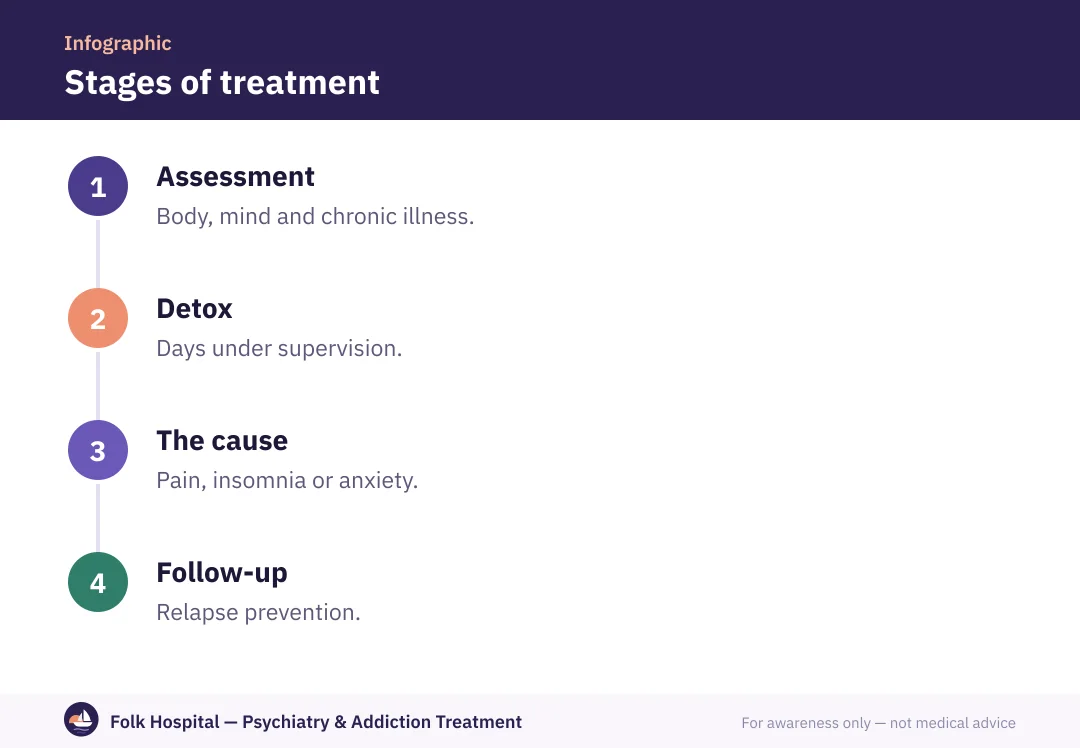
- A full medical assessmentblood pressure, blood sugar, heart, kidneys and lungs, current medicines, and how much opium is used and how.
- Supervised detoxmedicines that ease pain, diarrhoea, insomnia and anxiety, with closer monitoring for anyone with chronic illness.
- The medication decisionapproved relapse-prevention options depending on the case and the patient's wishes.
- Psychological rehabilitationchanging the routine tied to using, and handling pain, stress and empty time.
- Family and follow-upinvolving children or a spouse, with follow-up for at least a year.
03Withdrawal in older adults and people with chronic illness
Opium withdrawal resembles that of other opioids: bone pain, diarrhoea, runny nose, insomnia and anxiety. But in older adults or people with chronic illness it needs particular attention:
| Condition | What we monitor |
|---|---|
| High blood pressure and heart disease | Swings in blood pressure and pulse during withdrawal |
| Diabetes | Regular meals and blood sugar despite poor appetite and diarrhoea |
| Kidney disease | Choosing suitable medicine doses |
| Older age | Dehydration, confusion and falls |
Read about opium withdrawal and opioid addiction treatment.
Don't substitute it yourself
Some people try to stop opium with tramadol, sedatives or sleeping pills. That can add a new addiction, and mixing these drugs can slow breathing, especially in older adults.
04Changing the routine: the heart of rehabilitation
After years of use, opium becomes part of the day: after work, at a certain gathering, or before sleep. Rehabilitation helps to:
- Map the day and identify the times and places linked to using.
- Fill the gaps with new activities and people.
- Manage chronic pain by non-opioid means if it was part of how use began.
- Treat insomnia and depression, which are common after stopping.
05Overdose risk after stopping
- A few days after stopping, tolerance falls, and going back to the old amount can cause an overdose. Extreme drowsiness, slow breathing or blue lips need an ambulance on 123 immediately.
The strength of opium varies from source to source, making a safe dose even harder to judge.
Ambulance: 12306The family's role
When the person is a father or grandfather, children often hesitate to raise it. But a calm conversation based on concern for his health, rather than blame, often opens the door. A family counselling session is a good place to start. Read dealing with a father who has an addiction and about our family programme.
Read about the harms of opium.
؟Frequently asked questions
My father has used opium for years. Can he be treated?
Yes. Age and length of use don't rule out treatment, but they make medical assessment and monitored detox more important because chronic illness is likely.
How long does opium addiction treatment take?
Detox takes one to two weeks, rehabilitation one to three months, and follow-up at least a year; some medication options may continue longer.
Can opium be replaced with another medicine?
There are approved medical substitution treatments for opioid use disorder given at stable doses under supervision, decided by the doctor. Replacing it yourself with tramadol or sedatives is dangerous.
What are opium withdrawal symptoms?
Bone and muscle pain, diarrhoea, runny nose and eyes, insomnia, anxiety and strong cravings, usually peaking on days two and three.
Will treatment clash with blood pressure and diabetes medicines?
The doctor reviews all current medicines and chooses withdrawal medicines to suit them, which is why we ask patients to bring all their medicines and reports.
Sources and references
- Opioids — research topic — National Institute on Drug Abuse (NIDA)
- Guidelines for the psychosocially assisted pharmacological treatment of opioid dependence — World Health Organization
- Medications to Treat Opioid Use Disorder — Research Report — National Institute on Drug Abuse (NIDA)
- Drug misuse in over 16s: opioid detoxification (CG52) — National Institute for Health and Care Excellence (NICE)
- Opiate and opioid withdrawal — U.S. National Library of Medicine — MedlinePlus

A psychiatrist specialising in addiction and mental illness in adults and adolescents, with a focus on dual diagnosis.
For awareness only — not a substitute for medical advice. Editorial policy · View profile