Opium has a long history as a folk remedy in some communities, and these beliefs lead many to use it without realising the risk of addiction.
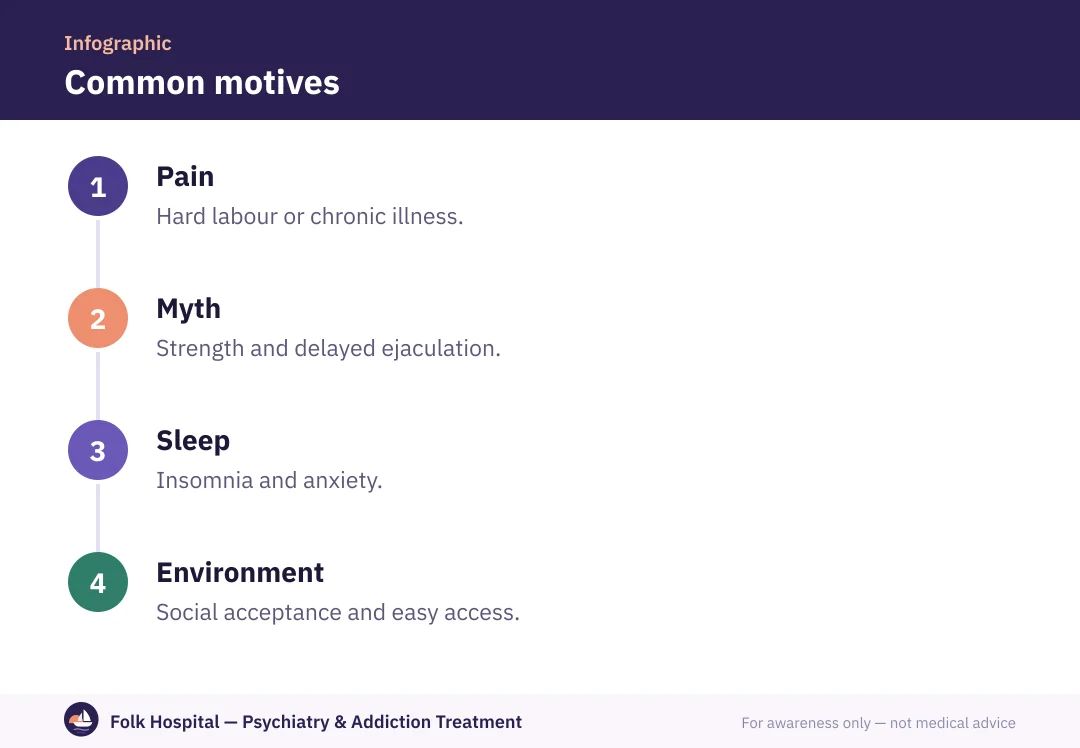
01Factors that raise the risk of addiction
| Factor | How it contributes |
|---|---|
| Folk remedy | Easing pain from hard work and chronic illness |
| Myths | Believing it treats blood pressure or diabetes or boosts sex |
| Social customs | Use at gatherings or occasions |
| Older people | Starting use for pain or sleep |
| Access | Availability in some areas |
Having a risk factor doesn't make addiction inevitable, and lacking one doesn't guarantee protection; addiction is an illness with many causes, and it can be treated.
02How does use turn into addiction?
Use begins for a specific reason, then tolerance and withdrawal appear, so use becomes daily at fixed times to avoid symptoms.
03What protects?
- Treating anxiety, depression and insomnia early and safely.
- Supportive relationships and open conversation in the family.
- Healthy ways of coping with stress and pain.
- Seeking help at the first signs of losing control.
Read about opium symptoms, its harms, its treatment.
؟Frequently asked questions
My father uses it for back pain. What's the alternative?
A medical assessment of the cause of pain, physiotherapy and safe medication, with gradual supervised withdrawal from opium.
Does opium treat blood pressure or diabetes?
No, that's a myth, and it can mask symptoms and delay real treatment.
Does opium boost sexual performance?
On the contrary, long-term use weakens desire and performance.
Sources and references
- Opioids — research topic — National Institute on Drug Abuse (NIDA)
- World Drug Report 2024 — United Nations Office on Drugs and Crime (UNODC)

A psychiatrist specialising in addiction and mental illness in adults and adolescents, with a focus on dual diagnosis.
For awareness only — not a substitute for medical advice. Editorial policy · View profile