01Symptoms by timing
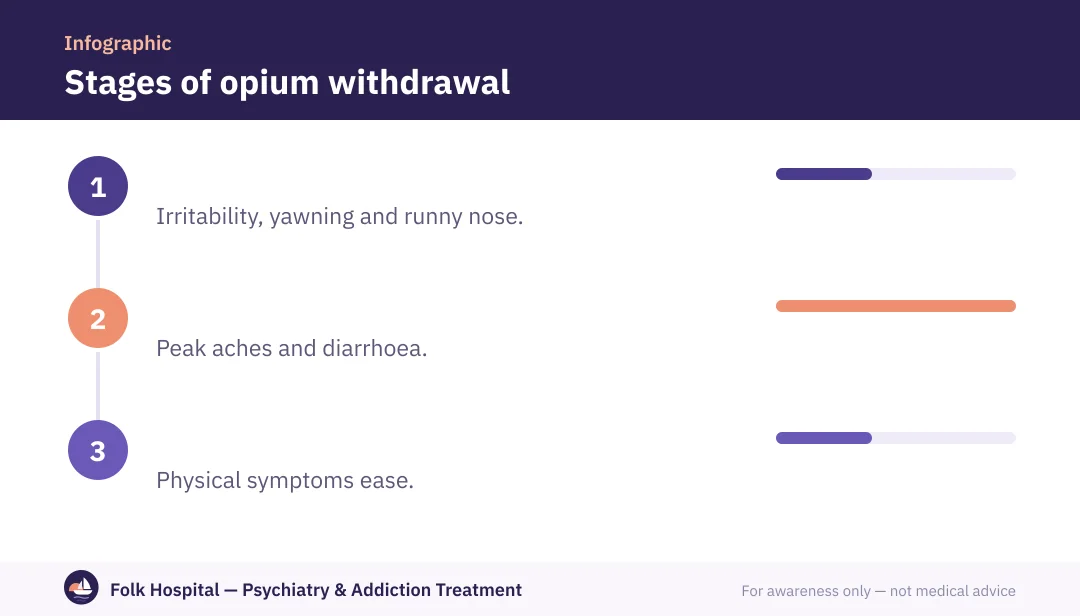
| Time since last dose | Symptoms |
|---|---|
| 6–12 hours | Irritability, yawning, runny nose, watery eyes and sweating |
| Days two to four | Peak: bone and muscle pain, diarrhoea, cramps, insomnia and intense cravings |
| A week to ten days | Physical symptoms ease |
| Weeks | Milder insomnia, anxiety and cravings |
02Safe detox
- Assessmentdose, route of use and chronic illnesses.
- Supporting medicinesto ease symptoms, or substitution treatment.
- Fluids and nutritionespecially for older people.
- Treating co-existing illnessesblood pressure, diabetes and chest conditions.
- Relapse preventionpsychological therapy and family follow-up.
- For slow breathing, unresponsiveness or blue lips: ambulance 123 immediately.
Read about opium addiction treatment, the symptoms of opium use and its harms.
؟Frequently asked questions
Can opium be stopped at home?
Sometimes with small doses under outpatient supervision. But large doses, older age or other illnesses usually need residential care for safe detox.
Is opium withdrawal life-threatening?
Rarely directly in healthy people, but severe dehydration, complications of chronic illness and relapsing on a high dose are the real dangers.
Is opium used as a folk remedy for pain or cough?
Sometimes, but it causes dependence and harm, and safe medical alternatives exist.
Which medicines help with withdrawal?
The doctor chooses medicines to ease symptoms or substitution treatment depending on the case; trying medicines without supervision isn't advised.
Sources and references
- Opioids — research topic — National Institute on Drug Abuse (NIDA)
- Opiate and opioid withdrawal — U.S. National Library of Medicine — MedlinePlus
- Guidelines for the psychosocially assisted pharmacological treatment of opioid dependence — World Health Organization

A psychiatrist specialising in addiction and mental illness in adults and adolescents, with a focus on dual diagnosis.
For awareness only — not a substitute for medical advice. Editorial policy · View profile