01What do the children go through?
| What the child feels | How it shows |
|---|---|
| Anxiety and insecurity | Fear, disturbed sleep and clinging to their mother |
| Shame | Hiding what happens at home, not inviting friends |
| Guilt | Believing they caused the problem |
| Early responsibility | Caring for siblings or protecting their mother |
| Anger | Aggression or defiance at school |
02How can you protect the children?
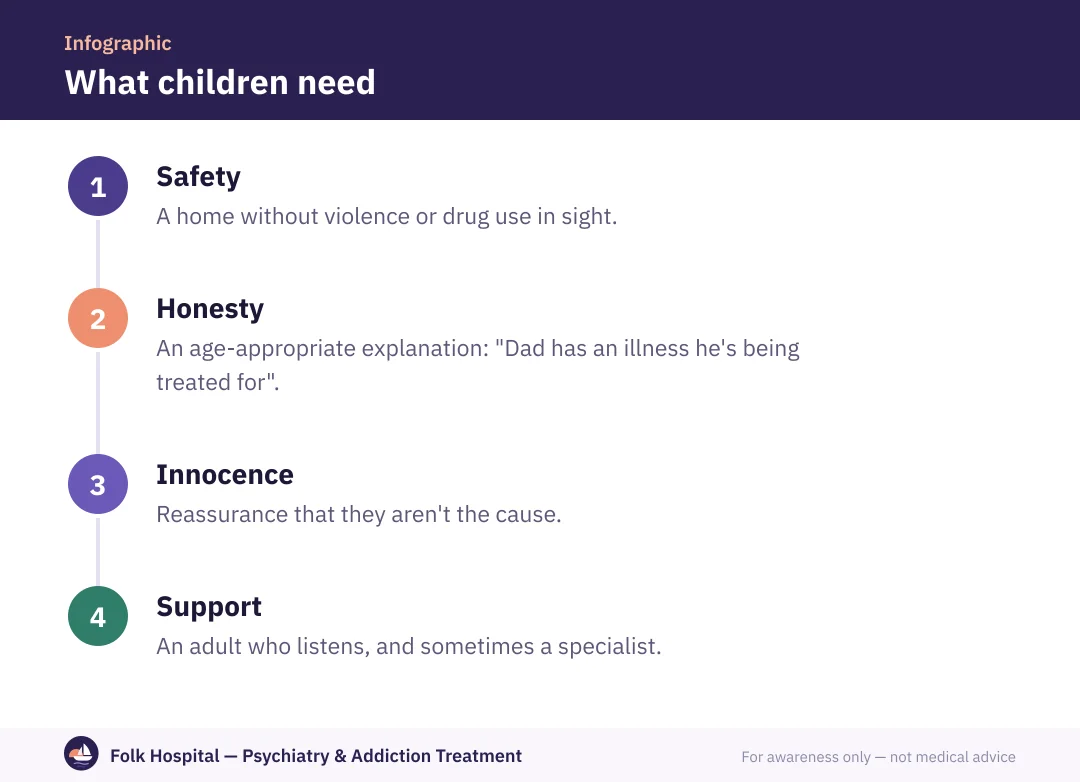
- Safetykeep them away from scenes of use, fighting and violence.
- Age-appropriate honesty«Dad has an illness called addiction, and it isn't your fault».
- Routinefixed times for meals, sleep and study.
- Room for feelingslet them talk and cry without blame.
- A supportive persona grandparent, uncle or teacher they trust.
- Assessment when neededfor any signs of anxiety or depression.
03What to say at each age
| Age | What fits |
|---|---|
| Early childhood | A very simple explanation and reassurance of safety |
| Primary school | That Dad is ill and needs treatment, and it isn't their fault |
| Adolescence | More honesty, talking about addiction as an illness, and a warning about inherited risk and experimenting |
04Helping the father
The conversation with the father is led by adults, not the children: the wife or an influential family member, with a specific treatment plan. Read how to convince an addict to get treatment and addiction and marriage.
05Prevention for the children
Children of addicted fathers are more vulnerable to addiction, but early conversation and a safe environment reduce the risk. Read about preventing addiction and teenagers and drugs.
- Safety first: leave with the children and get help. Police 122.
؟Frequently asked questions
Should I tell my children their father is an addict?
In a way suited to their age. Young children need a simple explanation about illness and treatment; older ones need more honesty. Total concealment increases their anxiety.
Do children inherit addiction?
Genetics increase vulnerability but don't decide addiction. A safe environment, conversation and early treatment of anxiety and depression greatly reduce the risk.
My teenage son is trying to rescue his father himself. What should I do?
Reassure him that this is a job for adults and specialists, keep him away from confrontations, and encourage him to talk about his feelings.
When does a child need a therapist?
With ongoing anxiety, disturbed sleep, a sharp drop at school, aggression, withdrawal or trying substances.
Sources and references
- Drugs, Brains, and Behavior: The Science of Addiction — National Institute on Drug Abuse (NIDA)
- Parents & Educators — National Institute on Drug Abuse (NIDA)
- Treatment Approaches for Drug Addiction — DrugFacts — National Institute on Drug Abuse (NIDA)
- Anxiety Disorders — National Institute of Mental Health (NIMH)
A specialist in psychological rehabilitation, behaviour modification and relapse prevention, with over 15 years in addiction programmes.
For awareness only — not a substitute for medical advice. Editorial policy · View profile