01Signs
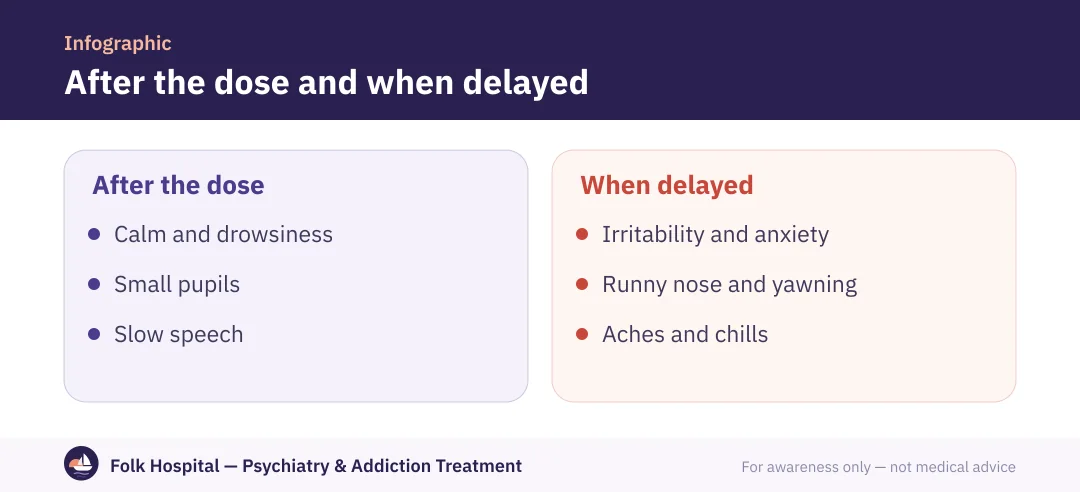
| Type | Signs |
|---|---|
| Under the effect | Drowsiness, calm and slowness, small pupils and itching |
| Physical | Constipation, nausea, loss of appetite and slow breathing |
| Signs of addiction | A daily need at fixed times, increasing amounts and rising spending |
| When delayed | Irritability, yawning, runny nose, watery eyes, aches and diarrhoea |
| At home | A distinctive smell, smoking tools and dark, sticky residue |
02Signs of overdose
Call an ambulance on 123 immediately for
- Unresponsiveness or difficulty waking them.
- Slow breathing or strange snoring.
- Blue lips.
What to do right nowAmbulance: 123
03What should you do?
Talk calmly, especially with older people who started using it for pain, and seek an assessment that covers chronic illnesses. Read about opium withdrawal, its treatment and its harms.
؟Frequently asked questions
My father has used opium for years and says it's under control. Is that possible?
He may seem regular, but a daily need and withdrawal when delayed mean dependence. It can be treated safely even after many years.
How is opium used?
By smoking, swallowing, dissolving it in a drink, and sometimes injecting.
Is opium less dangerous than heroin?
Usually less concentrated, but it causes dependence, withdrawal and overdose, especially in older people or when mixed.
Does it show up in a test?
Yes, it shows on an opioid test.
Sources and references
- Opioids — research topic — National Institute on Drug Abuse (NIDA)
- Opioid overdose — fact sheet — World Health Organization

Written byDr. Mahmoud ElsawyConsultant in psychiatry and addiction treatment
A psychiatrist specialising in addiction and mental illness in adults and adolescents, with a focus on dual diagnosis.
For awareness only — not a substitute for medical advice. Editorial policy · View profile