01Flakka: a synthetic stimulant with acute dangers
Flakka belongs to the synthetic cathinones, very potent chemical stimulants usually sold as crystals. They cause intense energy and wakefulness but are known for episodes of severe agitation, violent behaviour and psychosis, along with dangerously high body temperature that can destroy muscle and damage the kidneys.
02Emergency care first
- Severe agitation, violence or abnormal strength.
- Very high temperature, heavy sweating or hot skin.
- Seizures, chest pain or strong palpitations.
- Frightening hallucinations and dangerous behaviour.
Don't try to restrain the person yourself; avoid confrontation, remove dangerous objects and wait for the ambulance.
Ambulance: 123Read about signs of flakka use.
03How is it treated?
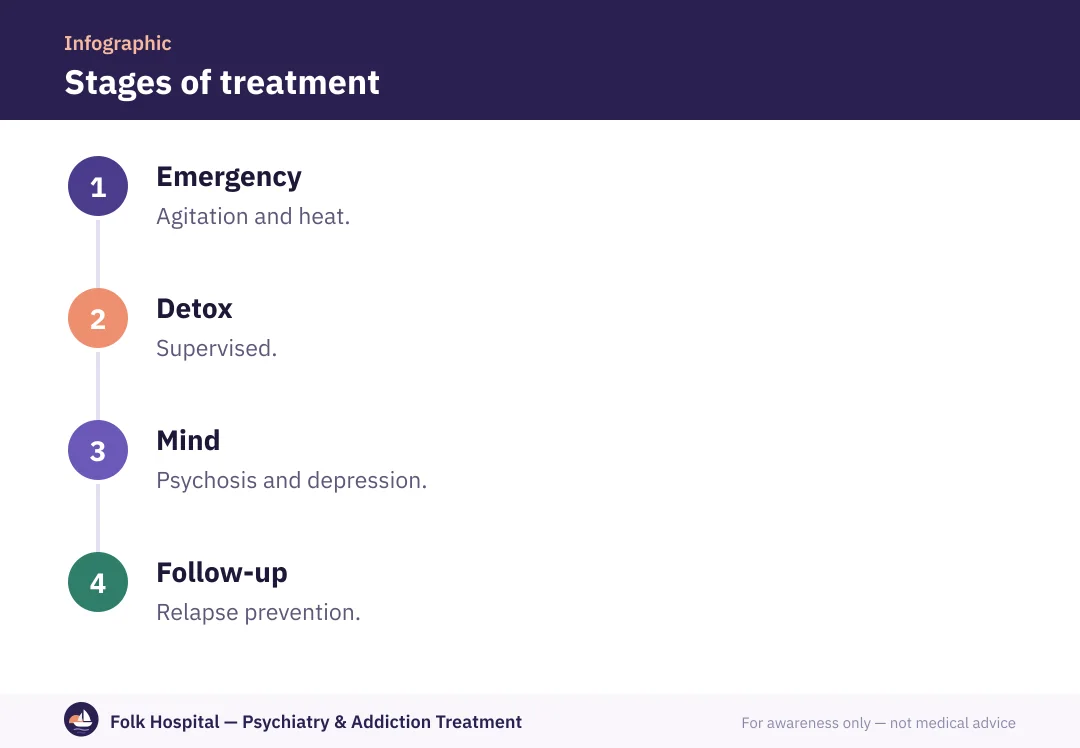
- Emergency care and stabilisationsafe calming, lowering temperature, fluids, and checks of muscles, kidneys and heart.
- Treating psychosisantipsychotic medicines when needed, and close psychiatric follow-up.
- Detoxmonitoring the crash, low mood, insomnia and intense cravings.
- Behavioural treatmentcontingency management, CBT and relapse-prevention skills.
- Long follow-upbecause cravings can return strongly weeks or months later.
04After stabilisation
As with other stimulants, after stopping the patient goes through a crash with exhaustion, long sleep and low mood, then weeks of intense cravings and mood swings. We monitor suicide risk closely during this period. The principles of rehabilitation resemble those for other stimulants; read crystal meth addiction treatment.
05Psychosis and aggression
Flakka is among the drugs most linked to psychosis and aggression. Once the patient is stable, we reassess: did the symptoms go with stopping, or is there a mental health condition that needs longer treatment? Read about drug-induced psychosis and dual diagnosis.
06Residential or outpatient?
In most flakka cases we recommend starting with residential care, because of the risk of agitation, psychosis and rapid relapse. The patient then moves to outpatient care and aftercare.
Read about the harms of flakka.
؟Frequently asked questions
Why is flakka so dangerous?
Because it's a very potent synthetic stimulant that can cause severe agitation, dangerously high temperature, racing heart, and muscle and kidney damage, as well as psychosis and violent behaviour.
What should I do with someone agitated after flakka?
Avoid physical confrontation, remove dangerous objects and call an ambulance on 123 immediately. Don't try to restrain them yourself, as that can raise their temperature and the danger.
Do hallucinations go away after stopping?
They improve in many people within days to weeks with treatment, but some need longer psychiatric follow-up.
How long does treatment take?
Stabilisation and detox take a few weeks, then intensive rehabilitation for one to three months, and follow-up for a year.
Sources and references
- Treatment Approaches for Drug Addiction — DrugFacts — National Institute on Drug Abuse (NIDA)
- Methamphetamine — research topic — National Institute on Drug Abuse (NIDA)
- Co-Occurring Disorders and Health Conditions — National Institute on Drug Abuse (NIDA)
- Drug misuse in over 16s: psychosocial interventions (CG51) — National Institute for Health and Care Excellence (NICE)

A psychiatrist specialising in addiction and mental illness in adults and adolescents, with a focus on dual diagnosis.
For awareness only — not a substitute for medical advice. Editorial policy · View profile