01Why is treating meth different from treating opioids?
Meth withdrawal is less physically painful, but its psychological effects run deeper: psychosis, depression, loss of pleasure and cravings that return suddenly months later. So treatment focuses on mind and behaviour more than medicines.
Crystal meth, or methamphetamine, is a powerful stimulant that floods the brain with dopamine far beyond any natural pleasure. With repeated use the brain's response to ordinary pleasures fades, so food, relationships and work feel "flat" without the drug. This state, which doctors call anhedonia, is one of the main things that draws people back, and treating it takes time, patience and a structured programme.
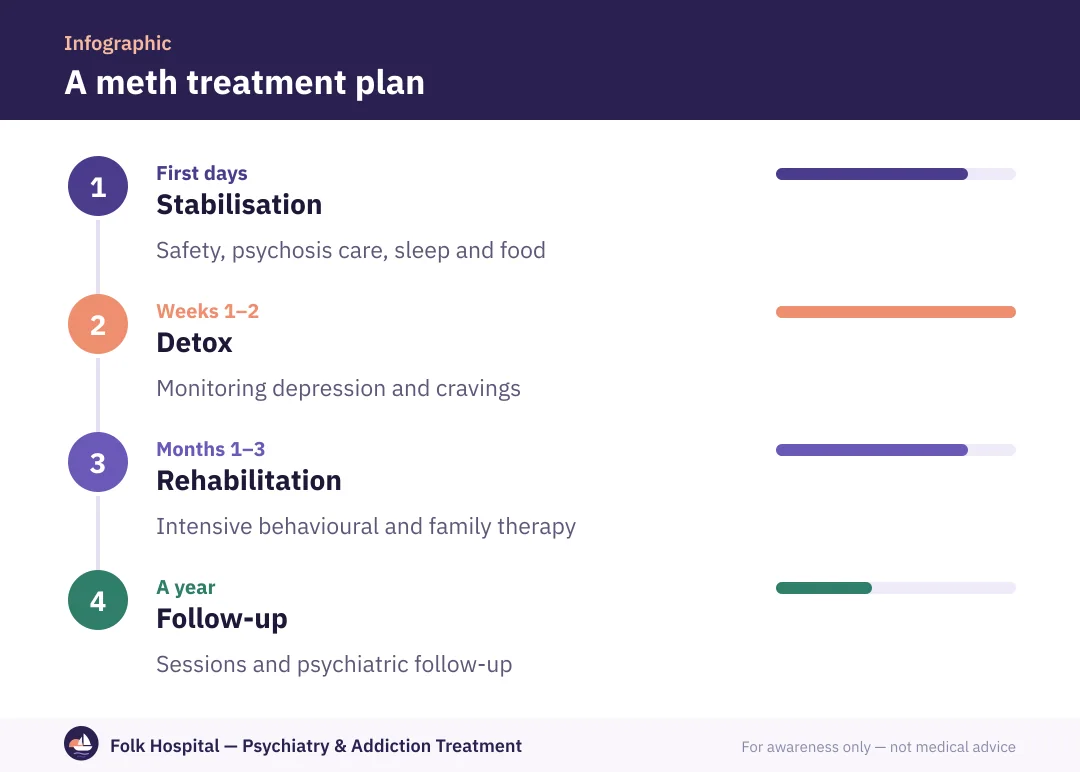
02What are the stages of meth treatment?
- Stabilisation and safetysafe admission for agitated patients, treatment of psychosis if present, and restoring sleep and nutrition.
- Detoxclose monitoring of mood through the crash and acute withdrawal. See meth withdrawal.
- Cognitive behavioural therapyrecognising triggers, learning to refuse offers, and handling boredom and stress.
- Incentive and reward programmesreinforcing healthy behaviour with clear goals and tangible rewards, an approach with proven benefit for stimulants.
- Family therapy and follow-uprepairing the damage of the using years, and regular follow-up to prevent relapse.
03Safe admission for acute cases
Many families contact us at a moment of crisis: a son who hasn't slept for days, suspects everyone, hears voices or has become aggressive. At that moment the first goal is safety:
- Calming the patient in a quiet place with as little confrontation as possible.
- A quick medical check of heart, temperature and fluids, because stimulants can cause dangerously high blood pressure and temperature.
- Sedating or antipsychotic medicines when needed, at carefully judged doses.
- Protection from harm to self or others.
- Chest pain, breathlessness or seizures.
- Very high temperature or severe confusion.
- Violence or threats to harm self or others.
- Frightening hallucinations the person is acting on.
Call an ambulance on 123, avoid physical confrontation and remove sharp objects.
Ambulance: 12304Withdrawal: three stages we know well
| Stage | Approximate timing | What happens | What we do |
|---|---|---|---|
| The crash | First days | Long sleep, hunger, exhaustion, low mood | Monitor mood and suicide risk, and nutrition |
| Acute withdrawal | Weeks one and two | Strong cravings, anxiety, mood swings, poor concentration | Early psychological work, sleep regulation and symptom medicines |
| Protracted symptoms | Weeks to months | Loss of pleasure, intermittent cravings, depression | Behavioural rehabilitation, exercise and treating depression |
05Behavioural therapy: why is it the foundation?
Because there's still no approved medicine that directly treats stimulant addiction, treatment relies on behavioural approaches proven in research:
- Contingency management: tangible rewards for engagement and negative test results. Scientific reviews rank it among the most effective approaches for stimulant addiction.
- Cognitive behavioural therapy: identifying triggers, breaking the link between the drug and energy, sex or staying up, and learning refusal skills.
- Integrated intensive outpatient models: a structured programme combining individual and group sessions, education, family involvement and regular testing over several months.
- Rebuilding natural pleasure: regular exercise, sleep and small enjoyable activities that gradually restore the brain's ability to enjoy.
06What about co-existing psychosis and depression?
We treat them within a dual diagnosis plan: antipsychotic medicines when needed, treatment for depression, and monitoring of whether symptoms fade after stopping or need longer treatment.
We pay particular attention to suicide risk in the first weeks of the crash, because the severe low mood after stopping stimulants can be sudden and deep. Read about drug-induced psychosis.
07Physical health after meth
- Heart and blood pressure: meth strains the heart, so we check blood pressure and an ECG when needed.
- Teeth: dry mouth, grinding and neglect leave damage that needs a dentist.
- Weight and nutrition: severe weight loss needs a nutrition plan.
- Skin: itching and sores from tactile hallucinations need care.
- Infections: screening for hepatitis and HIV for anyone who injected or had high-risk sexual behaviour.
Read about the harms of crystal meth.
08How long does meth treatment take?
Usually one to three months in an intensive programme, followed by at least a year of follow-up. Cases with psychosis or severe depression need longer. Memory, concentration and the ability to enjoy things improve gradually with long abstinence, which takes months, not days.
09Residential or outpatient?
Intensive outpatient care may suit
- Occasional or recent use.
- No psychosis, violence or suicidal thoughts.
- A supportive family and a drug-free home.
- Commitment to attend several times a week.
Residential care is better with
- Psychosis, agitation or aggression.
- Long-term daily use or injecting.
- Severe depression or suicidal thoughts.
- Failed previous attempts or mixing other drugs.
10Advice for families
- Don't argue with someone who is hallucinating or paranoid; speak calmly and reduce stimulation.
- Don't try to lock up or restrain them yourself; seek specialist help.
- Watch for low mood after stopping, and don't leave them alone if they talk about death.
- Start with family counselling. Read how to deal with someone using crystal meth and the difference between meth and captagon.
؟Frequently asked questions
Is there a medicine for meth addiction?
So far there's no internationally approved medicine for methamphetamine addiction itself. Treatment relies mainly on behavioural therapy, with medicines for accompanying symptoms as needed.
How long does meth treatment take?
Usually one to three months in an intensive programme, followed by a year of follow-up. Cases with psychosis or severe depression need longer.
Do hallucinations and paranoia go away after stopping?
In many people they improve within days to weeks of stopping with treatment, but they persist or return in some, especially after long use or with a vulnerability to psychosis, who then need longer psychiatric follow-up.
My son is aggressive and refuses treatment. What should I do?
If there's violence, threats or hallucinations, the family's safety comes first: avoid confrontation and seek emergency help. Once things are calm, contact us to arrange an assessment; the law may allow involuntary treatment in dangerous cases.
Why does someone sleep so much after stopping meth?
After days without sleep the body enters a crash with long sleep, hunger and exhaustion. It's an expected part of withdrawal, but it can come with severe low mood that needs monitoring.
Does meth damage the brain permanently?
Long-term use can affect memory, concentration and mood. Research shows some of these changes improve with long abstinence, though recovery is slow and takes months.
How does treating meth differ from treating captagon?
Both are stimulants and treatment shares the same behavioural core, but crystal meth is stronger and faster to cause psychosis and dependence, so it usually needs more intensive psychiatric follow-up. Read about the difference between meth and captagon.
Sources and references
- Methamphetamine — research topic — National Institute on Drug Abuse (NIDA)
- Treatment Approaches for Drug Addiction — DrugFacts — National Institute on Drug Abuse (NIDA)
- Co-Occurring Disorders and Health Conditions — National Institute on Drug Abuse (NIDA)
- Drug misuse in over 16s: psychosocial interventions (CG51) — National Institute for Health and Care Excellence (NICE)
- World Drug Report 2024 — United Nations Office on Drugs and Crime (UNODC)

A psychiatrist specialising in addiction and mental illness in adults and adolescents, with a focus on dual diagnosis.
For awareness only — not a substitute for medical advice. Editorial policy · View profile