01Signs
| Type | Signs |
|---|---|
| Psychological | Severe agitation, paranoia, hallucinations and strange behaviour |
| Physical | High temperature, heavy sweating, fast heartbeat and involuntary movements |
| Behavioural | Unusual violence and strength, removing clothes because of heat |
| Afterwards | A crash, depression, insomnia and cravings |
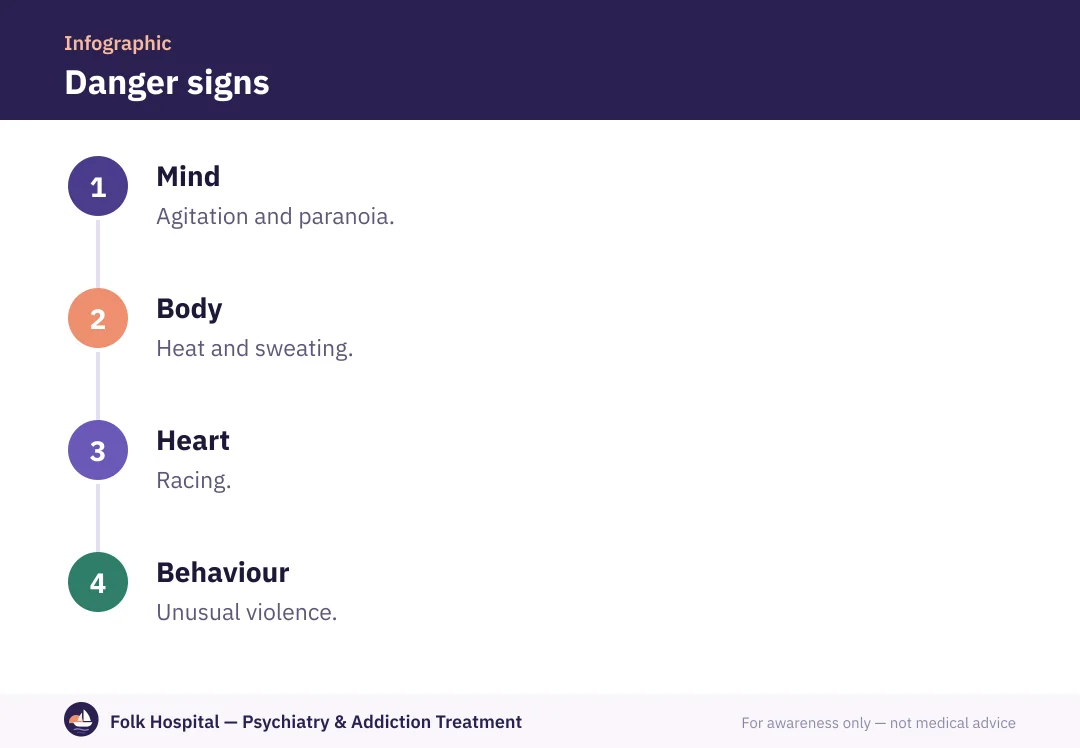
02Danger signs
- Very high temperature with agitation.
- Seizures or unconsciousness.
- Violent behaviour or danger to self or others.
- Chest pain.
03After the episode
The person needs a psychiatric assessment because psychosis may persist, and addiction treatment because cravings are strong. Read about flakka addiction treatment, its harms and drug-induced psychosis.
؟Frequently asked questions
How should I act with someone agitated after a drug?
Step back and move others away, try to calm the space, and call the ambulance and police. Don't try to restrain them alone.
Why is it called the zombie drug?
Because of the strange behaviour, agitation and unusual movements seen in some users.
Does flakka cause addiction?
Yes. It causes strong cravings to repeat and dependence, like other stimulants.
How do I deal with someone who is severely agitated?
Avoid confrontation, keep a safe distance, remove dangerous objects and call an ambulance immediately.
Sources and references
- Synthetic Cathinones (Bath Salts) DrugFacts — National Institute on Drug Abuse (NIDA)
- Drugs, Brains, and Behavior: The Science of Addiction — National Institute on Drug Abuse (NIDA)

A psychiatrist specialising in addiction and mental illness in adults and adolescents, with a focus on dual diagnosis.
For awareness only — not a substitute for medical advice. Editorial policy · View profile