01Harms
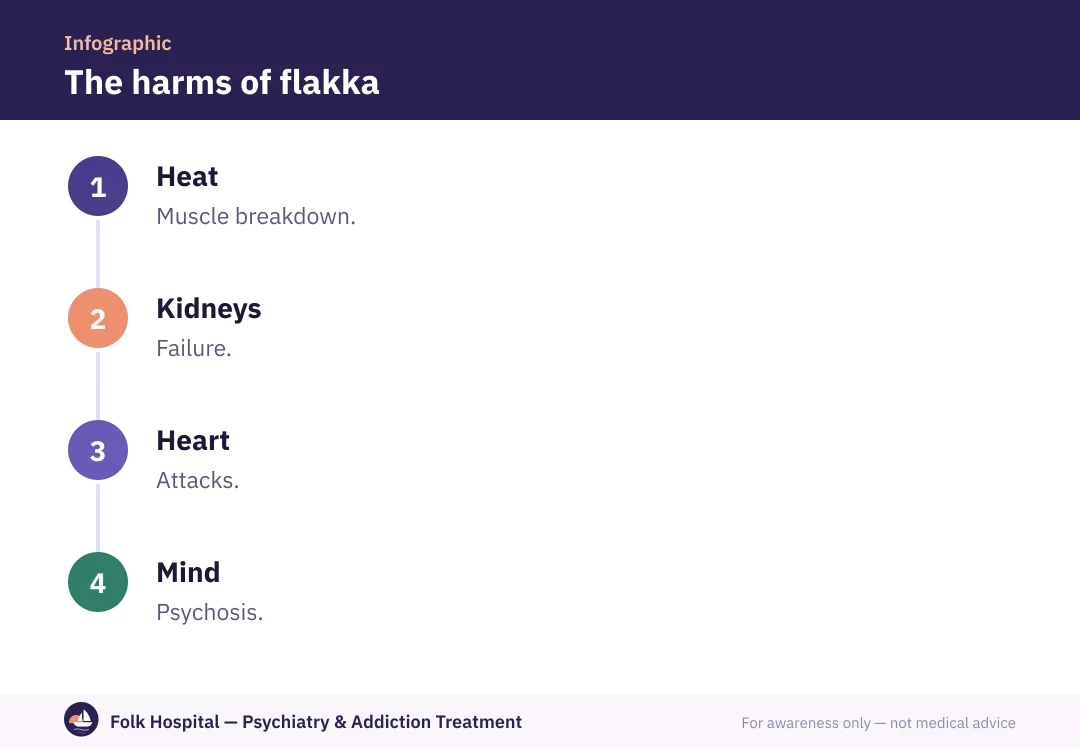
| Area | Harms |
|---|---|
| Heat and muscles | Severe overheating, muscle breakdown and kidney failure |
| Heart | Fast and irregular rhythm, and heart attacks |
| Mind | Agitation, paranoia, hallucinations, psychosis and depression after stopping |
| Behaviour | Violence, and harm to self or others |
| Dependence | Strong cravings and rapid repetition |
- Agitation with high temperature, seizures, chest pain or very dark urine.
02Treatment
It needs medical and psychiatric assessment and addiction treatment. Read about flakka symptoms, how long it stays in the body and its treatment.
؟Frequently asked questions
Does flakka psychosis go away?
It usually improves with stopping and treatment, but it can last longer in some people.
What is excited delirium?
A state of severe agitation with high temperature and unusual strength; it's an emergency that can be life-threatening.
Does flakka cause lasting harm?
It can damage the kidneys or heart, and psychological symptoms may persist in some people.
Is flakka like shabu?
Both are powerful stimulants, but synthetic cathinones such as flakka are less predictable, with contents varying between batches.
Sources and references
- Synthetic Cathinones (Bath Salts) DrugFacts — National Institute on Drug Abuse (NIDA)
- Drugs, Brains, and Behavior: The Science of Addiction — National Institute on Drug Abuse (NIDA)

A psychiatrist specialising in addiction and mental illness in adults and adolescents, with a focus on dual diagnosis.
For awareness only — not a substitute for medical advice. Editorial policy · View profile