01Ecstasy: a problem that starts at parties
Ecstasy (MDMA) is a stimulant that also alters perception, often used at parties and nights out, giving a sense of energy, closeness to others and pleasure. Many people think it "isn't addictive". But repeated use can cause psychological dependence, recurrent dips in mood, and difficulty enjoying ordinary life without it.
The problem is compounded because tablets in circulation often contain other substances besides MDMA, and may be mixed with alcohol, cannabis or cocaine on the same night. Read about why people use ecstasy and its signs.
02The acute danger: when to go to emergency
- Very high temperature and hot, dry skin.
- Seizures or loss of consciousness.
- Severe confusion or agitation.
- Severe headache with vomiting and disorientation, which may mean a dangerous salt imbalance.
- Chest pain or strong palpitations.
Call an ambulance on 123 immediately, move the person somewhere cool and don't leave them alone.
Ambulance: 12303How is it treated?
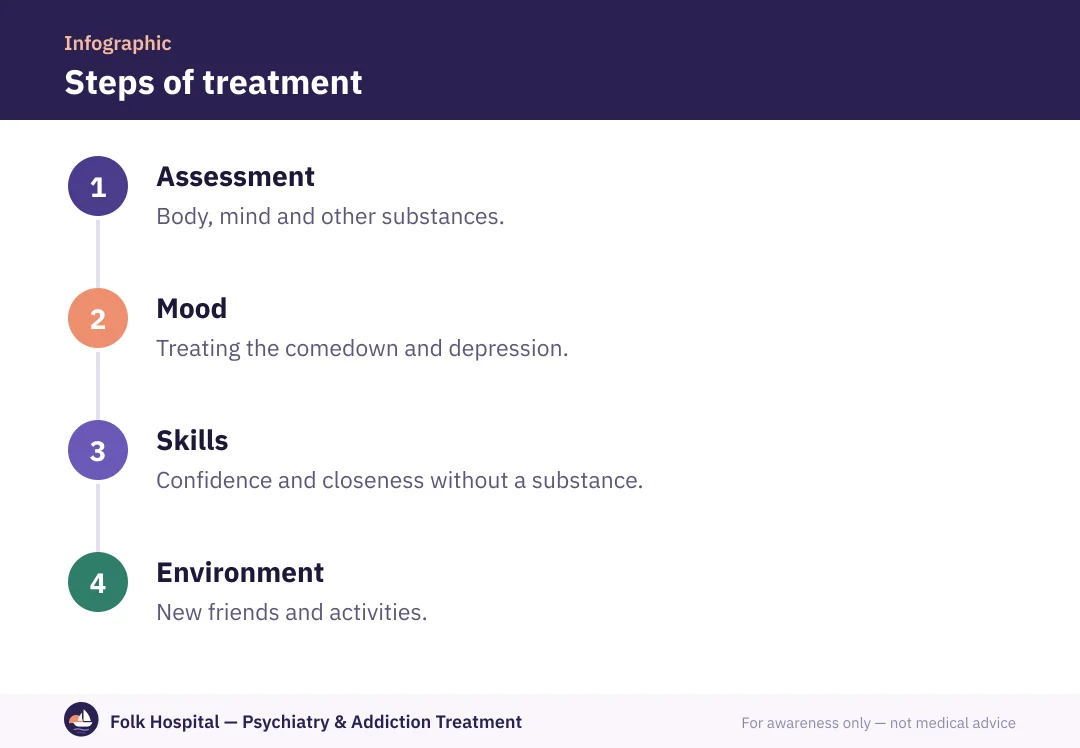
- Assessmentpattern of use, other drugs, mental state, and any previous panic attacks or psychosis.
- Treating the low moodfollowing depression, anxiety and insomnia after stopping, and treating them when needed.
- Cognitive behavioural therapyreasons for use, parties and friends, and coping with boredom and loneliness.
- Treating other substancesalcohol, cocaine or cannabis.
- Follow-upsessions and a plan for high-risk situations such as parties and events.
Read about ecstasy withdrawal.
04The dip after ecstasy
Ecstasy releases large amounts of serotonin, and the brain then needs days to rebalance. So two or three days later, many people feel:
- Sadness, emptiness and tearfulness without a clear reason.
- Anxiety and irritability.
- Exhaustion and poor concentration.
- Insomnia or disturbed sleep.
With repetition this dip can become longer and deeper, turning into depression that needs treatment in some people. The good news is that mood improves gradually with abstinence and treatment.
05Social treatment: the heart of the problem
Because ecstasy is tied to parties and friendship groups, treatment focuses on:
- Understanding the motive: seeking closeness? Escaping loneliness or social anxiety? Excitement?
- A plan for events: how to enjoy them without drugs, and when to leave a place or group.
- Treating social anxiety if it lies behind the use. Read about social anxiety.
- Building new relationships and activities that give real enjoyment.
06Residential or outpatient?
Most cases are treated as outpatients. We use a residential stay for severe depression or suicidal thoughts, psychosis, or heavy use of other drugs alongside it. Read about outpatient care.
Read about the harms of ecstasy.
؟Frequently asked questions
Is ecstasy addictive?
It can cause dependence in some users, especially with repeated use, seen as cravings, exhaustion and depression after stopping, and difficulty enjoying things without it.
Why do I feel depressed a few days after a party?
Because ecstasy releases large amounts of serotonin, and the brain then needs time to restore it, causing a dip in mood and energy. With repetition, the dip can become longer and deeper.
How long does treatment take?
Usually outpatient treatment for several weeks to two months, with follow-up; longer with depression or other drug use.
What are danger signs after taking ecstasy?
Very high temperature, seizures, confusion, severe headache with vomiting, and loss of consciousness. They need emergency care immediately.
Can treatment be done without a residential stay?
Yes in most cases, unless there's severe depression, psychosis or heavy use of other drugs.
Sources and references
- MDMA (Ecstasy/Molly) — research topic — National Institute on Drug Abuse (NIDA)
- Treatment Approaches for Drug Addiction — DrugFacts — National Institute on Drug Abuse (NIDA)
- Drug misuse in over 16s: psychosocial interventions (CG51) — National Institute for Health and Care Excellence (NICE)
- Co-Occurring Disorders and Health Conditions — National Institute on Drug Abuse (NIDA)

A psychiatrist specialising in addiction and mental illness in adults and adolescents, with a focus on dual diagnosis.
For awareness only — not a substitute for medical advice. Editorial policy · View profile