01Why does the crash happen?
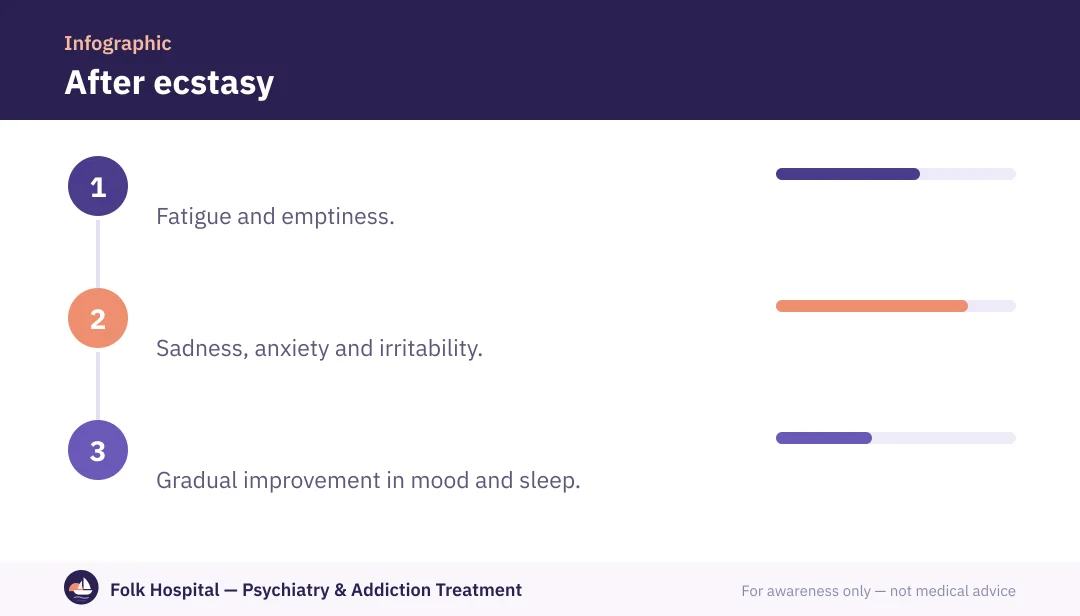
Ecstasy releases large amounts of serotonin at once, so the user feels euphoria and closeness to others. Afterwards the brain needs time to rebuild its stores, and a low mood follows.
02Symptoms and timing
| Time | Symptoms |
|---|---|
| One to three days | Sadness, anxiety, exhaustion, irritability and insomnia or oversleeping |
| With repeated use | Depression lasting weeks, poor concentration and cravings |
03What helps?
- Sleep and nutritionand fluids in moderation.
- Avoiding other substancesalcohol and cannabis deepen the crash.
- Movement and daylightwalking and activity during the day.
- Talking to someone you trustdon't stay alone with the sadness.
- A medical assessmentif depression lasts more than two weeks.
- Thoughts of self-harm or suicide: the mental health hotline 08008880700, or ambulance 123.
Read about ecstasy addiction treatment, the symptoms of ecstasy use and its harms.
؟Frequently asked questions
Is sadness after ecstasy real depression?
A short comedown is common and passes, but if sadness lasts two weeks or more or thoughts of self-harm appear, it needs assessment.
What is the «Tuesday blues» after ecstasy?
A common description of the low mood that appears two or three days after weekend use, linked to serotonin depletion.
Does ecstasy affect memory in the long term?
Repeated use is linked to memory, mood and sleep problems in some users, and some of these effects improve after stopping.
Should I take an antidepressant myself?
No. The doctor assesses whether the depression is temporary or needs treatment, and some medicines interact dangerously with ecstasy.
Sources and references
- MDMA (Ecstasy/Molly) — research topic — National Institute on Drug Abuse (NIDA)
- Depression — National Institute of Mental Health (NIMH)
- Suicide Prevention — National Institute of Mental Health (NIMH)

A psychiatrist specialising in addiction and mental illness in adults and adolescents, with a focus on dual diagnosis.
For awareness only — not a substitute for medical advice. Editorial policy · View profile