01Harms
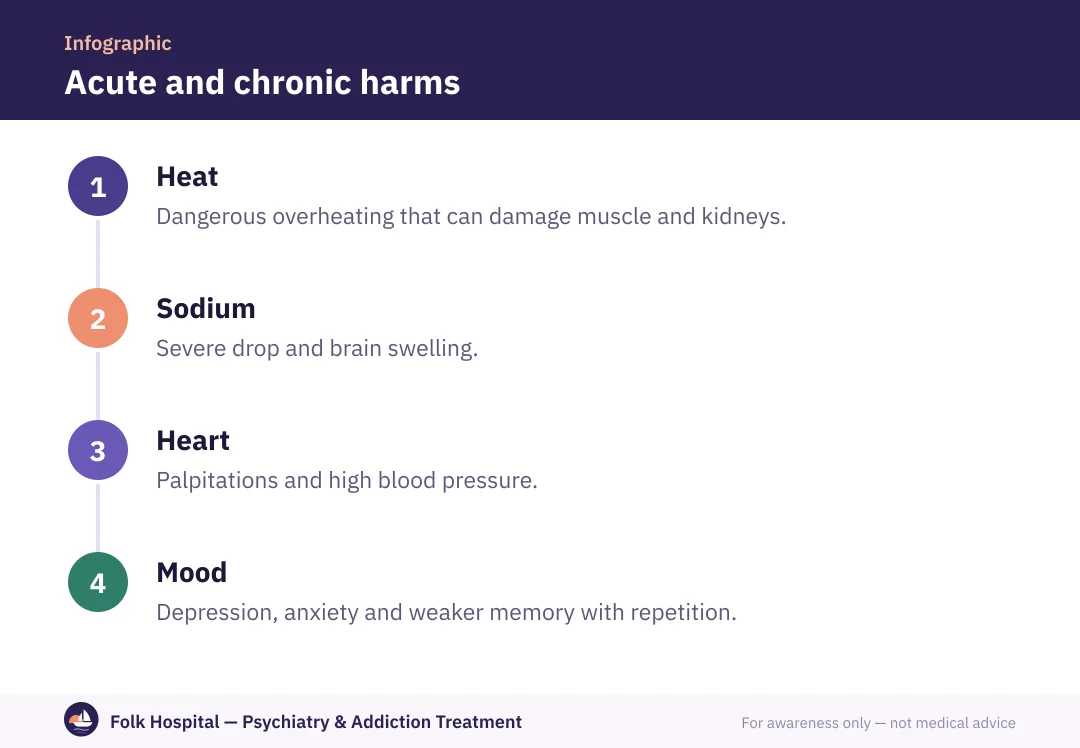
| Area | Harms |
|---|---|
| Heat and fluids | Severe overheating, dehydration, or low sodium from too much water |
| Heart | Fast and irregular rhythm, high blood pressure |
| Brain and mind | Low mood, anxiety, and memory and sleep problems with repeated use |
| Mouth | Teeth grinding and wear, and jaw pain |
| Interactions | Serotonin syndrome with some medicines |
- High temperature with confusion, seizures, severe headache and vomiting after drinking lots of water, or chest pain.
02Treatment
Stopping is possible with psychological support, monitoring mood and sleep. Read about ecstasy symptoms, its withdrawal and its treatment.
؟Frequently asked questions
Can ecstasy be taken with antidepressants?
No. The mix can cause serotonin syndrome, a dangerous condition with fever, seizures and confusion.
Can someone die from ecstasy?
Yes, from severe overheating, low sodium from drinking too much water, heart rhythm disturbance, or mixing with other substances.
Does ecstasy cause depression?
It causes a temporary low after each use, and repeated use may be linked to ongoing depression and anxiety in some people.
Is mixing it with antidepressants dangerous?
Yes. It can cause serotonin syndrome, a serious condition with fever, agitation and rigidity.
Sources and references
- MDMA (Ecstasy/Molly) — research topic — National Institute on Drug Abuse (NIDA)
- Drugs, Brains, and Behavior: The Science of Addiction — National Institute on Drug Abuse (NIDA)

A psychiatrist specialising in addiction and mental illness in adults and adolescents, with a focus on dual diagnosis.
For awareness only — not a substitute for medical advice. Editorial policy · View profile