01Amphetamine and captagon: the same family
Amphetamine is a stimulant that raises dopamine and noradrenaline, giving temporary energy, focus, wakefulness and confidence. It's often used to study, to work long hours and to stay up. What's sold on the street as captagon is usually amphetamine tablets of unknown make-up and dose, sometimes with other substances.
With repeated use, the person needs bigger doses, the day without the drug feels heavy and drained, and a crash follows binges of staying awake. Read about causes of amphetamine addiction and its signs.
02How is it treated?
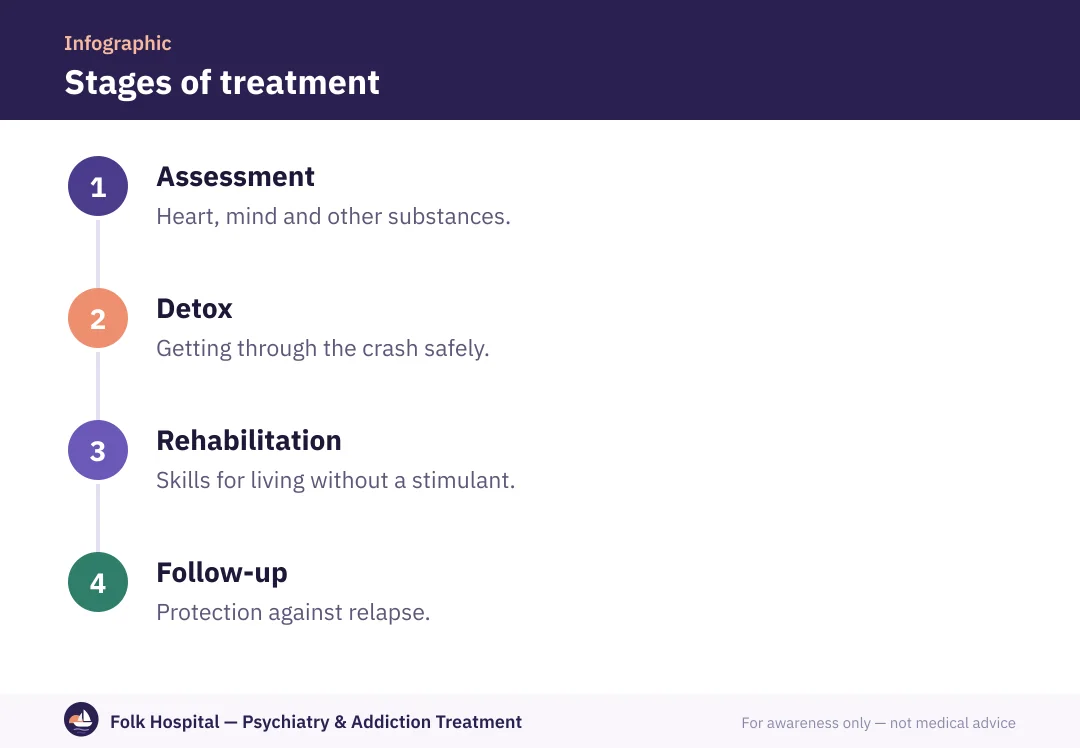
- Assessmentamount and pattern of use, other drugs, heart and blood pressure checks, and mental state and suicide risk.
- Supportive detoxsleep, nutrition and fluids, with medicines for insomnia, anxiety and low mood when needed.
- Treating psychosis if presentpsychiatric assessment and follow-up until symptoms resolve.
- Behavioural treatmentCBT, contingency management and training for high-risk situations.
- Family and follow-upfamily sessions, regular testing and a relapse-prevention plan.
Read about amphetamine withdrawal.
03The crash: the most dangerous moment psychologically
After stopping comes a crash with long sleep, hunger and exhaustion, then low mood, loss of pleasure and strong cravings. In some patients the low mood is deep enough to bring suicidal thoughts, so we monitor mood closely in the first weeks.
- Chest pain, strong palpitations or seizures.
- High temperature or confusion.
- Agitation, violence or hallucinations.
- Talk of death or self-harm.
Call an ambulance on 123 immediately.
Ambulance: 12304If it's used to study or work
Many students and workers started for "performance", not to get high. Here treatment focuses on two things:
- Assessing for ADHD: some were self-treating without a diagnosis, and if the condition is present it has proper treatment with the right dose and follow-up. Read about ADHD.
- Alternative skills: regular sleep, breaking up study, managing stress, and realistic expectations of performance.
05Behavioural treatment: what works?
Because there's no approved medicine for stimulant addiction, treatment relies on proven approaches:
- Contingency management: tangible rewards for engagement and negative tests.
- Cognitive behavioural therapy: breaking the link between the drug and energy, achievement and staying up.
- Rebuilding natural pleasure: exercise, sleep and activities that restore the brain's ability to enjoy.
Read more in crystal meth addiction treatment, as the principles are similar.
06Residential or outpatient?
Outpatient care may be enough
- Occasional use.
- No psychosis or suicidal thoughts.
- A supportive family.
Residential care is better with
- Daily use or long binges without sleep.
- Psychosis, agitation or severe depression.
- Mixing other drugs or failed previous attempts.
Read about the harms of amphetamine and the harms of captagon.
؟Frequently asked questions
Is captagon the same as amphetamine?
The original captagon was a medicine converted to amphetamine in the body; what's sold on the street under that name today is usually amphetamine tablets mixed with other substances, and treatment is similar.
How long does amphetamine treatment take?
Acute withdrawal takes one to two weeks, rehabilitation usually one to three months, and follow-up a year, because cravings can return months later.
I use it to study or work. Is that addiction?
If you can't perform without it, raise the dose, or it affects your sleep and mood, these are signs of dependence that need assessment. Undiagnosed ADHD may lie behind it.
Does amphetamine cause mental illness?
It can cause psychosis, paranoia and hallucinations, especially with high doses and long periods without sleep, which improve in many people with stopping and treatment.
Can treatment be done as an outpatient?
Yes, with occasional use and no psychosis or severe depression, and a supportive family. Otherwise residential care is safer.
Sources and references
- Methamphetamine — research topic — National Institute on Drug Abuse (NIDA)
- Treatment Approaches for Drug Addiction — DrugFacts — National Institute on Drug Abuse (NIDA)
- Co-Occurring Disorders and Health Conditions — National Institute on Drug Abuse (NIDA)
- Drug misuse in over 16s: psychosocial interventions (CG51) — National Institute for Health and Care Excellence (NICE)
- World Drug Report 2024 — United Nations Office on Drugs and Crime (UNODC)

A psychiatrist specialising in addiction and mental illness in adults and adolescents, with a focus on dual diagnosis.
For awareness only — not a substitute for medical advice. Editorial policy · View profile