01Harms by body system
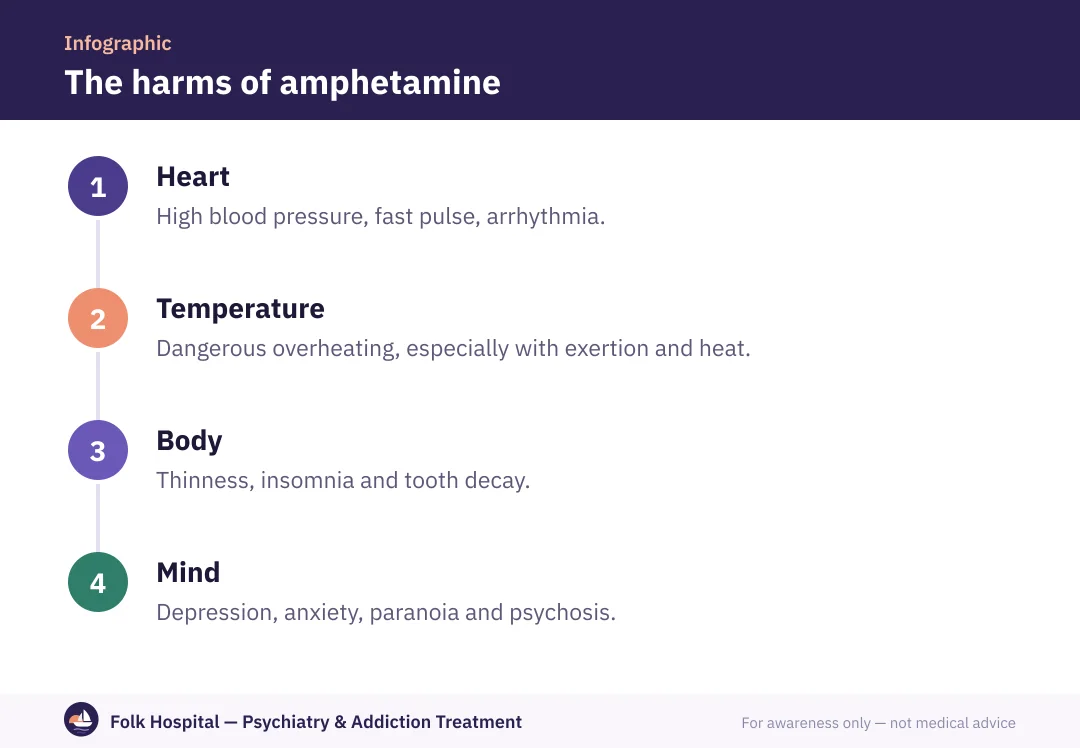
| System | Harms |
|---|---|
| Heart and vessels | High blood pressure, fast and irregular heartbeat, and strokes |
| Brain and mind | Insomnia, anxiety, irritability, suspicion, psychosis and depression after stopping |
| Body | Weight loss, malnutrition, dehydration and overheating |
| Teeth and skin | Teeth grinding and wear, and sores from scratching |
| Behaviour | Impulsivity, risk-taking and sometimes violence |
02Social harms
Slipping at school, job loss, debt, and family and legal problems.
- Chest pain, a sudden severe headache, weakness on one side of the body, high temperature or seizures: ambulance 123.
03Can the harms improve?
Many improve with stopping, nutrition, sleep and psychological therapy. Read about the symptoms of amphetamine use, its withdrawal and its treatment.
؟Frequently asked questions
Can amphetamine cause psychosis?
Yes, especially with high doses and long sleepless periods. It shows as suspicion and hallucinations, usually improves with stopping and treatment, but can recur with renewed use.
Does amphetamine cause permanent brain damage?
Long-term use at high doses can affect memory, concentration and mood, and some of these effects improve with long abstinence.
Does it affect the heart in young people?
Yes. Even in young people it can cause irregular rhythm or a stroke, especially with high doses or mixing.
Does it cause infertility or sexual problems?
Long-term use can affect sexual performance and hormones in some users.
Sources and references
- Methamphetamine — research topic — National Institute on Drug Abuse (NIDA)
- Drugs, Brains, and Behavior: The Science of Addiction — National Institute on Drug Abuse (NIDA)

A psychiatrist specialising in addiction and mental illness in adults and adolescents, with a focus on dual diagnosis.
For awareness only — not a substitute for medical advice. Editorial policy · View profile