01Stages of withdrawal
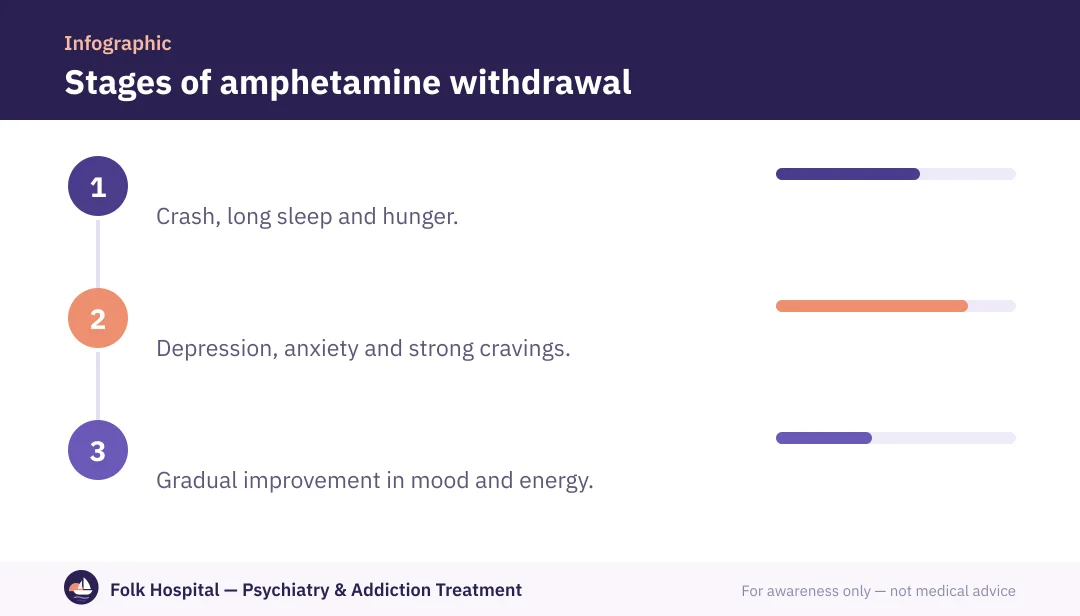
| Stage | Approximate timing | Symptoms |
|---|---|---|
| The crash | Hours to days | Long sleep, hunger and severe exhaustion |
| Acute withdrawal | One to two weeks | Depression, anxiety, irritability, poor concentration and cravings |
| Extended phase | Weeks to months | Loss of pleasure, cravings with triggers and mood swings |
02What helps?
- Sleep and nutritionreplacing what use depleted.
- A safe environmentaway from the substance and friends who use.
- Treating symptomsinsomnia, depression and anxiety under a doctor's supervision.
- Psychological therapyCBT, motivational work and relapse prevention.
- Gradual physical activityhelps improve mood.
03When is admission needed?
- Severe depression or suicidal thoughts.
- Psychotic symptoms such as suspicion and hallucinations.
- Using several substances.
- Previous attempts that failed.
- Thoughts of suicide or self-harm: the mental health hotline 08008880700, or ambulance 123.
Read about amphetamine addiction treatment, the symptoms of amphetamine use and shabu.
؟Frequently asked questions
Do I need hospital admission for amphetamine withdrawal?
Not always. But residential care helps with severe depression, suicidal thoughts, psychosis, multiple substances or failed previous attempts.
How long does amphetamine withdrawal last?
The first crash lasts days, acute symptoms about one to two weeks, while loss of pleasure and cravings may continue more mildly for weeks or months.
Why does nothing feel enjoyable after stopping?
Because stimulants deplete the brain's reward system, which needs time to recover. This feeling improves gradually with abstinence, activity and sleep.
Can psychosis happen during withdrawal?
Psychosis is more common during heavy use and may persist in the first days after stopping. It needs urgent assessment.
Sources and references
- Methamphetamine — research topic — National Institute on Drug Abuse (NIDA)
- Treatment Approaches for Drug Addiction — DrugFacts — National Institute on Drug Abuse (NIDA)
- Suicide Prevention — National Institute of Mental Health (NIMH)

A psychiatrist specialising in addiction and mental illness in adults and adolescents, with a focus on dual diagnosis.
For awareness only — not a substitute for medical advice. Editorial policy · View profile